


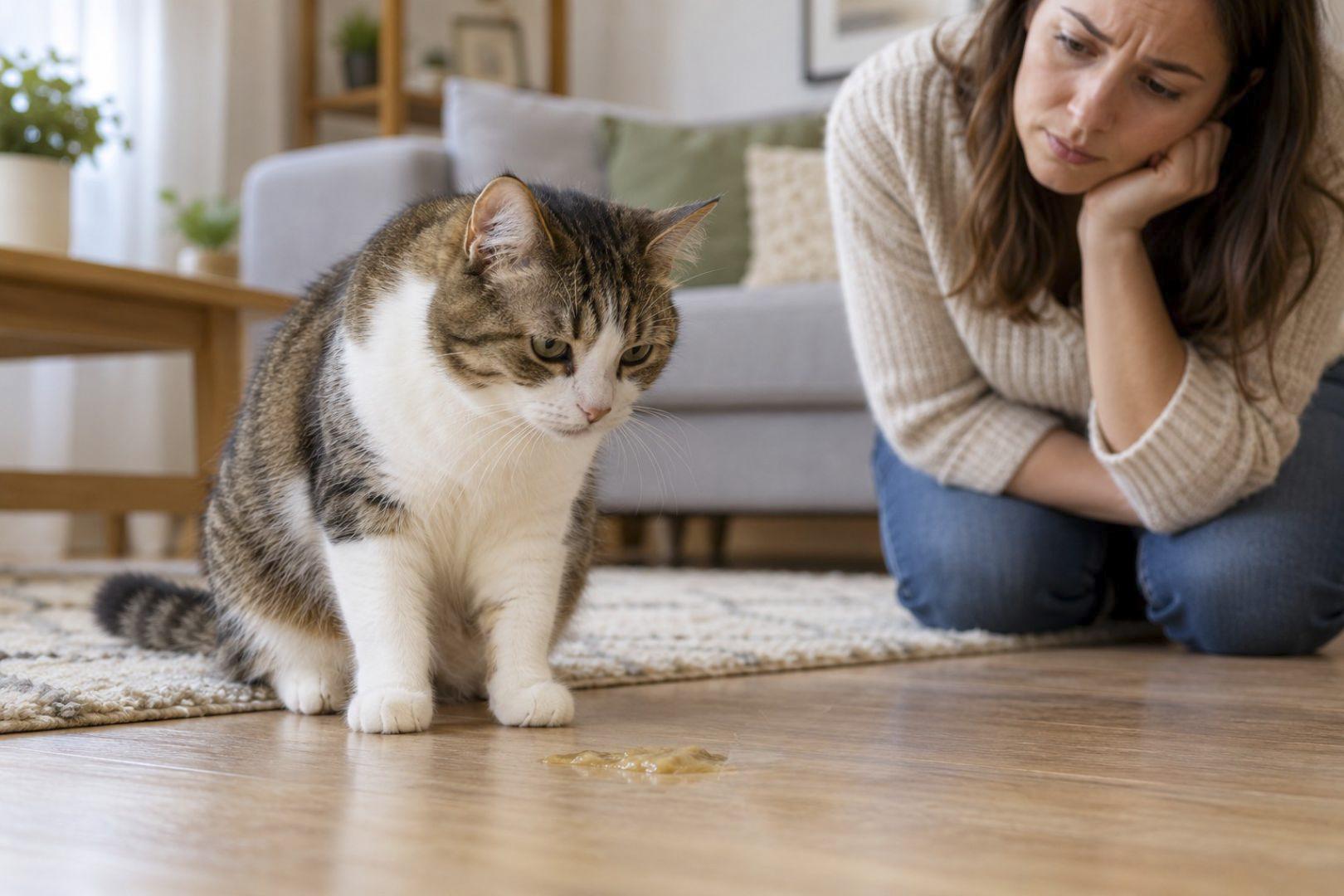
Many people who live with cats have seen them vomit ‘from time to time’. Often, the explanation comes almost automatically: ‘It must be a hairball’.
But this widespread assumption can mean that important signs go unnoticed.
Cats groom themselves every day, swallow fur and may bring up hairballs on occasion. However, frequent vomiting should not be considered normal. Nor should we assume that every episode of vomiting, retching or coughing is related to fur.
In this article, we explain when a hairball may be an isolated occurrence, when vomiting may indicate a health problem and which signs should prompt you to seek veterinary advice.
Why vomiting in cats is associated with hairballs
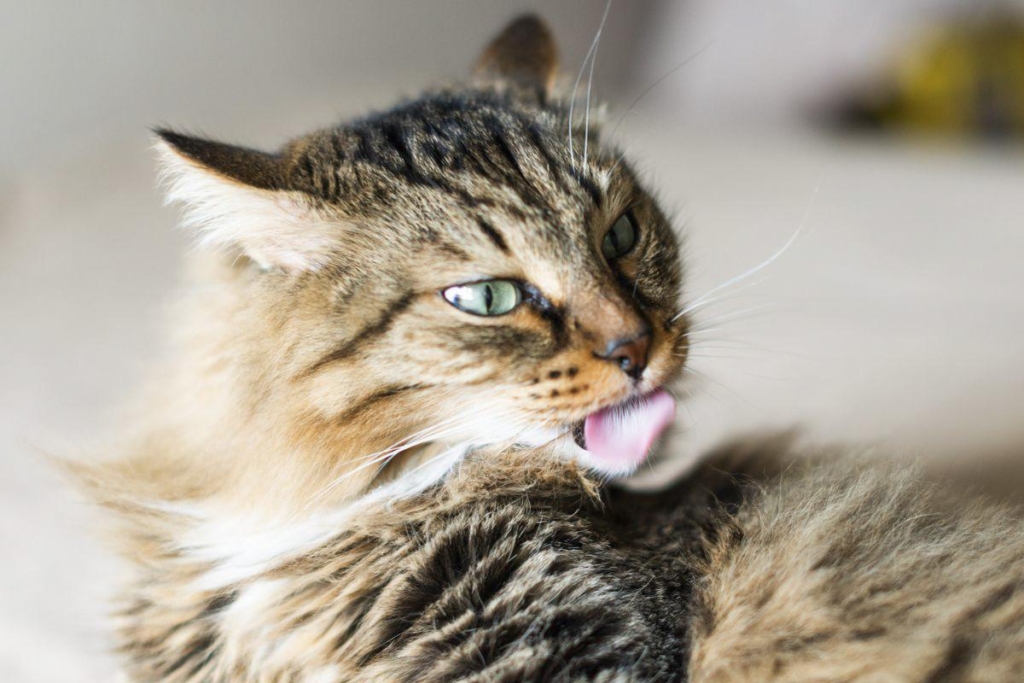
Cats spend a substantial part of their day grooming. Their tongues are covered in tiny papillae, which act like a natural brush, removing loose fur, dirt and debris from the coat.
Some of this fur is swallowed. In many cases, it passes through the digestive tract and is eliminated in the faeces. At other times, it can accumulate in the stomach and form a compact mass of fur known as a trichobezoar, or hairball.
When a cat brings up a hairball, it is usually elongated or cylindrical because it passes through the oesophagus on its way out. This is why many people recognise it as a damp mass of fur, sometimes mixed with digestive fluid, food or saliva.
So far, the explanation seems straightforward. The problem arises when any episode of vomiting is considered ‘normal’ simply because the patient is a cat.
Are hairballs normal in cats? When to be concerned
Hairballs can occur occasionally, particularly in long-haired cats, during shedding periods or in cats that swallow more fur than usual.
But just because it happens frequently does not mean it is normal.
A single hairball in a cat who is active, eating well, maintaining their weight and showing no other signs may not be a cause for concern. However, if your cat vomits often, repeatedly retches, loses their appetite or weight, or changes their behaviour, it is worth investigating what is happening.
Fur may be only part of the problem. The important question is not just ‘How can I help my cat bring up hairballs?’ but also:
Why is my cat vomiting?
Why is my cat swallowing so much fur?
Could there be an underlying digestive, skin, metabolic, or respiratory disease?
The big mistake: assuming all vomiting in cats is caused by hairballs
One of the most common myths in feline medicine is that cats vomit ‘for no reason’.
This belief can delay the diagnosis of significant illnesses. In some cases, people seek advice only after their cat has been vomiting intermittently for months or even years, because it has always been put down to hairballs.
But a cat should not be vomiting every week, every few days, or several times a month without a clear cause.
What is more, not everything that looks like vomiting actually is. What we see at home may be:
Vomiting.
Regurgitation.
Coughing.
Retching.
Nausea.
Difficulty bringing up a hairball.
A respiratory sign mistaken for a digestive problem.
Distinguishing between these is important because each points towards different possible causes.
Vomiting, regurgitation, coughing and retching in cats: important differences
When someone says their cat ‘vomits’, the vet needs to know exactly what happens before, during and after each episode.
How to recognise vomiting in cats
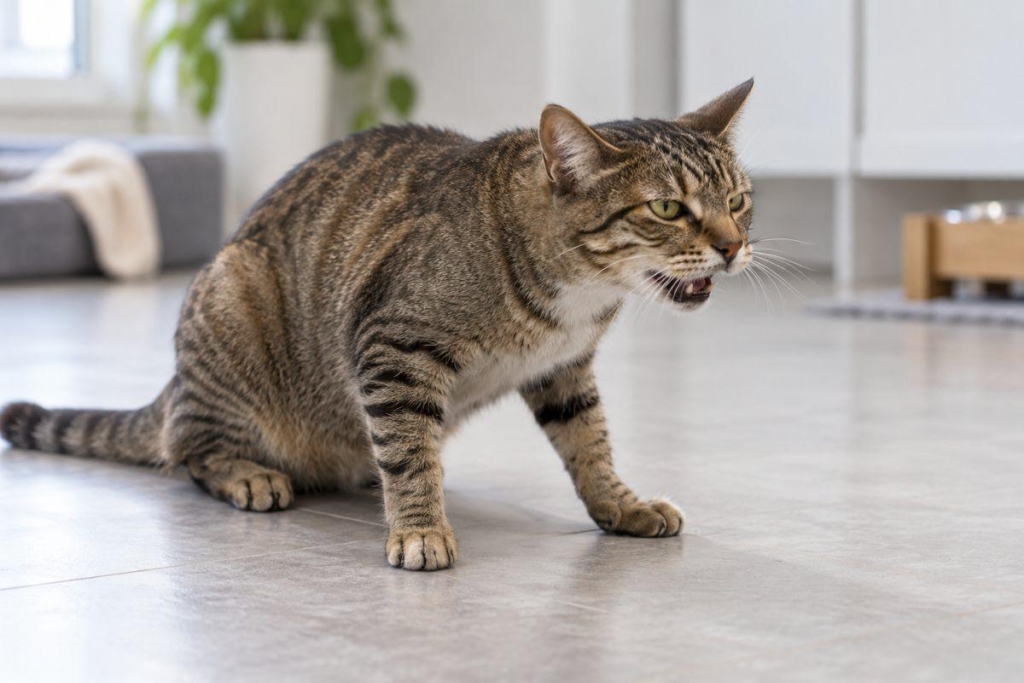
Vomiting is an active process. It is often preceded by nausea, salivation, abdominal movements, restlessness or vocalisation. The cat may crouch, contract their abdomen and bring up digested food, fluid, bile, foam or fur.
It may be associated with digestive, metabolic, infectious, dietary, toxic or systemic problems.
What is regurgitation in cats?
Regurgitation is generally more passive. Food comes back up without pronounced abdominal contractions, often shortly after eating. It may be largely undigested or tubular in shape.
It has different causes from vomiting and may be linked to oesophageal problems, eating too quickly, anatomical abnormalities or motility disorders.
Coughing in cats: when it looks like a hairball
Coughing can easily be mistaken for an attempt to bring up a hairball. Some cats lower their heads, stretch their necks and make repeated movements that the person watching interprets as retching.
But if no fur or digestive contents are brought up and the episode seems respiratory, other causes need to be considered, such as feline asthma, bronchitis, respiratory disease or cardiopulmonary problems.
Retching without bringing anything up: when to seek advice
Repeated retching without bringing anything up also warrants attention. It may occur with nausea, foreign bodies, digestive irritation, respiratory problems or genuine difficulty passing a hairball. If it persists, do not wait to seek advice.
How often is it normal for a cat to vomit? When to see a vet
There is no single frequency of vomiting that can be considered normal for every cat.
An isolated episode in a cat who is otherwise well and shows no other signs may not be serious. But when vomiting recurs, becomes more frequent or is accompanied by other changes, it is no longer an isolated event.
As a practical guide, it is advisable to consult your vet if:
Your cat vomits frequently.
They vomit several times in the same week.
They vomit several times in one day.
Hairballs appear repeatedly.
The pattern changes from what is usual for your cat.
They vomit more and more often.
They vomit and also lose weight, eat less or seem lethargic.
In cats in particular, chronic signs should not be treated as normal. Cats tend to hide discomfort, and many diseases can progress with subtle signs.
Distinguishing emergency warning signs from factors that increase vulnerability
Seek emergency veterinary care if your cat vomits repeatedly, cannot keep food or water down, has difficulty breathing, is severely lethargic or has abdominal pain, has blood in their vomit, or you suspect they have ingested a toxin or a foreign body.
For kittens, senior cats and cats with pre-existing conditions, seek an early veterinary assessment, as they may be more vulnerable to complications.
Do not wait 24 hours if your cat shows signs of serious illness.
Common causes of vomiting in cats: hairballs and other diseases
Hairballs are only one possible cause. Vomiting in cats can have many origins, which is why veterinary assessment should be tailored to each case.
Hairballs, or trichobezoars, in cats
These may form when a cat swallows more fur than their digestive system can normally eliminate. This can happen during shedding periods, in long-haired cats or when grooming is excessive.
Excessive grooming: when a cat swallows too much fur
If a cat licks themselves more than usual, they will swallow more fur. This behaviour may be associated with:
Fleas or other external parasites.
Allergies.
Dermatitis.
Itching.
Pain.
Stress.
Anxiety.
A lack of environmental enrichment.
Problems living alongside other cats.
Illnesses that cause general discomfort.
In these cases, the hairball is not the main problem but a consequence of something that is causing the cat to groom excessively.
Digestive problems that can cause vomiting in cats
Vomiting may be associated with gastritis, inflammatory bowel disease, food intolerances, allergies, constipation, gastrointestinal motility disorders, pancreatitis, intestinal parasites or foreign bodies.
In some cats, chronic vomiting may be the only visible sign for a long time.
Metabolic or systemic diseases associated with vomiting
In adult and senior cats, vomiting can also occur with diseases that do not necessarily originate in the stomach, such as:
Chronic kidney disease.
Hyperthyroidism.
Diabetes.
Liver disease.
Pancreatitis.
Electrolyte imbalances.
Inflammatory or infectious conditions.
That is why, when a cat vomits repeatedly, it is generally advisable to assess their overall health through a thorough examination and, depending on the case, additional tests.
Respiratory problems that can be mistaken for hairballs
Some cats with chronic coughing, feline asthma or bronchial disease may look as though they are trying to bring up a hairball, even when there is no digestive problem.
If your cat makes retching movements, stretches their neck, seems to cough and brings nothing up, it is important to record a video and show it to your vet.
Warning signs: when to see a vet if your cat is vomiting
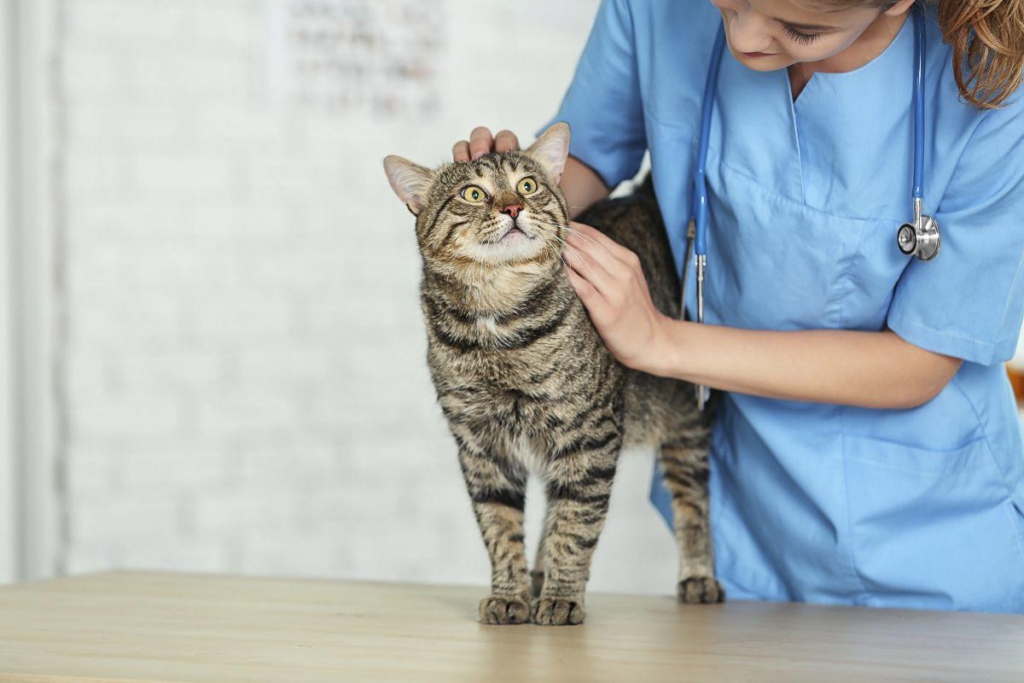
Consult a vet if your cat has any of the following signs:
They vomit several times in one day.
They vomit repeatedly.
They repeatedly retch without bringing anything up.
They stop eating or eat much less.
They seem lethargic or hide more than usual.
They lose weight.
They have diarrhoea.
They are constipated or do not pass faeces.
They have abdominal pain.
There is blood in their vomit or faeces.
They repeatedly bring up yellow fluid, foam or food.
They drink or urinate more than usual.
Their coat looks unhealthy.
They groom excessively or have areas of hair loss.
They seem to cough or have difficulty breathing.
They are a kitten, a senior cat or have a pre-existing illness.
They may have swallowed plants, string, toys, toxic substances or medicines.
In cats, not eating for more than 24 hours can also be concerning, particularly if accompanied by vomiting or lethargy.
Can a hairball cause a veterinary emergency in cats?
Yes, although this is not the most common outcome.
Most of the fur a cat swallows passes through the digestive tract and is eliminated in the faeces. However, some fur may accumulate in the stomach and form a hairball, which the cat may bring up by vomiting. In rare cases, a hairball may become lodged in the digestive tract and cause an obstruction.
An obstruction can cause:
Repeated vomiting.
Abdominal pain.
Loss of appetite.
Lethargy.
Constipation.
Dehydration.
Rapid deterioration in the cat’s overall condition.
If these signs occur, do not try to manage the problem at home with hairball paste, oil, laxatives or remedies that have not been recommended. Your cat needs a veterinary assessment.
What to do at home if your cat vomits once
If your cat vomits once, remains active, eats normally and shows no other signs, you can monitor them closely over the next few hours.
It may also help to:
Record the date and time of the episode.
Note what they brought up: fur, food, fluid, foam, bile or blood.
Check whether they have eaten too quickly.
Consider whether there have been any recent changes in diet.
Monitor whether they are passing faeces normally.
Check whether they are grooming more than usual.
Record a video if it looks like coughing, retching or another episode that is difficult to describe.
Brush them more frequently if they are shedding.
Prevent access to toxic plants, string, wool, elastic bands or small objects.
This record can be very helpful at a veterinary appointment. A video often helps distinguish vomiting from coughing, regurgitation or retching.
What not to do if your cat vomits
Although the intention is to help, some actions may make the problem worse or delay diagnosis.
Avoid:
Giving medicines intended for humans.
Giving antiemetic medicines without veterinary advice.
Giving oils or homemade laxatives.
Increasing the amount of hairball paste without knowing the cause.
Forcing food or water if your cat is vomiting repeatedly.
Waiting several days if they are not eating.
Assuming it is always a hairball.
Changing their diet abruptly.
Dismissing vomiting because your cat has ‘always been like that’.
If vomiting recurs, the aim should not be to mask the symptom but to understand what is causing it.
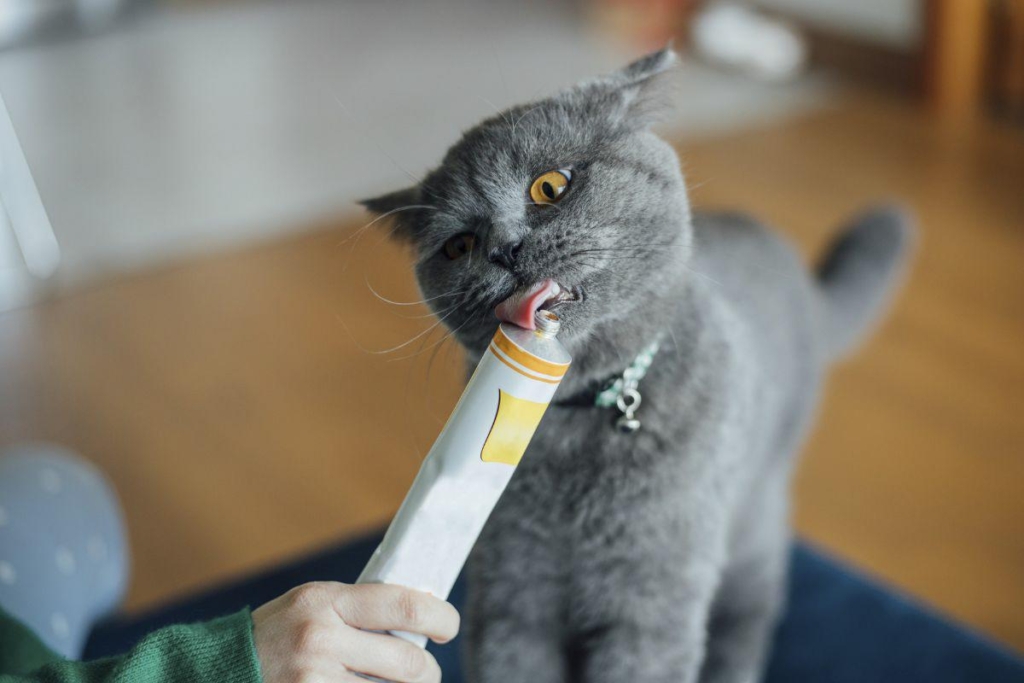
Does malt paste help with hairballs in cats?
Malt paste and other hairball management products are commonly used to help swallowed fur pass through the digestive tract. However, scientific evidence supporting the effectiveness of some of these products is limited, and not all cats need them. Veterinary advice remains important.
But not every cat needs it, not every cat responds in the same way, and it should not be used as the only response to frequent vomiting.
How often it is given and how much to use depend on the product, coat type, age, weight, diet and health of the cat. For cats with digestive, kidney or pancreatic disease, excess weight or therapeutic diets, it is best to seek advice before using it routinely.
Furthermore, if a cat vomits frequently, increasing the amount of malt paste may waste valuable time while the underlying cause remains undiagnosed.
Does cat grass help cats bring up hairballs?
Cat grass can be useful as environmental enrichment and may be a safer alternative for cats that tend to chew plants, provided it has been grown without pesticides or other harmful substances.
It generally comes from cereals such as wheat, oats, barley or rye. It is not the same as catnip, which is a different plant with different effects in some cats.
However, cat grass should not be regarded as a medical treatment for vomiting. Some cats may vomit after eating it, but that does not mean it is always beneficial or that we should encourage vomiting as a way of ‘purging’.
If your cat repeatedly vomits after eating grass, or has other symptoms, seek veterinary advice.
How to prevent hairballs in cats without treating vomiting as normal
Prevention is important, but it should be accompanied by a broader view of your cat’s health.
The following measures may help reduce hairball formation:
Brush your cat regularly.
Brush more often during shedding periods.
Use grooming tools suited to their coat type.
Avoid pulling at the fur or forcing brushing sessions.
Check the skin for wounds, dandruff, parasites or areas of hair loss.
Maintain appropriate parasite prevention.
Provide a suitable diet.
Ask your vet whether specific foods or fibre supplements could help.
Improve environmental enrichment.
Reduce sources of stress.
Consider pain as a possible factor if your cat’s grooming pattern changes.
Coat care is particularly important in long-haired cats. Senior cats, cats with obesity or osteoarthritis, and those with limited mobility may also need adapted care because they may groom less effectively or accumulate more loose fur.
If you would like more information about prevention, read our article on how to prevent hairballs in cats, where we explain brushing, malt paste, cat grass and other helpful care measures in greater detail.
What will the vet do if your cat vomits frequently?
The assessment will depend on your cat’s age, how often they vomit, what the vomit looks like, whether it contains fur, their diet, weight, appetite and any other clinical signs.
At the appointment, the vet may recommend:
Taking a detailed medical history.
A full physical examination.
Reviewing weight and body condition.
Assessing hydration status.
Blood tests.
Urine tests.
A faecal examination or parasite test, where appropriate.
An abdominal ultrasound scan.
X-rays if a foreign body or obstruction is suspected.
Specific tests based on age and symptoms.
A dermatological assessment if grooming is excessive.
A respiratory assessment if the episodes seem to involve coughing.
A dietary trial if food intolerance or allergy is suspected.
Endoscopy or advanced diagnostic tests in selected cases.
The aim is not to carry out tests for their own sake, but to identify the cause and prevent a chronic problem from progressing unnoticed.
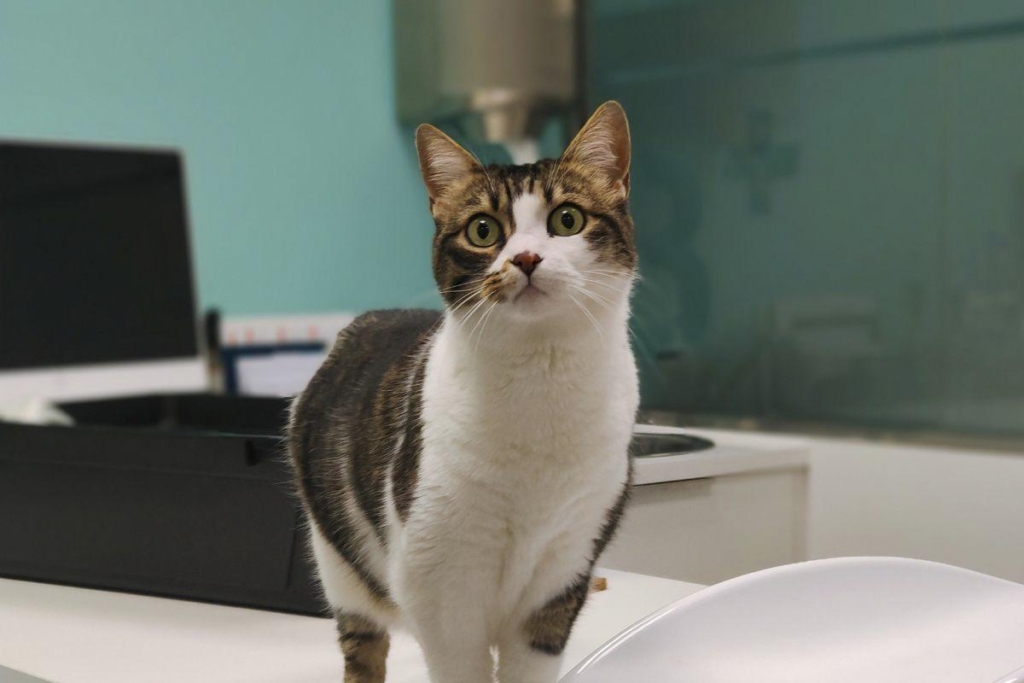
At Balmesvet, we assess whether your cat is vomiting because of hairballs or another cause
At Balmesvet, we have a team specialising in feline medicine and facilities designed to reduce stress for cats during visits, examinations and hospitalisation.
We know that many cats experience stress when leaving home, which can lead families to delay a visit. That is why we follow Cat Friendly and Fear Free protocols, adapting our handling to each patient to make the experience as calm as possible.
If your cat vomits frequently, retches, loses weight, eats less or you are unsure whether they are actually bringing up hairballs, we recommend arranging a veterinary assessment.
In many cases, identifying the problem early may allow treatment to start sooner, improve the cat’s wellbeing and help prevent complications.
Frequently asked questions about vomiting and hairballs in cats
Is it normal for my cat to vomit hairballs?
It can happen occasionally, but it should not be frequent. If your cat regularly brings up hairballs, it is worth checking for excessive grooming, digestive disease, skin problems, stress or another cause.
How often can a cat vomit hairballs?
There is no normal frequency that applies to all cats. A single episode may not be concerning if your cat is otherwise well, but repeated vomiting, even when it contains fur, warrants veterinary advice.
My cat retches but brings nothing up. Could it be a hairball?
Possibly, but it could also be nausea, coughing, a respiratory problem, digestive irritation or a foreign body. If the retching recurs or your cat is lethargic, it is advisable to see a vet.
Can coughing in cats be mistaken for a hairball?
Yes. Some coughing cats look as though they are trying to bring up a hairball. If your cat stretches their neck, makes repeated movements and brings nothing up, record a video and speak to your vet.
Does malt paste prevent vomiting caused by hairballs in cats?
Malt paste may help some cats prone to hairballs, but it should not be the sole solution when vomiting is frequent. Before increasing how much you give, it is better to establish why your cat is vomiting.
Is cat grass good for hairballs?
It can be useful as enrichment and a safe alternative for chewing plants, but it is not a medical treatment for vomiting. If your cat often vomits after eating grass, seek veterinary advice.
When is vomiting in my cat a veterinary emergency?
Seek urgent veterinary care if your cat vomits many times, is not eating, is lethargic, is in pain, is not passing faeces, has blood in their vomit or faeces, has difficulty breathing, may have ingested a toxin or foreign body, or is a kitten, senior cat or patient with a pre-existing illness.
Cats do not vomit ‘for no reason’: when to seek veterinary assessment
Hairballs exist and may be part of life for some cats, but they should not become the automatic explanation for every episode of vomiting.
A cat who vomits frequently needs to be assessed. The cause may be straightforward, but vomiting can also be the first sign of digestive, skin, metabolic or respiratory disease.
Observing your cat, recording episodes and seeking advice promptly can make a substantial difference.
At Balmesvet in Barcelona, we can help you find out whether your cat is occasionally bringing up hairballs or whether something else is going on.
Balmesvet Veterinary Hospital in Barcelona
| Details | Information |
| Address | Calle Balmes 205, 08006 Barcelona |
| Telephone | 931 173 173 |
| atencioclient@balmesvet.com | |
| Appointments | 8:30–20:00 |
| Emergency care / Hospitalisation | 24/7 |
Need help? Call us or request an appointment. 24/7 emergency veterinary care in Barcelona.

 Barcelona, C/ Balmes nº 205
 931 173 173
 info@balmesvet.com