


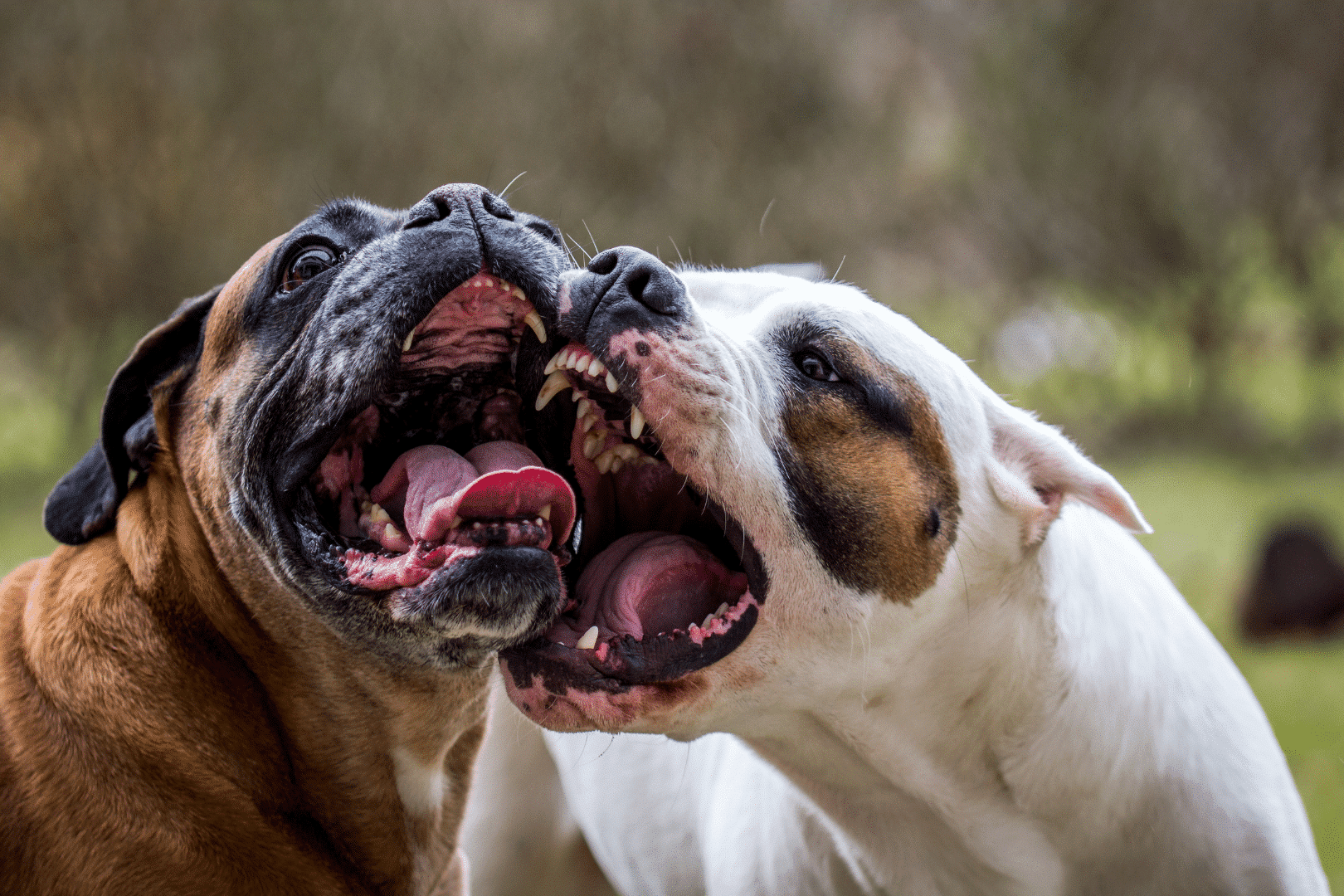
Dog fights can happen in seconds, without warning. For those of us who share our lives with a canine companion, witnessing an attack is one of the most distressing situations we can experience. Beyond the shock, the concern for our dog’s health, visible or internal injuries, and legal implications make us realize that it is not enough to simply keep calm: we must act quickly and judiciously.
This article is designed to help you step by step if another dog has attacked your dog. We explain what to do from the first moment, how to safely administer first aid, what current legislation says in Catalonia and the city of Barcelona, how to claim liability, and how to emotionally support your dog after the trauma.
What to do during an attack: how to safely separate the dogs
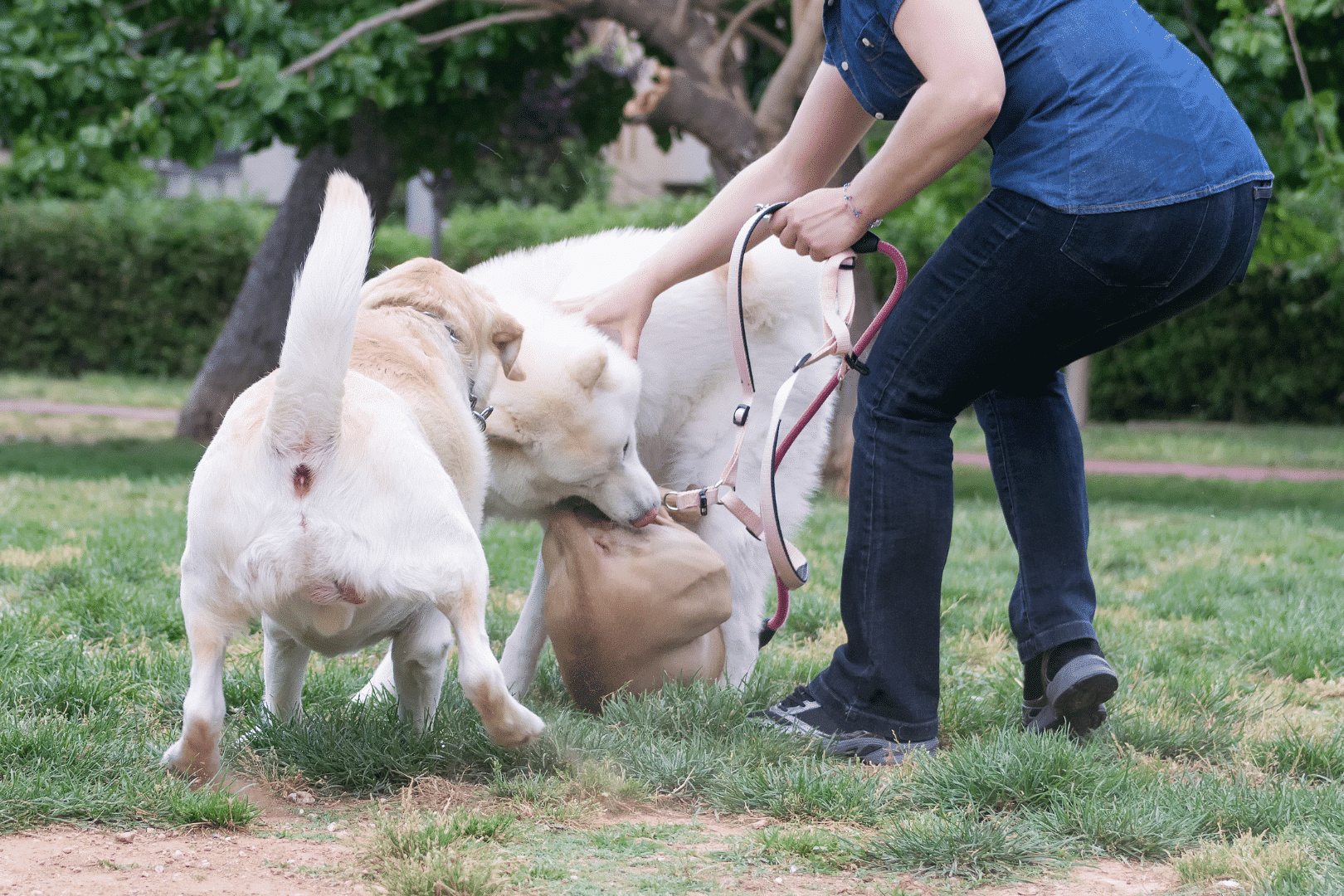
Separating dogs can be very difficult, especially when the fighting is intense. At times like these, it is essential not to act impulsively or put yourself in danger.
Do not put your hand between the dogs or grab them by the collar. These are dangerous moves that could result in you being bitten, even by your own dog, who may be in a state of panic.
If possible, ask for help and use these strategies:
- Throw water on the dog or make a loud noise to divert its attention.
- Hold the aggressive dog by its hind legs, lifting them firmly but gently (wheelbarrow method).
- Call your dog if you have good obedience training.
- If the attacking dog is not on a leash, try to restrain it once the dogs are separated.
Once the situation is under control, keep your dog calm, prevent it from moving around too much, and visually check its general condition. Do not attempt to perform any deep wound care at home, but you can apply some basic first aid if you have the knowledge and means to do so.
First aid after a bite: what to do before going to the vet
Although you should always go to the vet as soon as possible, there are some measures you can take in the meantime, if your dog is calm and you can handle them safely:
- Gently wash the visible area with saline solution or warm water and mild soap. Never use alcohol or hydrogen peroxide: they are irritants and hinder healing.
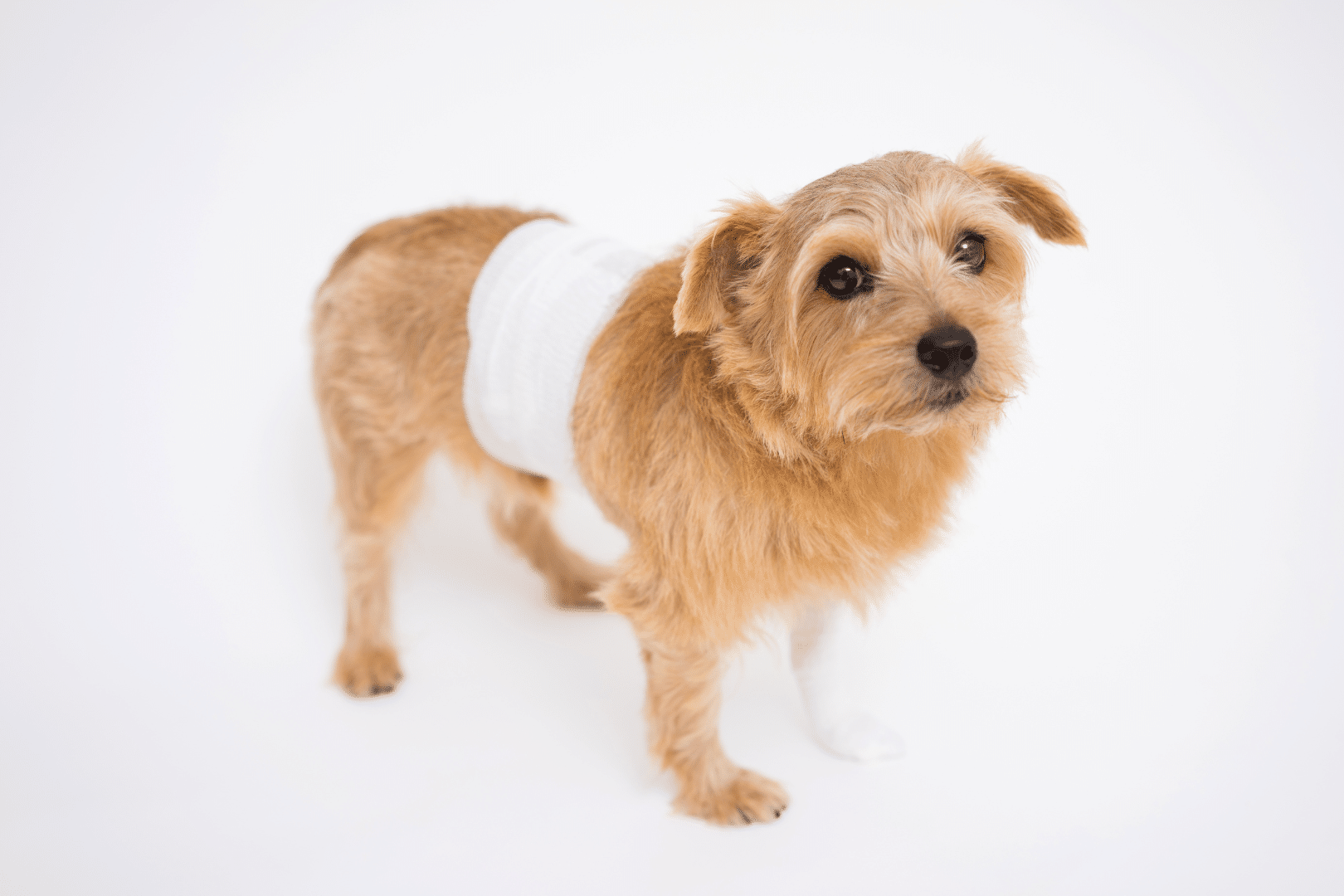
- If there is bleeding, cover it with gauze or a clean cloth and apply gentle pressure.
- Prevent the dog from licking the wound. You can use a cone collar if you have one.
- Do not apply ointments, betadine, or topical antibiotics on your own, unless previously instructed to do so by a veterinary professional.
Not all wounds are visible. Some bites, especially deep ones, can damage muscles, blood vessels, or even internal organs without leaving any obvious external signs. That is why it is essential to always go to a veterinary clinic, even if the wounds appear to be minor.
Veterinary care after the bite: tests, treatments, and follow-up
At Balmesvet, when we treat a dog that has been bitten, the first thing we do is carry out a complete clinical assessment, beyond the most visibly obvious injuries. The examination may include:
- Shaving of the affected area to detect hidden wounds.
- Imaging tests (X-rays, ultrasounds) if internal damage is suspected.
- Assessment of signs of shock, bleeding, or acute pain.
When should a bite be sutured? Risks and exceptions
This is one of the most controversial points. In general, bite wounds are not sutured immediately because they are contaminated with bacteria from the other animal’s mouth. Closing an infected wound can lead to abscesses or serious infections.
However, there are exceptions. A veterinarian may decide to partially close a wound or do so under specific conditions:
- With drainage placement.
- After thorough surgical cleaning.
- In areas where the wound cannot be left open due to functional risk.
Each case should be assessed individually.
Usual treatment: antibiotics, analgesia, dressings and pain control
- Broad-spectrum antibiotics.
- Painkillers and anti-inflammatories.
- Regular check-ups, at the clinic or at home.
- Cone collar to prevent licking.
- Rest and a calm environment.
It is essential to follow all veterinary instructions and attend scheduled check-ups to ensure that the wound heals properly.
Legal liability in Catalonia and Barcelona: who is responsible for a bite?
In Catalonia, liability for damage caused by a dog falls directly on its legal guardian, regardless of whether the dog was off the leash, had broken free, or the attack was “accidental.”
Article 1905 of the Spanish Civil Code establishes that:
“The owner of an animal, or the person who makes use of it, is liable for any damage it may cause, even though it may have escaped or run away.”
This rule is backed up by Legislative Decree 2/2008 on animal protection in Catalonia, which also says that owners are responsible if their pets cause harm to other animals or people.
If the attacking dog is a PPP (potentially dangerous dogs): licenses, muzzle and legal obligations
In the case of potentially dangerous dogs (PPP), the regulations are even stricter. State law (Law 50/1999 and RD 287/2002) and Barcelona municipal regulations state that:
- They must have a license and mandatory civil liability insurance.
- They must always wear a muzzle and be kept on a short leash (less than 2 meters) in public spaces.
- They cannot be let off the leash under any circumstances, even in dog recreation areas.
If a bite occurs and it is proven that the dog was not wearing a muzzle or was off-leash, the owner may face administrative and even criminal charges, in addition to bearing the financial cost of the damages.
Barcelona regulations: responsible ownership and penalties for non-compliance
The Barcelona City Council Ordinance on the Protection, Ownership, and Sale of Animals (BOPB, 2003) establishes in Article 11 that:
- All dogs must be kept on a leash in public areas, except in areas specifically designated for dogs to run free.
- Under no circumstances are dogs allowed in children’s play areas, whether on a leash or off.
- Failure to comply may result in financial penalties.
If your dog was loose: how it affects liability and insurance
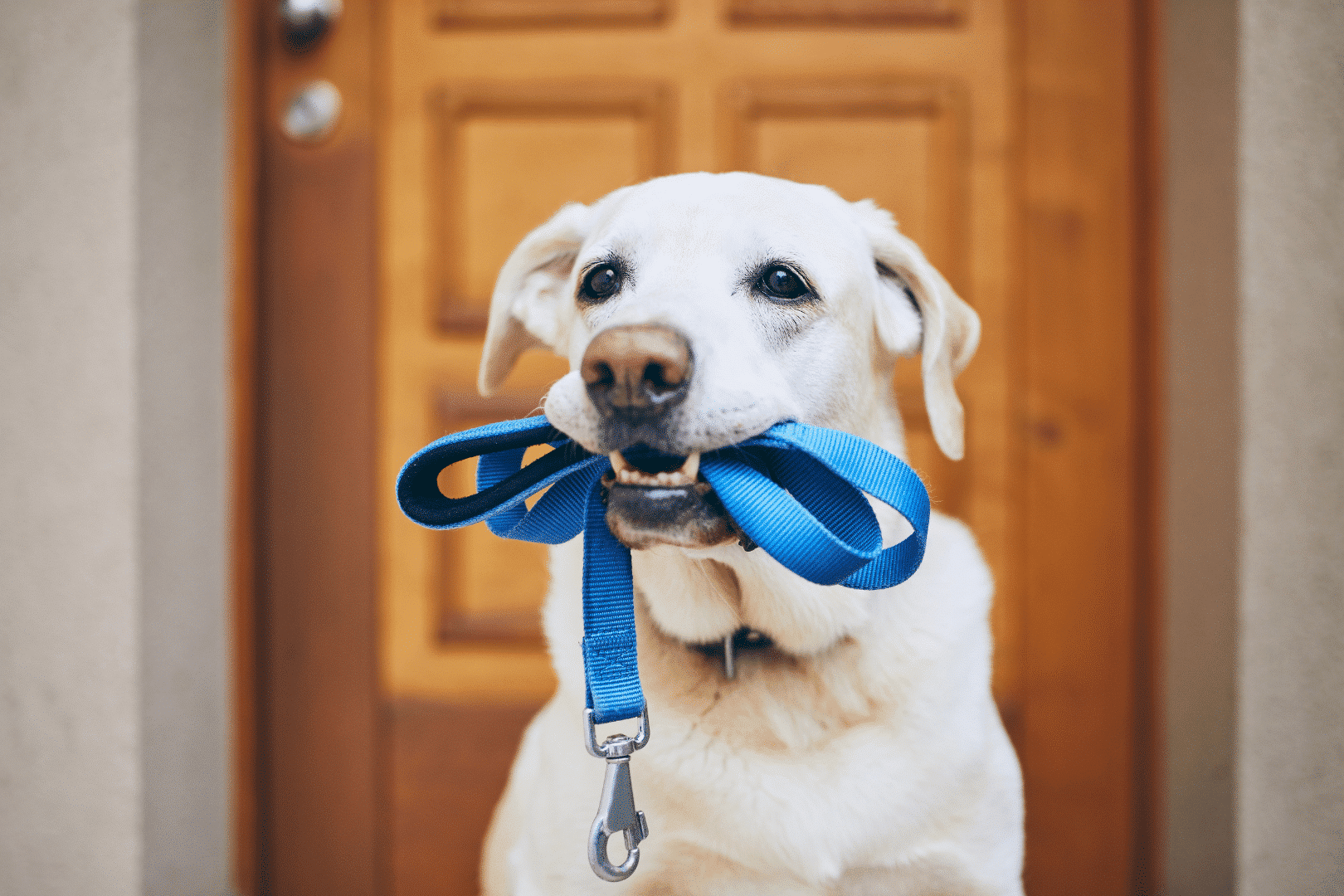
This is an important point. If your dog was off-leash outside of a permitted area and was bitten, the responsibility for the attack may not fall entirely on the other owner. Even if the other dog bites, if your dog approached off-leash or invaded the other dog’s space, it may be considered shared liability.
This does not mean that you cannot file a report, but:
- Compensation may be reduced.
- The burden of proof will be greater.
- The other dog’s insurance may refuse to pay if there are violations on both sides.
That is why it is essential to gather as much information as possible at the time of the incident: photos, information about the other dog, witnesses, and a police report.
Legal steps after a bite: how to file a claim and what compensation to seek
- Identify the owner of the aggressive dog: name, phone number, address, regular veterinarian, microchip number if possible.
- Contact the Barcelona Municipal Police: they can file a report of the attack.
- Collect evidence: photographs of the injuries, veterinary bills, testimonies, medical reports.
- Report the owner if they do not cooperate, especially if the dog was off the leash, without a muzzle, or if the attack was repeated or serious.
- Claim damages amicably or through the courts:
- Extrajudicial procedure (registered letter with lawyer).
- Civil procedure (lawsuit for strict liability).
Veterinary expenses, physical or functional impairments, and, in some cases, damages for pain and suffering can be claimed if the dog dies.
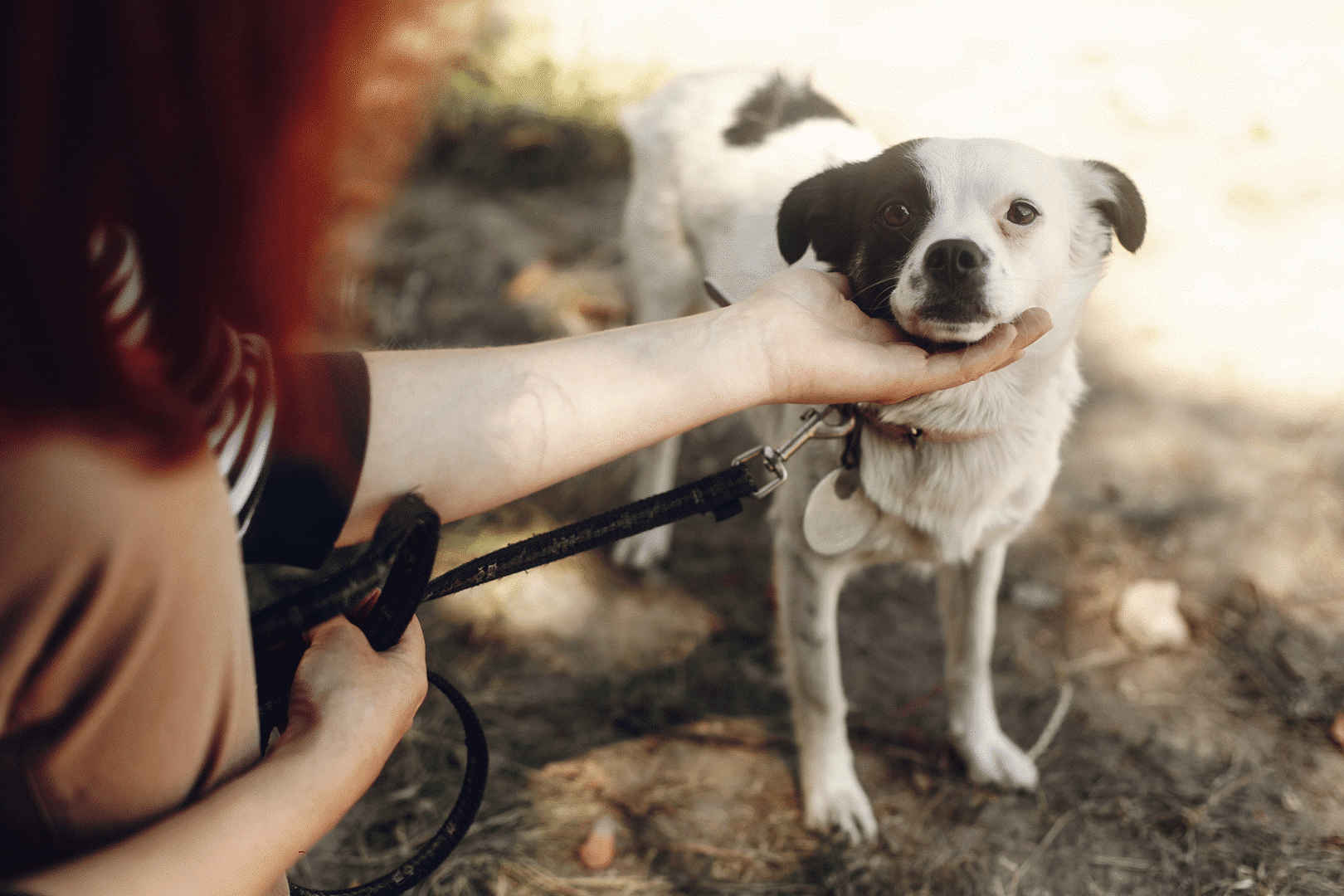
Emotional aftermath of assault: signs of stress and how to help
After an attack, your dog may suffer emotional side effects. Fear, distrust, or reactive behavior are common responses after a traumatic episode.
Check if:
- They avoid going outside.
- They are tense or aggressive toward other dogs.
- They exhibit changes in their general behavior (listlessness, hypervigilance, fear of physical contact).
You can help by:
- Avoiding the area of the incident for a while.
- Reinforcing their safety with gentle walks, games, and routines.
- Consulting with a clinical animal behaviorist if fear or reactivity persists.
At Balmesvet, we collaborate with canine behavior professionals who can help you design an emotional recovery plan.
If your dog has bitten: how to act responsibly and within the law
If your dog has attacked another dog, you must act responsibly:
- Offer immediate help to the other caregiver and accompany them to the vet if necessary.
- Provide your details, veterinary records, and insurance information if you have it.
- Cooperate with the authorities if a report is required.
Don’t forget that in Barcelona, your dog must always be on a leash outside of specified recreation areas. And if it is a PPP, you must strictly comply with all legal requirements.
Emergencies and comprehensive support: when to go to a referral veterinary hospital
A dog bite is a difficult situation, but it can be handled calmly, responsibly, and with the proper advice. Prompt veterinary care, proper documentation of what happened, and knowledge of the current regulations are essential to protect both your dog and yourself.
At Balmesvet, we are prepared to care for your canine companion in any emergency situation. Our veterinary emergency team works 24 hours a day, every day of the year, and has an Intensive Care Unit, its own laboratory, and specialists in all medical areas, including animal behavior and pain management.
In addition, we are a veterinary hospital accredited as a Fear Free clinic, which means that we strive to make every visit, even in traumatic situations, as calm and respectful as possible. We know that after an attack, your dog’s emotional impact also needs attention. Our team is trained to recognize fear, anxiety, and stress, and to apply strategies that help your dog feel safe, accompanied, and well cared for from the very beginning.
If you need urgent medical attention or emotional support after an attack, you can count on us.
Balmesvet – Leading veterinary hospital in Barcelona
| Data | Information |
| Address | Carrer Balmes 205, 08006 Barcelona |
| Parking | Balmes 200 (30 min consultas; hasta 1 h urgencias) |
| Phone | 931 173 173 |
| atencioclient@balmesvet.com | |
| Consultations | 8:30–20:00 |
| Emergency/Hospitalization | 24/7 |
Need help? Call us or make an appointment. 24/7 emergency services available.
 Barcelona, C/ Balmes nº 205
 931 173 173
 info@balmesvet.com