


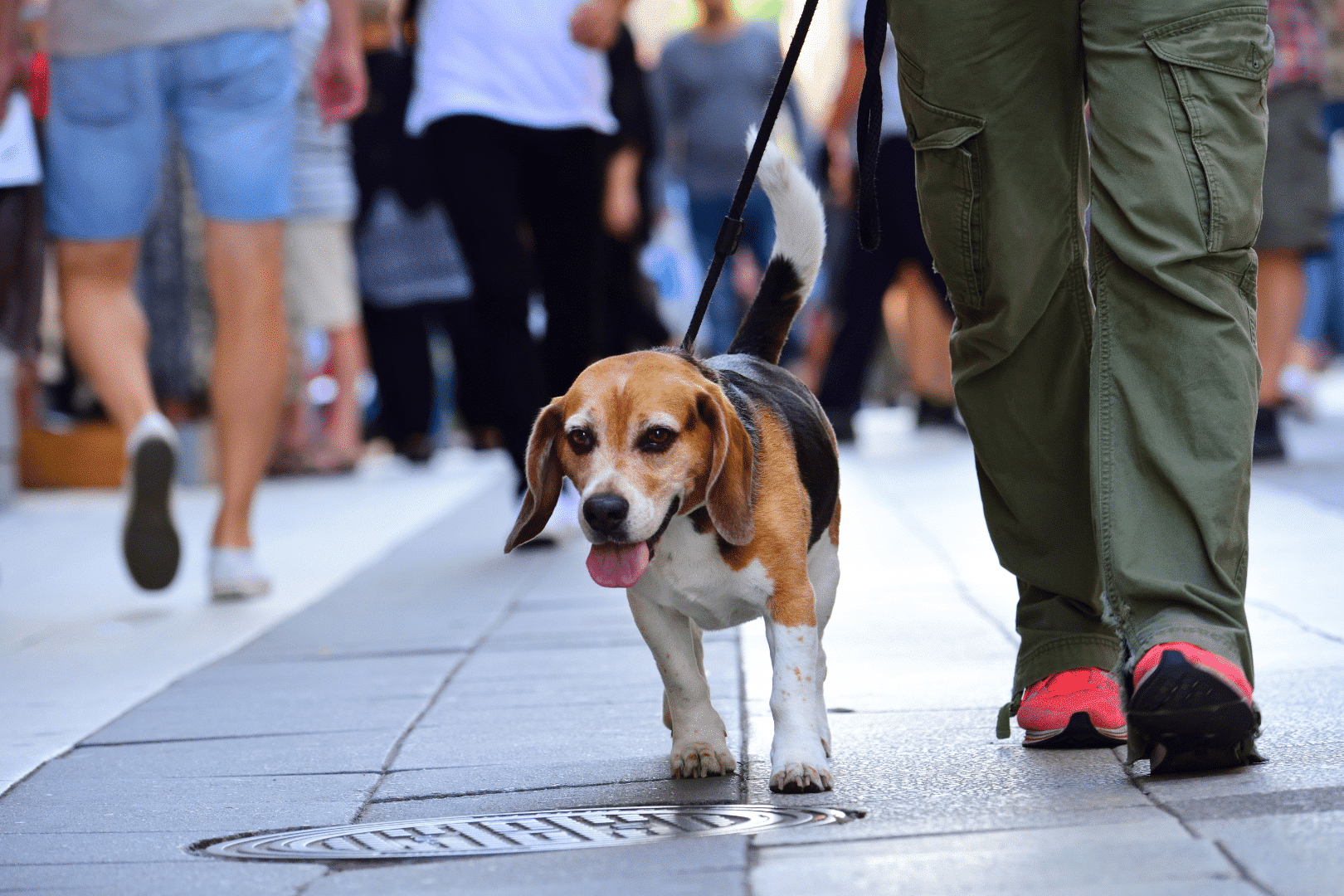
Getting around town with a dog involves making small decisions every day, such as choosing the least busy sidewalk, avoiding crowded terraces, and, above all, deciding where to let your companion relieve themselves without disturbing anyone. When the only options are sidewalks, storefronts, and street corners, this can become a source of contention with other residents and business owners.
To offer a straightforward and respectful alternative, Barcelona began installing Urinaris Urban Dog stations – specifically designed for dog urination, easy to identify, hygienic, and simple to keep clean. But there are still not enough of them. The more there are, the easier it will be to teach dogs to seek them out naturally, as part of their walking routine.
In this blog, we explain exactly what Urinaris Urban Dog urinals are, where the idea came from, where you can find them in Barcelona, and how to use them correctly.
What are Urban Dog Urinals and what are they used for?
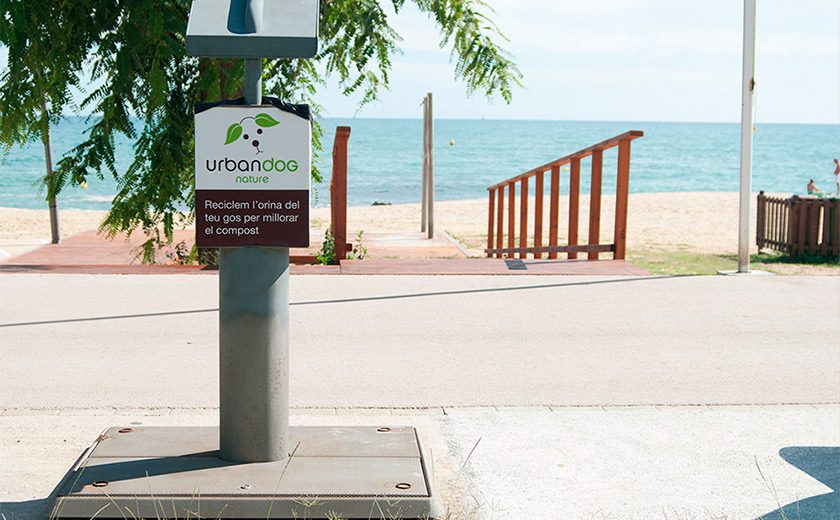
Urinaris Urban Dogs are structures installed on public streets specifically designed for dogs to urinate in a hygienic and contained manner. They are streetside fixtures, usually vertical or creatively shaped, made from materials that are easy to clean and designed to withstand frequent use.
Unlike random peeing on corners, lampposts, or building facades, these dog urinals help provide a more hygienic way for our canine companions to relieve themselves, while protecting street infrastructure and reducing urine buildup in inappropriate areas.
Origin of the Urban Dog Urinaris: how the idea was born and how it evolved
This idea arose in response to a growing need in urban environments: to find sustainable solutions that improve harmony between dogs and people. With more and more dogs living in cities such as Barcelona, the challenges in terms of cleanliness, public civility, and upkeep of public spaces have also increased.
Inspired by examples that have been successfully implemented in other European cities, some city councils, urban designers, and animal rights groups have started to back this idea as a practical, aesthetically pleasing, and smart solution. Urinaris Urban Dog is part of a new vision of a pet-friendly city, where dogs are seen as part of city life and are treated as responsible members of the community.
Dog urinals in Europe: from the French model to the Czech psi pisoár
The idea of creating “bathrooms” for dogs did not originate in Barcelona. More than forty years ago, Paris was already experimenting with urban remedies to prevent sidewalks and facades from becoming soaked in urine.
- 1980s, Paris: the first canisites appeared, small fenced-in areas with sand where dogs could relieve themselves. Although rudimentary, they marked the beginning of a more civilized approach to dog ownership in the city.
- 1990s, Brussels: the Belgian capital implemented a network of dog toilets connected to the sewer system, which were marked on official maps. The measure was accompanied by the obligation to carry poop bags.
- 2014, Spain: in Sant Joan Despí, entrepreneur Nico Jardí patented Urban Dog Nature, a stainless steel urinal with vegetable compost that converts urine into fertilizer. The invention spread to several Catalan and Basque municipalities and finally reached Barcelona.
- 2015, Prague: The Czech capital installed psí pisoáry, metal posts measuring just 40 centimeters high with slots connected directly to the sewage system. The aim was to protect green areas from excessive urination.
- 2023, Brno and Pilsen: Several Czech cities adopted perforated concrete blocks, also called psí pisoár. Their porosity retains some of the urine, keeps the scent for dog marking, and requires minimal maintenance. District 3 in Pilsen purchased twenty-four units in a single order.
- 2025, Amsterdam: The Dutch city held a public consultation on the installation of urinoir paaltjes, posts connected to the sewer system in neighborhoods with a high dog population.
This European tour demonstrates that the need for hygienic and sustainable services for dogs is a common challenge and that the Catalan version of Urban Dog has successfully incorporated the principles of the circular economy into the original concept.
These are the Urban Dog Urinals from Barcelona: design, materials, and operation
The commercial version installed in the city of Barcelona is compostable and combines:
- Robust stainless steel structure to resist corrosion and constant use.
- Upper tray with a grid that allows urine to pass through but prevents the plant substrate from scattering.
- Removable bottom drawer where mulched pruning clippings are collected. When the nitrogen in the urine saturates the mixture, municipal workers remove it and take it to the garden center to complete the composting process.
- The substrate is replaced every six weeks in summer and every three months in winter.
- Each post can be fitted with a small advertising panel to help finance maintenance.
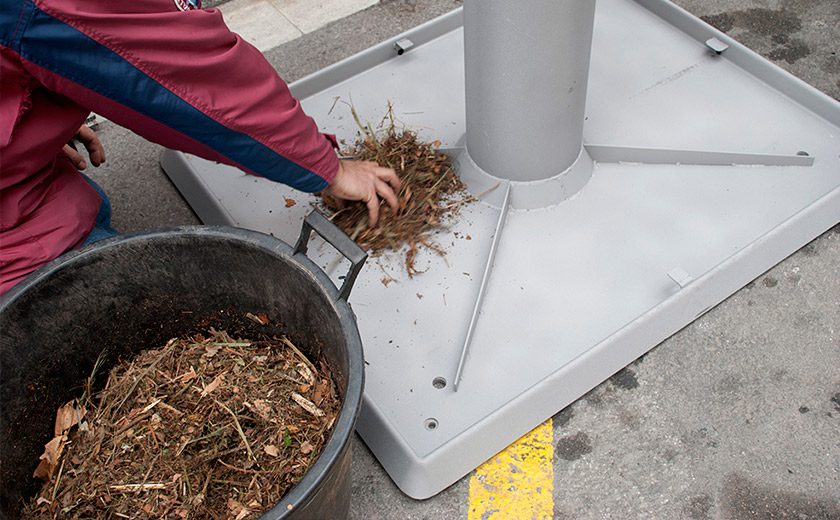 The idea was sparked in Sant Joan Despí, when Nico Jardí was confronted by a passerby because his dog Pluto was urinating on a tree. Realizing that there were no appropriate spaces, Jardí designed a prototype using sand, which he later replaced with shredded plant trimmings; these absorbed the nitrogen from the urine and, after a few weeks, turned into nutrient-rich compost. This is how Urban Dog Nature was born, patented in 2014 and trialed in half a dozen Catalan and Basque municipalities.
Urban Dog Urinal Location: Where to Find Them in Barcelona
Although they are not yet widespread throughout the city, some districts of Barcelona have begun to install the stations in specific areas. They can be found in places where there is a high volume of dog traffic or where there have been recurring problems with urine buildup.
Some examples of locations where Urinaris Urban Dog or similar projects already exist:
- Eixample district: on streets such as Enric Granados or the Consell de Cent area, as part of the superblock plan.
- Gràcia: next to small parks and enclosed squares, such as Plaça del Sol.
- Sants-Montjuïc and Poblenou: where there are pilot projects for dog-friendly street fixtures.
In addition, in neighborhoods with a high dog population density, such as Sant Antoni or El Born, some businesses and neighborhood associations are promoting these devices on their own initiative, with simpler or adapted versions.
User guide: how to teach your dog to use the Urban Dog Urinals
Although its use may seem intuitive, it is important to follow some recommendations so that the Urinari Urban Dog works effectively:
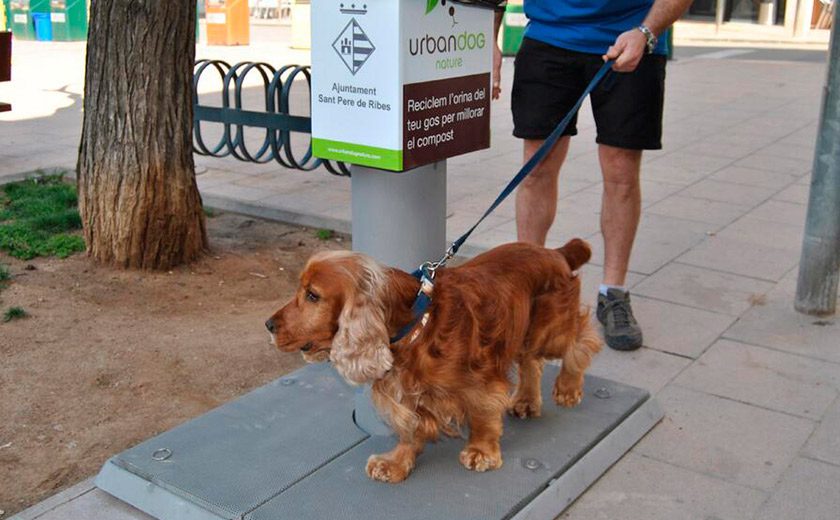
- Bring your dog on a leash to the urinal and let them sniff it.
- Gently encourage them to urinate there, especially if it’s their first time.
- Reward them if they pee in the right place. This will positively reinforce this behavior.
- Clean with water if necessary: although these elements are designed to facilitate drainage and self-cleaning, carrying a bottle of water is still good common courtesy.
- Do not leave excrement: if your dog also poops in the area, always pick it up with a bag, as you would in any public space.
Benefits of Urban Dog Urinals for the city, dogs, and their caregivers
Embracing this urban approach with your dog has multiple benefits:
- Protection of street furniture: in Sant Joan Despí, repairs due to urine corrosion were estimated at €36,000 per year before Urban Dog was implemented.
- Reduced odors: plant debris acts as a biofilter; Czech urinals retain part of the urine, preventing leaks.
- Circular economy: the urine-soaked substrate increases its iron content by up to 1,200% and doubles its calcium content, improving the quality of compost for municipal parks.
- Civility and harmonious coexistence: by providing a designated spot, responsibility is encouraged and the good image of dog walkers is boosted. Brussels has 70 marked dog toilets and fines for not picking up excrement.
By doing this, we’re helping to make the city cleaner and more civic-minded, protecting street furniture and facades from stains and odors. We’re improving how dog owners are seen by society by showing that we’re responsible.
Barcelona dog-friendly: how Urban Dog Urinaris improves coexistence
Barcelona is gradually moving towards a more inclusive city model for our canine companions. Initiatives such as Urinaris Urban Dog are just one more piece of the puzzle in the change that is taking place to make coexistence between humans and dogs more harmonious and respectful.
At Balmesvet, as Barcelona’s leading veterinary hospital, we support any and all initiatives that improve city life for dogs and their owners. We believe that a city that is better adapted to these needs is also a healthier and more humane place for everyone.

Want more Urban Dog Urinals in your neighborhood? Here’s how to promote their installation
If you think it would be beneficial to have one of these urban urinals in your area, you can:
- Talk to your neighborhood association or neighborhood council.
- Send a request to the city council through the Decidim Barcelona platform.
- Share this information to raise awareness among more dog owners about its use.
Small actions can make a big difference in how we share and care for our city.
Did you find this interesting? Share this blog with other dog owners in Barcelona. And if you have any questions about your dog’s behavior, vet visits, or any aspect of their health and well-being, don’t hesitate to ask us. We are located at Balmes 205, Barcelona, with 24-hour emergency service and general care from 8:30 a.m. to 8:00 p.m. Tel. 931 173 173.
| Data | Information |
| Address | Carrer Balmes 205, 08006 Barcelona |
| Parking | Balmes 200 (30 min consultas; hasta 1 h urgencias) |
| Phone | 931 173 173 |
| atencioclient@balmesvet.com | |
| Consultations | 8:30–20:00 |
| Emergency/Hospitalization | 24/7 |
Need help? Call us or make an appointment. 24/7 emergency services available.


 Barcelona, C/ Balmes nº 205
 931 173 173
 info@balmesvet.com