


If every time you serve your cat’s food it seems like a race for speed and within seconds they’ve devoured their meal, you may have a little gobbler in the house. Although it may seem like a simple habit, if your cat eats quickly can lead to health problems, from regurgitation to digestive disorders to being overweight. In this article, we’ll explore the most common causes of this behavior and give you effective strategies to help your cat eat more calmly.
How do you know if your cat eats too quickly?
Some signs that your cat is eating at high speed include:
- Finishes its food in less than two minutes.
- Does not chew the food and swallows it directly.
- Vomits or regurgitates shortly after eating.
- Passes gas frequently.
- Asks for food constantly as if he/she is never satisfied.
If you notice any of these signs, it’s time to take action to improve their well-being and prevent future health problems.
Why does your cat eats so quickly?
The reasons behind this behavior can range from medical causes to emotional or environmental factors. These are the most common ones:
1. Stress or competitiveness with other cats.
If your cat lives with other felines, it may feel the need to eat quickly to avoid having its food taken away. Cats are not used to eating in groups, so sharing a space with other cats can generate anxiety and encourage this behavior.
- Feed each cat in a separate area, preferably in different rooms or with visual barriers between them.
2. Lack of stimulation and boredom
Cats need environmental enrichment to keep them active and mentally stimulated. If a cat does not have enough games, hobbies or interaction with its guardian, it may view food as its only source of entertainment and devour it eagerly.
- Make sure they have interactive toys, daily playtime and environmental enrichment options, such as climbing towers or interactive feeders.
3. Past experiences of food shortages
Rescued cats or those that have previously lived in the street may develop compulsive eating behavior. If they have had difficulty getting food in the past, they may eat quickly out of fear that it will disappear.
- Establish a structured feeding routine so that your cat understands that it will always have access to its food at regular times.

4. Underlying medical problems
Some medical conditions can increase appetite and cause your cat to eat faster than normal. Among them:
- Hyperthyroidism
- Diabetes mellitus
- Exocrine pancreatic insufficiency
- Certain types of intestinal cancer
- Intestinal parasites
- Irritable bowel syndrome
If your cat exhibits excessive hunger along with weight loss, changes in coat or abnormal behavior, consult a veterinarian to rule out disease.
5. Inadequate diet or nutritional deficiencies
If your cat’s nutrition is not complete or does not meet its needs, it may feel constantly hungry. Low-protein, high-carbohydrate diets can create a temporary feeling of fullness without providing essential nutrients.
- Make sure their diet is balanced and appropriate for their age, weight and physical condition. Consult your veterinarian if you need to make changes in their diet.
How to make your cat eat more slowly
The pace of feeding in cats is a key factor in their digestive and metabolic well-being. When a cat eats too fast, it can develop problems such as regurgitation, vomiting, aerophagia and even long-term overweight or obesity. This behavior can be due to multiple factors, as mentioned above.
Fortunately, there are a number of strategies to moderate the speed at which your cat eats and improve their feeding experience. From the use of specialized feeders to adjustments in their diet and environment, these solutions can contribute to a slower, healthier eating experience.
Here are the best tips to prevent your cat from gobbling down their food in a matter of seconds and encourage more balanced eating behavior.
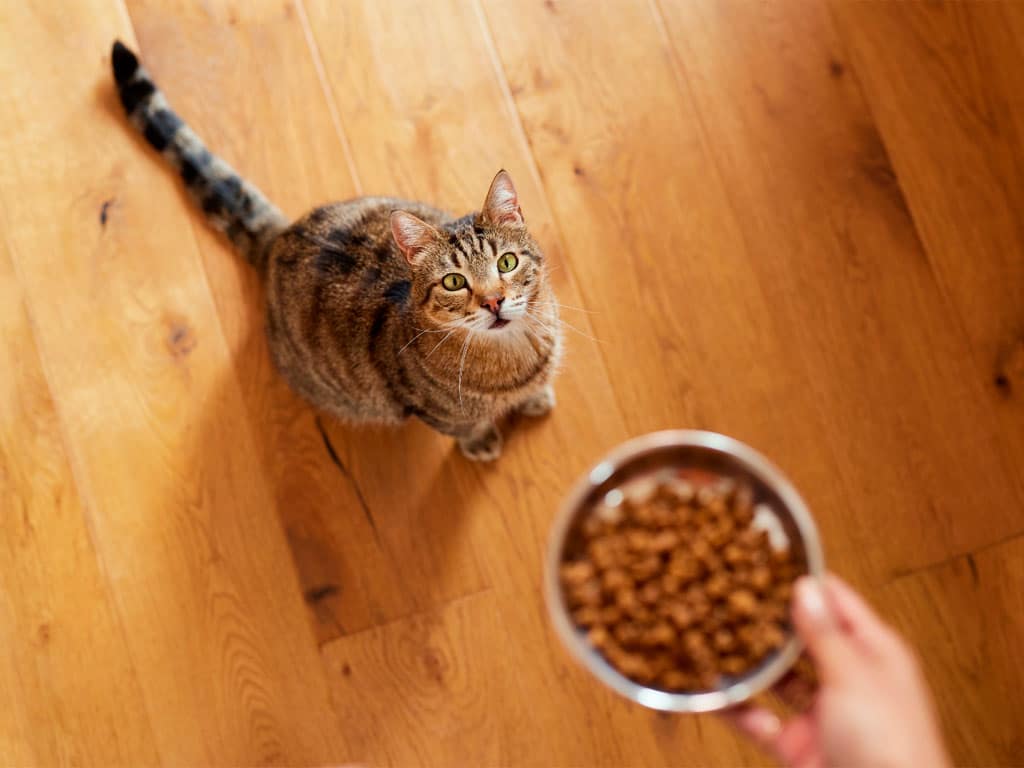
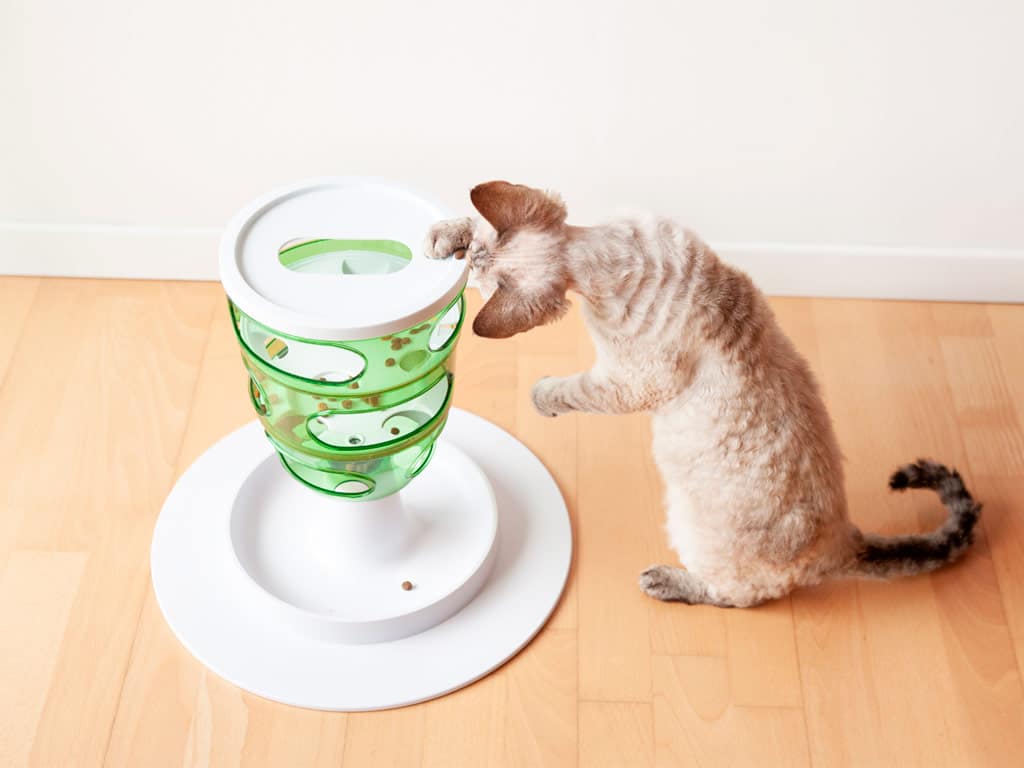
1. Use a special feeder to slow down their feeding.
In nature, cats hunt for food, which forces them to eat slowly and in small quantities. Why not imitate this behavior at home? Interactive feeders are designed to do just that.
- You can opt for maze feeders, puzzle feeders or kibble dispensers, which force your cat to use its paws or tongue to get the food bit by bit.
- In addition to reducing the speed at which they eat, these feeders stimulate their mind and prevent boredom, turning mealtime into an entertaining challenge.
If your cat is very curious and likes a challenge, this type of feeder can be a great way to get them to eat more slowly without them noticing.
2. Opt for a diet rich in protein
The food you feed your cat influences how quickly it eats it.
- A diet rich in protein and low in carbohydrates helps your cat feel fuller for longer, avoiding food cravings.
- If your cat only eats kibble, try switching to wet food or even adding water to its dry food to improve digestion and increase satiety.
Before making any changes to their diet, consult with your veterinarian to make sure they are getting the right food for their age, weight and needs.
3. Try a licking mat
Licking mats are an excellent tool to slow down your cat’s eating, especially if you feed wet food or spreadable treats. These mats have textured surfaces that force your cat to lick repeatedly to get their food. Not only do they slow down their eating, but they also have a relaxing effect and can help calm anxiety in cats that tend to eat too fast.
4. Create your own slow feeder at home
If you don’t want to spend money on a special feeder, you can make one with whatever you have at home!
- Spread their food on a flat surface, such as a large plate or baking sheet. This makes your cat have to move around to reach each bite instead of gobbling it down all at once.
- Use an ice cube tray, muffin tray or egg carton to place small portions of food in different compartments. This way your cat will have to work harder to eat.
- Add obstacles in its bowl, such as a golf ball or ping-pong ball, so it has to move it before it can reach its food.
These tricks mimic foraging in nature, making your cat eat more slowly and enjoy the process.
5. Divide food into several small portions
Instead of serving them two large meals a day, try dividing their daily ration into 5 or 6 small portions.
- In the wild, cats hunt several times a day rather than eating large amounts at one time, so this method is more natural for them.
- If you can’t be home to feed them more frequently, an automatic feeder can help you schedule meals and control the exact amount they eat at each feeding.
This not only slows down their intake, but also helps to avoid digestive problems and keep their metabolism active.
6. Give them their own space to eat
If you have more than one cat at home, make sure each has its own quiet space to eat.
- Eating too close to another cat can generate anxiety and cause them to speed up eating for fear of losing their food.
- Ideally, separate their feeding bowls and, if they are particularly territorial, feed them in separate rooms so they can eat without pressure.
Remember that cats are solitary hunters, not pack animals like dogs. Giving them individual space can make a big difference in their eating behavior.
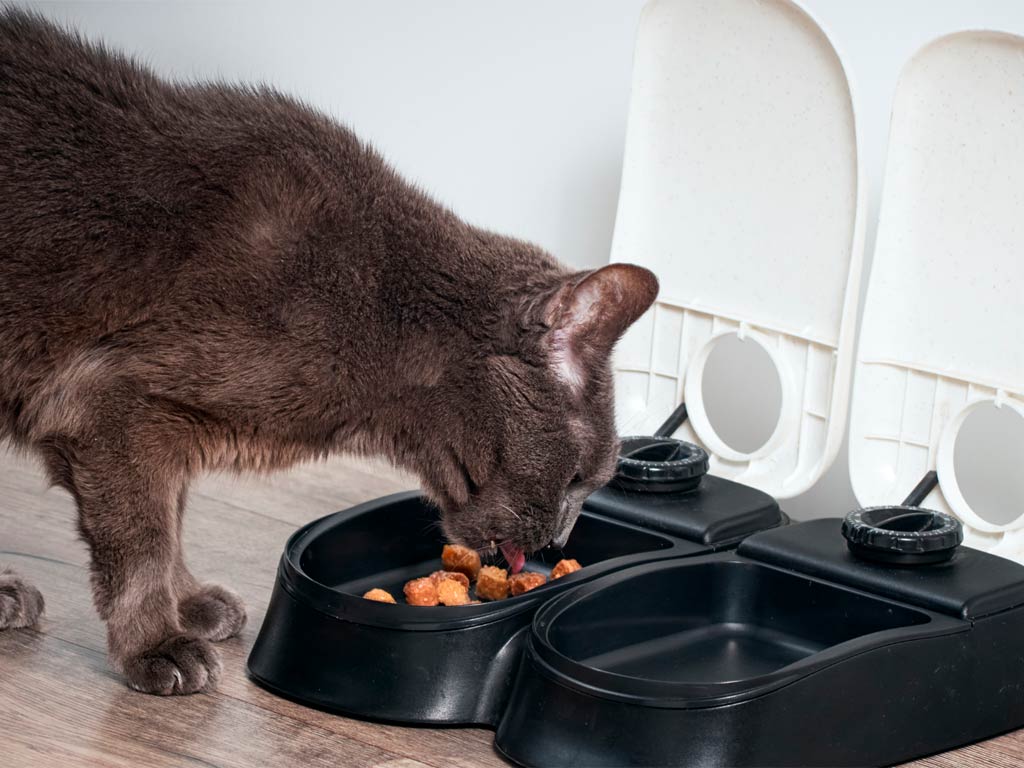
7. Use a microchip feeder
If several cats live together at home and one of them tends to steal food from the others, a microchip feeder can be the perfect solution.
- These devices only open for the cat whose ID has been registered, preventing others from accessing their food.
- They are especially useful for cats with food anxiety or those who have experienced food shortages in the past, as they provide security and confidence when eating.
In addition, this type of feeder is ideal if you need to control the exact amount your cat consumes on a daily basis.
If you notice that their relentless hunger persists despite these changes or is accompanied by other symptoms such as weight loss or frequent vomiting, consult a veterinarian to rule out health problems.
What if my cat eats quickly and vomits?
If your cat continues to eat anxiously and vomits frequently, it is important to differentiate between regurgitation and vomiting:
- Regurgitation: Occurs shortly after eating and the food seems poorly digested. It is due to the speed with which he/she has eaten.
- Vomiting: Occurs later, involves abdominal contractions and the food appears partially digested. It may be a sign of a health problem.
If your cat vomits regularly, loses weight or shows other signs of illness, consult your veterinarian.
Eating too fast can be a problem for your cat’s health, but fortunately there are many effective solutions. From special feeders to adjustments in their feeding routine, you can help them develop healthier habits and avoid digestive or anxiety problems.
If you suspect there is a medical cause behind his behavior, don’t hesitate to consult a veterinarian to make sure your cat is healthy and well fed.

 Barcelona, C/ Balmes nº 205
 931 173 173
 info@balmesvet.com