


With the arrival of good weather, walks with your dog get longer, gardens bloom and cats enjoy exploring the outdoors. But among the tall grass and country roads lurk spikes, one of the most frequent hazards for dogs and cats in the spring and summer.
These small, dry, spiky grass seeds may seem harmless, but they have the ability to penetrate your pet’s body, travel internally and cause everything from minor irritations to serious infections or even emergency surgery. They often go unnoticed until they have already caused considerable damage.
The spikes can become a serious problem. In this blog we give you all the useful information to know what to do before, during and after:
- What they are and why they pose a real risk.
- In what environments they grow and how to avoid them.
- What symptoms you should observe.
- How we diagnose and remove them at Balmesvet.
- And what practical steps you can take to protect your dog or cat during wheat spike season.
Read on and get ready for a safer spring and summer for your life partner. Because sometimes, the smallest thing can become the biggest enemy if not detected in time.
What are grass spikes and why are they dangerous for dogs and cats?
Spikes are seeds of grasses (such as wheat, barley and other wild grasses) that grow along roadsides, parks, gardens and open fields. During the spring and summer, these seeds dry out, shed easily and can catch on the fur of dogs and cats.
From a medical point of view, spikes are considered highly invasive foreign bodies. Their arrow-shaped structure makes them particularly dangerous, since once they come into contact with the skin or natural orifices, they move in only one direction, causing serious wounds and infections. Not only do they adhere easily, but they can migrate through internal tissues, causing deep inflammation, abscesses, severe pain and even damage to vital organs if not detected in time.
Their migratory behavior means that the spike is often not visible externally, and diagnosis may require advanced means such as endoscopy or imaging tests. In more severe cases, its removal may involve surgery.
Where do these spikes grow and in which areas should you be most careful?

Although at first glance they may go unnoticed, spikes are present in many of the places frequented by our canine and feline companions, especially in spring and summer. They are especially abundant in:
-
- Areas with tall, dry grass: this is the most typical environment. As the heat rises, the grass dries out and the spikes are easily shed.
- Roadside and rural roadsides: these areas often have overgrown, unmaintained vegetation, which favors the proliferation of grasses and other wild weeds that produce spikes.
- Parks with neglected or poorly mowed lawns: even within the city, an unmaintained park can become a source of risk if the height of the vegetation is not controlled.
- Private gardens and disused land: it is common for abandoned lots or poorly tended gardens to grow these types of weeds without control, increasing the risk of contact.
- Abandoned or fallow fields: in rural environments, these spaces accumulate large amounts of dry stalks, especially at the end of spring and during the summer.
What problems can spikes cause in dogs and cats?
Spikes can penetrate different parts of your pet’s body, causing irritation, infections, abscesses, pain and in some cases, complications that compromise overall health. Here are the most frequent locations and their associated clinical signs:
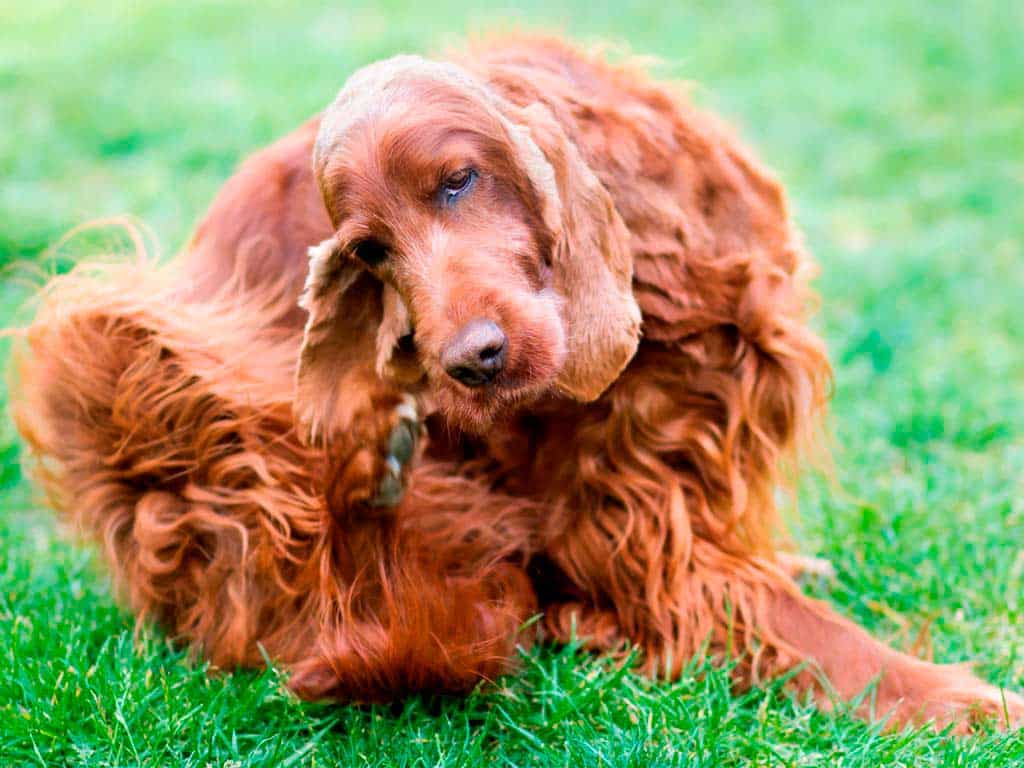
Ears: This is one of the most common locations. The spike can lodge in the ear canal, causing:
- Constant head shaking.
- Insistent scratching of the affected ear.
- Pain when touching the area.
- Inflammation, discharge and bad odor.
If not detected in time, it can advance towards the eardrum, perforate it and trigger otitis media or internal otitis.
Nose: Spikes may get in while sniffing the ground. Symptoms include:
- Repeated and intense sneezing.
- Unilateral nasal bleeding or discharge.
- Rubbing their snout against the floor.
The spike can move into the sinuses, requiring advanced techniques for its removal, such as rhinoscopy.
Eyes: Direct contact may cause:
- Excessive watering of the eyes.
- Inflammation of the eyelid or conjunctiva.
- Continuous blinking (blepharospasm).
- Ocular pain and mucous secretion.
An undetected spike can cause corneal ulcers, eye infections and partial or total loss of vision.
Skin and paws: They become pinned between the toes, pads, armpits or groin. The most common signs are:
- Sudden limping without obvious cause.
- Localized swelling.
- Compulsive licking of an area.
- Presence of fistulas or abscesses draining pus.
In many cases, the spike is not visible because it has already moved under the skin. Ultrasound is very useful in these cases to locate it.
Genitals and perianal area: Occasionally, the spikes may enter the vulva or anus, causing:
- Excessive licking of the area.
- Difficulty urinating or defecating.
- Recurrent secretions or infections.
These are particularly sensitive areas that require a delicate examination and, in most cases, anesthesia.
Internal organs (advanced cases): In severe situations, spikes may migrate to internal structures such as:
- Lungs: causing pneumonia, fever and respiratory distress.
- Abdomen: causing damage to organs, peritonitis or deep abscesses.
- Muscles or other cavities: causing generalized infections.
How are spikes diagnosed by the veterinarian?
The diagnosis of a spike may seem simple in some cases, but its location and the degree of migration determine the complexity of the process.

Detailed physical examination: The first step is a thorough examination. High-risk areas such as ears, nose, eyes, paws, armpits, groin and skin are carefully inspected for signs of inflammation, discharge, pain or visible presence of foreign bodies.
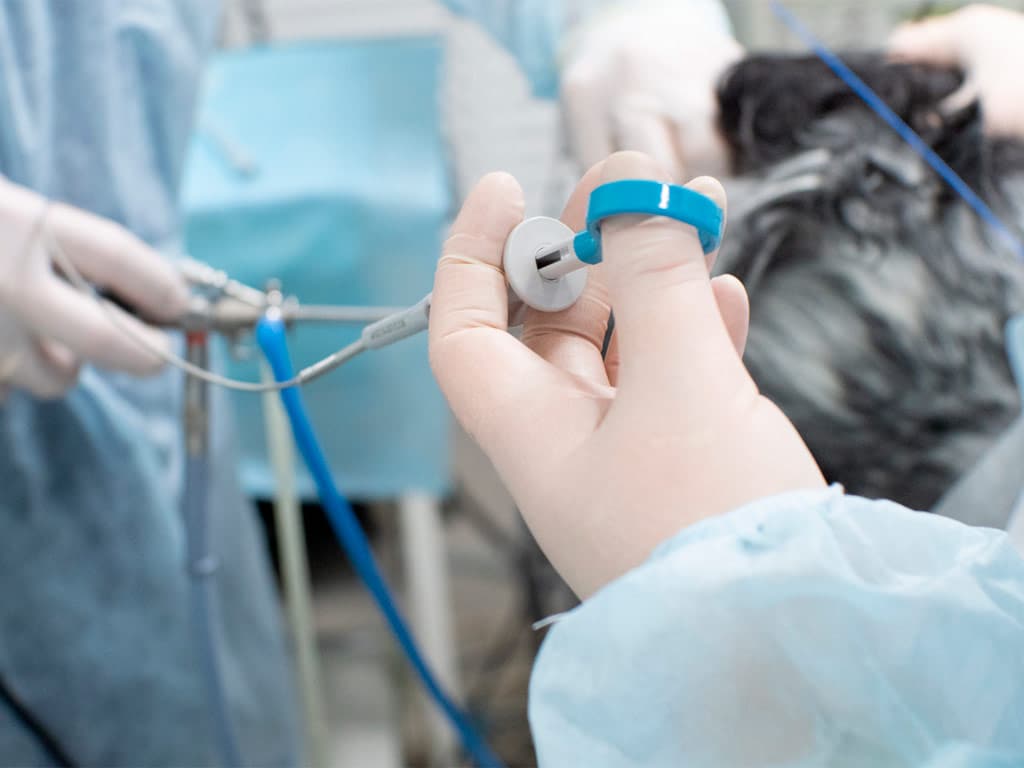
Otoscopy and rhinoscopy: when spikes are suspected in the ear or nasal canal, we use otoscopes and rhinoscopes that allow a deep and safe examination of the ear canal or nasal cavities.
Diagnostic imaging: if there is a possibility that the spike has migrated into the body (such as the chest, abdomen or deep soft tissues), imaging tests are used:
- High resolution digital radiography to evaluate bone structures and visible foreign bodies.
- Abdominal and soft tissue ultrasound to detect swelling, abscesses or embedded spikes not visible on external examination.
- Computed tomography (CT), especially useful in complex cases where a three-dimensional image is required to locate deep or migrated spurs in unusual areas.
Diagnostic and therapeutic endoscopy: in many cases, the use of endoscopes allows not only to accurately locate the spike in places such as the pharynx, esophagus, nose or bronchi, but also to remove them in the same procedure, without the need to resort to open surgery. This minimally invasive technique reduces trauma and accelerates the patient’s recovery.
At Balmesvet, we combine the latest technology with the experience of our veterinary specialists to offer a complete and safe approach to these types of veterinary emergencies.
How are the spikes extracted in dogs and cats depending on their location?
Depending on where the spike is lodged, different techniques and protocols are used:
- On the skin or between the digits: when the spike is visible and shallow, it can be removed manually using sterile forceps. If it has generated an abscess, it is necessary to drain the area, perform a surgical cleaning and administer antibiotics to prevent the spread of infection.
- In the ears: if the spike is in the ear canal, especially in breeds with long ears or thick hair, it can lodge in deep areas. Otoscope and special otologic forceps are used. Generally, sedation or anesthesia is required to avoid involuntary movements that may cause injury to the eardrum or middle ear.
- In the nose: nasal extraction is performed by rhinoscopy, using extraction forceps with a delicate and flexible design. This procedure is performed under sedation or anesthesia, as it is a highly vascularized and sensitive area. Early action is key to prevent the spike from advancing into the sinuses.
- In the eyes: the presence of a spike in the eye requires immediate action by the veterinary ophthalmology service. An eye examination is performed with specialized material and the extraction is carried out under local or general anesthesia, depending on the depth and level of pain.
- In internal organs (lungs, abdomen or other deep locations): when the spike has migrated to internal areas, the approach may be surgical or by advanced endoscopy. In these cases, the procedure must be immediate to avoid complications such as pneumonia, peritonitis or serious organ damage.
At Balmesvet, we have fully equipped operating rooms, flexible and rigid endoscopy systems, and a veterinary CAT scanner that allows us to precisely locate the spike before surgery.
How to prevent complications from spikes in dogs and cats
Prevention is the most effective tool to avoid the consequences of spikes in dogs and cats. Although it is not always possible to completely avoid contact with these seeds, following a series of guidelines can greatly reduce the risk of them becoming embedded or migrating inside your dog’s or cat’s body.
Avoid high-risk areas: during spring and summer, avoid walking in areas with tall, dry grass or unmaintained vegetation, especially on country roads, abandoned lots or parks with poorly kept lawns.
Inspect your pet after every walk: check your pet’s body thoroughly, paying attention to key areas such as:
- Ears (internally and externally).
- Nose and around the eyes.
- Between the toes and pads.
- Armpits and groin.
- Perianal area and genitals.
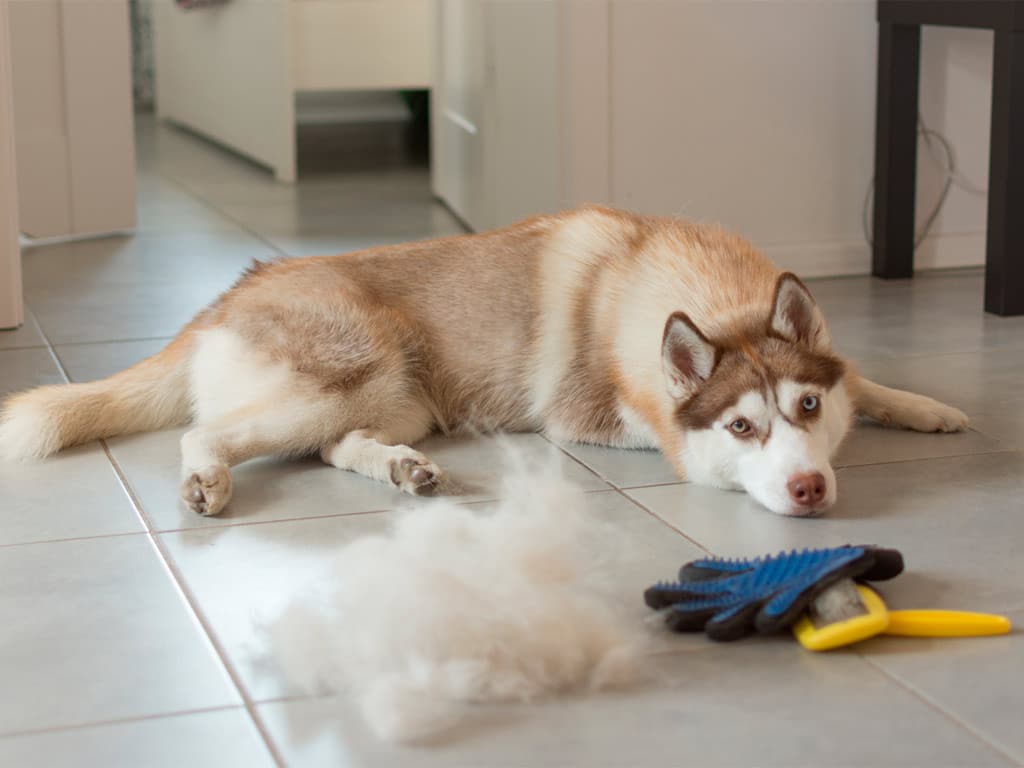
Frequent brushing: Daily brushing helps to remove spikes before they can penetrate the skin. It also helps to detect areas of swelling or discomfort before they become more serious.
Trimming of hair in vulnerable areas: especially in dogs with long or dense hair, it is recommended to cut the hair in areas such as:
- Pads and between the toes.
- Inner part of the ears.
- Armpits and groin.
Use of ear protectors: in breeds with long ears such as cockers or basset hounds, ear protectors can be used during walks in risk areas. These accessories are designed to prevent the penetration of spikes without interfering with the animal’s welfare or hearing.
Maintenance of the home environment: if you have a garden or terrace, try to keep vegetation under control, eliminating dry weeds and weeding regularly. It is also important to check common areas in communities or shared yards.
Advice and prevention: regular check-ups allow us to detect problems early and avoid complications. At Balmesvet we teach you how to check your pet and recognize the early signs of a spike. An early detection can make all the difference.
We are here to help you, whenever you need it. We treat each case with a comprehensive approach, combining veterinary experience, state-of-the-art technology, and protocols focused on the welfare of each patient. Our veterinary team is prepared to act with great precision when faced with any suspicion, from a superficial spike to more complex situations. If you notice anything unusual, don’t let it slide. We are available 24 hours a day, every day of the year, to protect the health of your dog and cat.


 Barcelona, C/ Balmes nº 205
 931 173 173
 info@balmesvet.com