


Sharing your home with a cat brings a lot of joy, but it also involves certain risks that often go unnoticed. One of the most serious and often unknown is the so-called high-rise cat syndrome, a situation that can endanger the life of your feline companion in a matter of seconds.
This syndrome refers to cats falling from windows, balconies or terraces, and is much more frequent than we imagine. Despite their agility, balance and supposed ability to “always land on their feet”, cats are not safe from serious injury when they fall from great heights. In fact, these accidents are a common cause of veterinary emergencies, especially in spring and summer, when windows and balconies are kept open longer.
At Balmesvet, each year we see numerous cases of cats admitted in critical condition after a fall. Some can recover thanks to an immediate and specialized response, but others do not have the same fate. That is why we believe that the best way to protect your cat is to be informed, take preventative measures, and act quickly if an accident occurs.
In this blog we will explain:
- What exactly high-rise cat syndrome is.
- Why it occurs and what causes it.
- What injuries it can cause.
- How you can prevent it at home.
- What to do if your cat suffers a fall.
- And how Balmesvet is prepared to act in these emergency cases.
We want this article to be a useful tool for you, so that you can anticipate risks and take better care of your cat. Because their safety also starts at home.
What is high-rise cat syndrome and why does it occur?
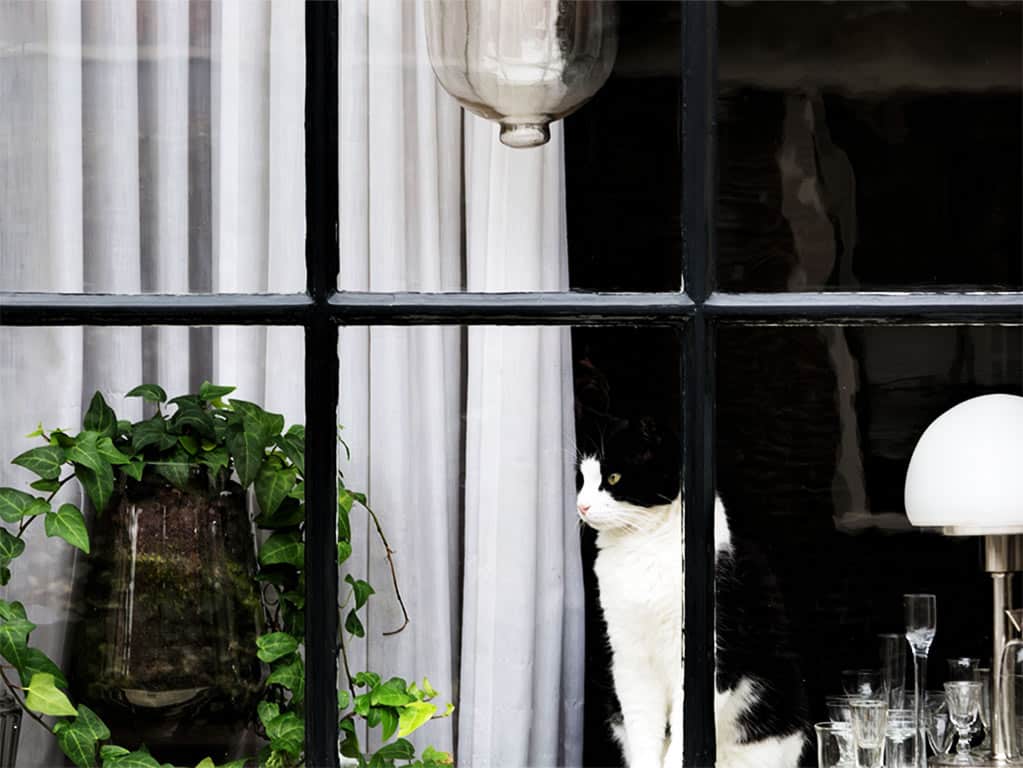
High-rise cat syndrome is a veterinary emergency situation caused by the accidental fall of a cat from a considerable height. It usually occurs from balconies, terraces or unprotected windows. It mainly affects cats living in high-rise apartments and occurs more frequently in warmer weather, when windows are open and cats have access to the outdoors.
But why do cats fall?
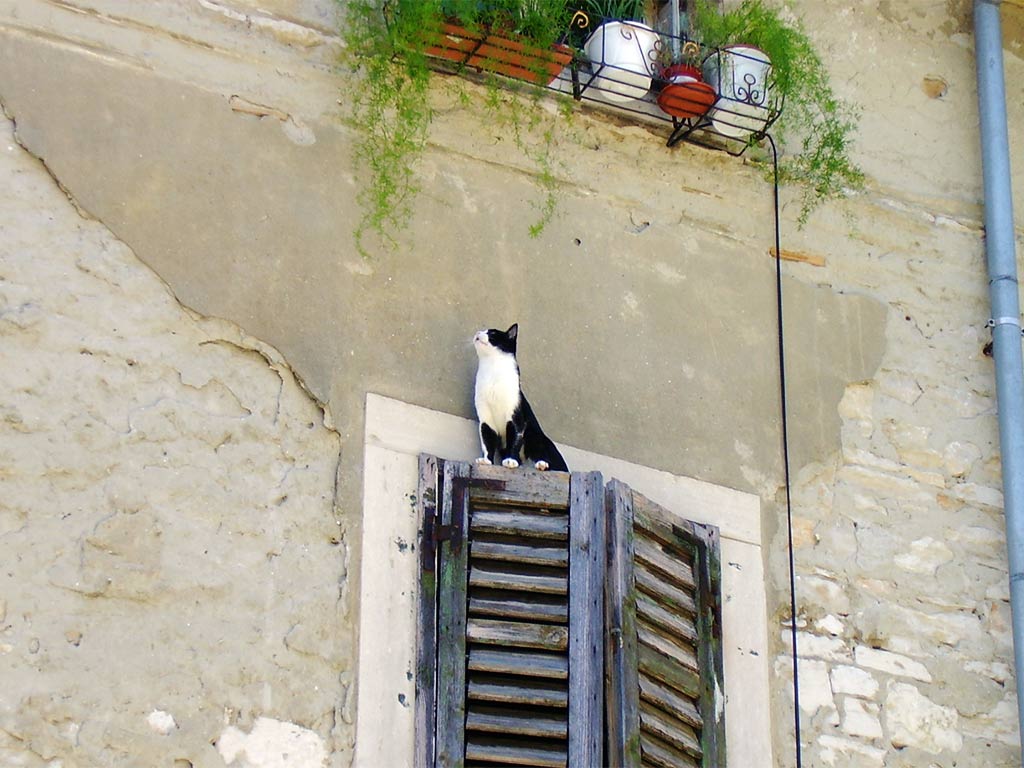
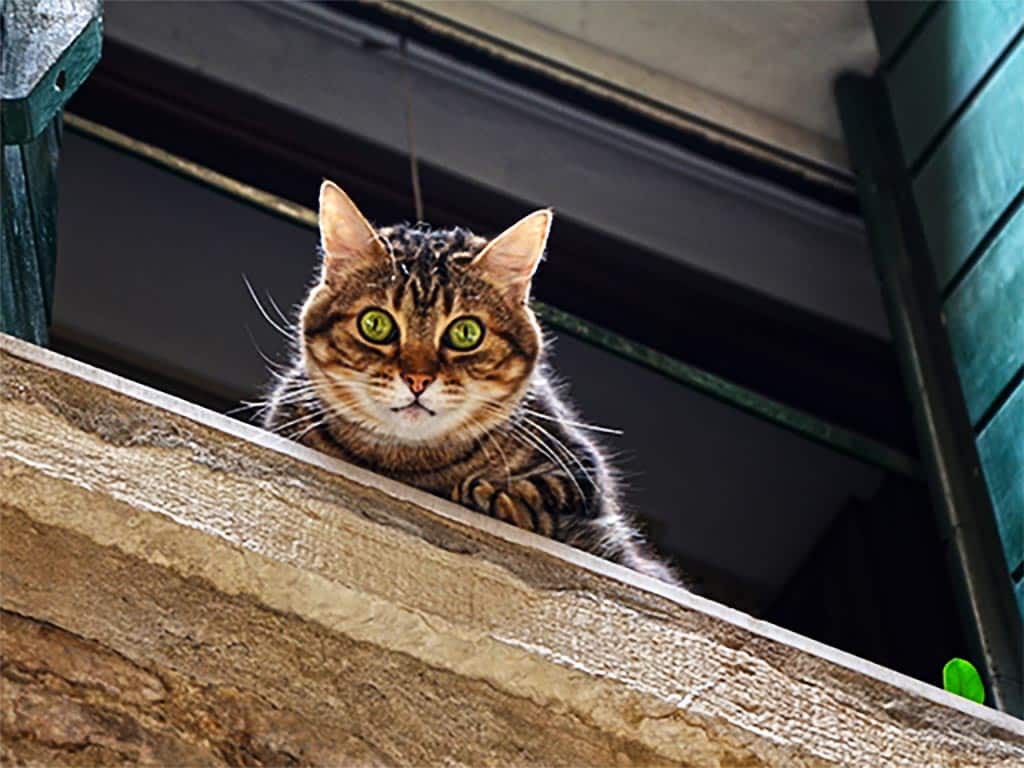
The answer lies in their natural curiosity and hunting instinct. Many cats pounce on a fly or a bird without considering the potential danger. Others simply lie down on a window ledge, lose their balance or slip. There are also cats that jump in an attempt to follow their caregiver or when they see something that catches their attention.
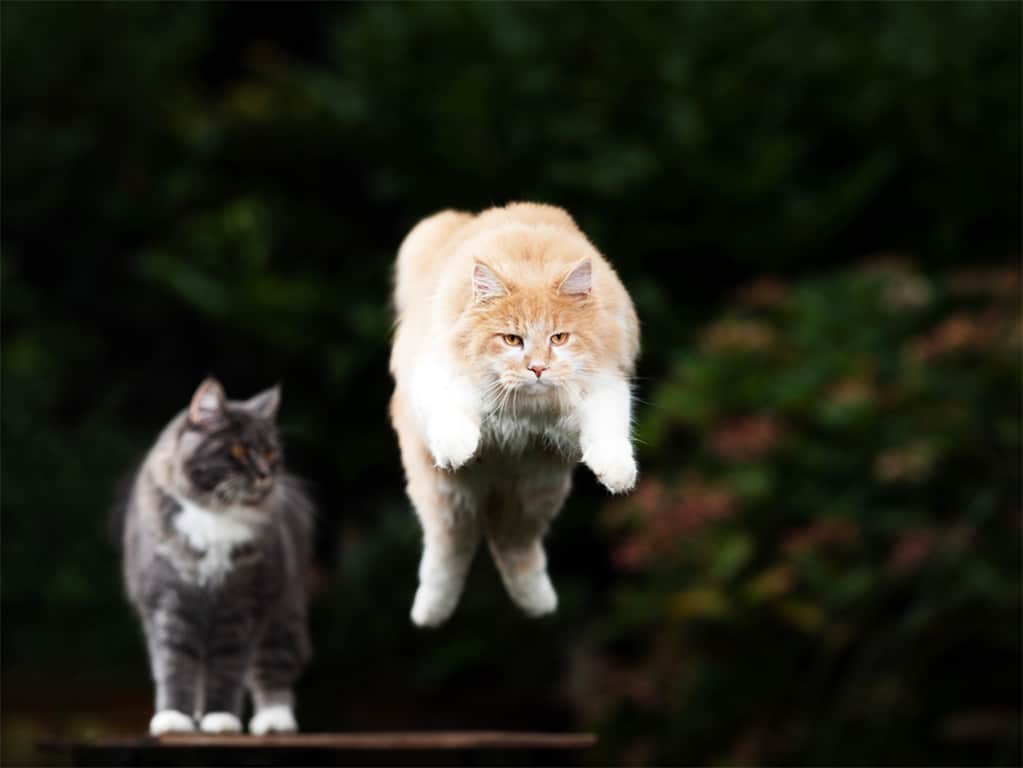
Contrary to popular belief, cats do not always land on their feet, and even if they manage to turn their body in the air, this does not protect them from impact. The feline roll-over reflex works to some extent, but a fall from height can result in serious internal injuries or even death.
Most common injuries after a fall
When a cat suffers a fall from a considerable height, the type of injury will depend on several factors: the height, the impact surface, the position in which it falls and its general physical condition. Some of the most common injuries we see in our emergency and intensive care unit are:
- Fractures: especially of the jaw, extremities or pelvis.
- Thoracic trauma: lung contusions, pneumothorax or hemothorax.
- Urinary bladder injuries: such as bladder wall hematoma or rupture.
- Abdominal injuries: internal bleeding or damage to vital organs.
- Cranial traumas: which can generate serious neurological impairments.
- Damage to internal organs: such as the liver, spleen or kidneys.
- Shock: a serious and potentially fatal medical condition.
Many of these injuries require immediate hospitalization, stabilization and, in some cases, emergency surgery. At Balmesvet, we have a 24h emergency service, a feline ICU and a specialized team that acts immediately in these cases, which significantly increases the chances of recovery.
How to prevent high-rise cat syndrome
The best way to avoid this type of accident is to anticipate the cat’s natural behavior. Here is a series of effective recommendations that you can apply at home:
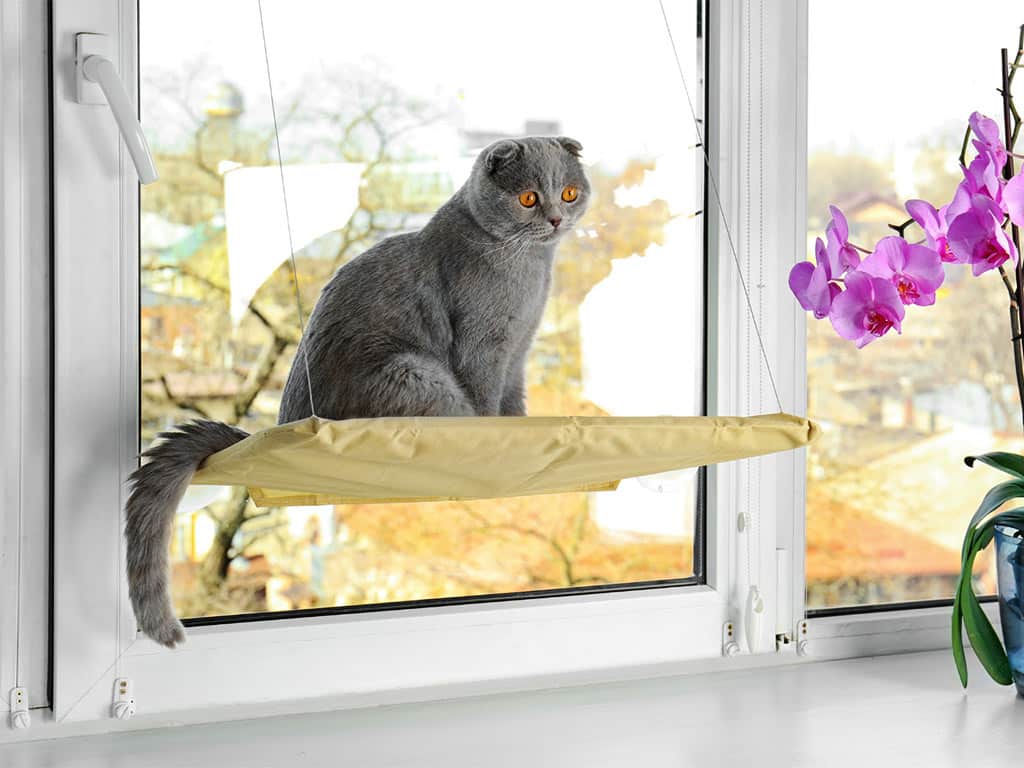
- Place protective netting or screens on all windows, balconies and terraces. This is the most effective and affordable measure to prevent falls.
- Don’t leave tilt-and-turn windows open: cats may try to climb through them and get trapped.
- Keep an eye on open windows, especially if your cat is young, curious or very active.
- Prevent them from climbing on the ledge: you can place obstacles or use safe repellents to deter them.
- Enrich their indoor environment: create safe spaces for them to climb, explore and play indoors.
- Neutering in young cats: helps to reduce scouting and runaway urges.
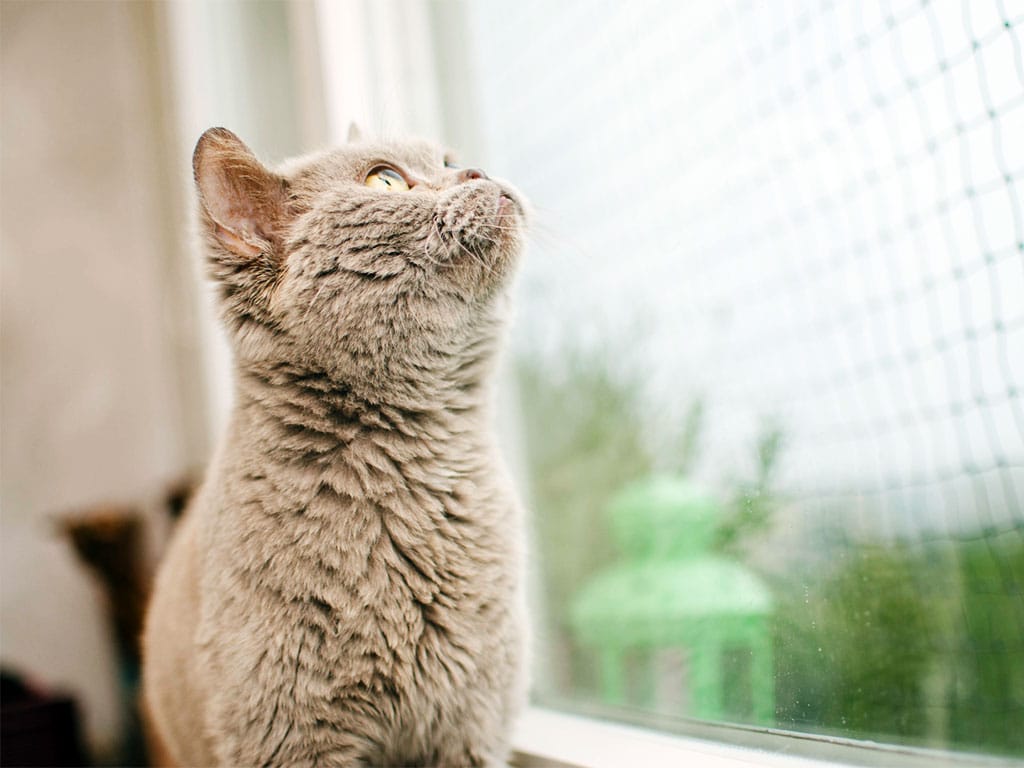
Remember that the cat is not aware of the danger posed by heights, so it is our responsibility to protect it.
What to do if your cat falls
In the event of a fall, the most important thing is to remain calm and act quickly:
- Do not move them abruptly: They could have internal injuries or fractures. If you can, place them on a rigid surface (such as a board or crate) to transport them.
- Take them immediately to the veterinarian: even if they look fine. Some internal damage is not visible to the naked eye and may worsen over time.
- Do not give them food or drink: they may require sedation or surgery.
- The more information you give us, the better: height of the fall, type of surface they fell onto, time passed since the fall, etc.
At Balmesvet, we attend emergencies 24 hours a day in Barcelona, every day of the year. If your cat has a fall, you can count on us to act with speed, experience and the necessary equipment to stabilize and treat your cat from the very first moment.


 Barcelona, C/ Balmes nº 205
 931 173 173
 info@balmesvet.com