


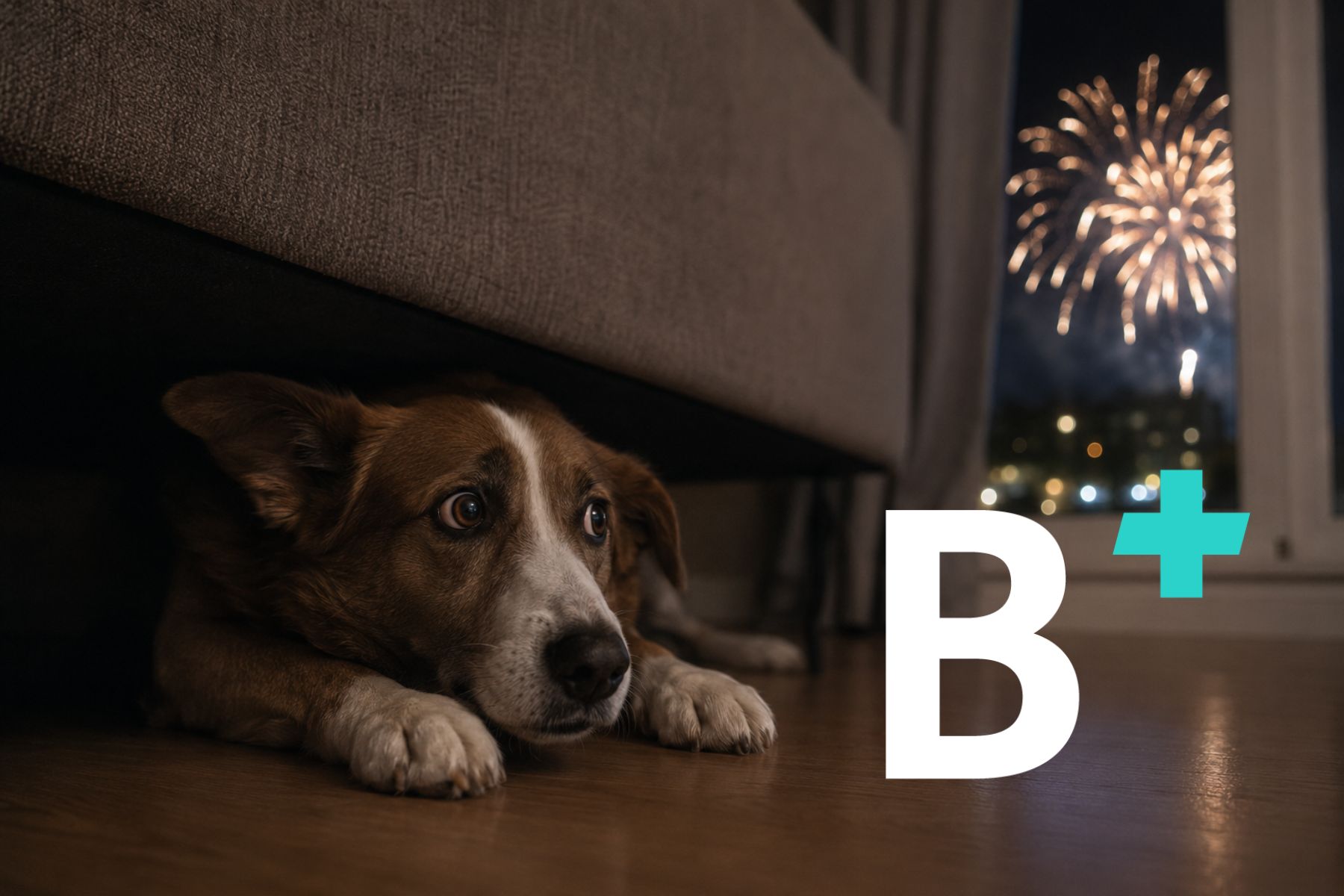
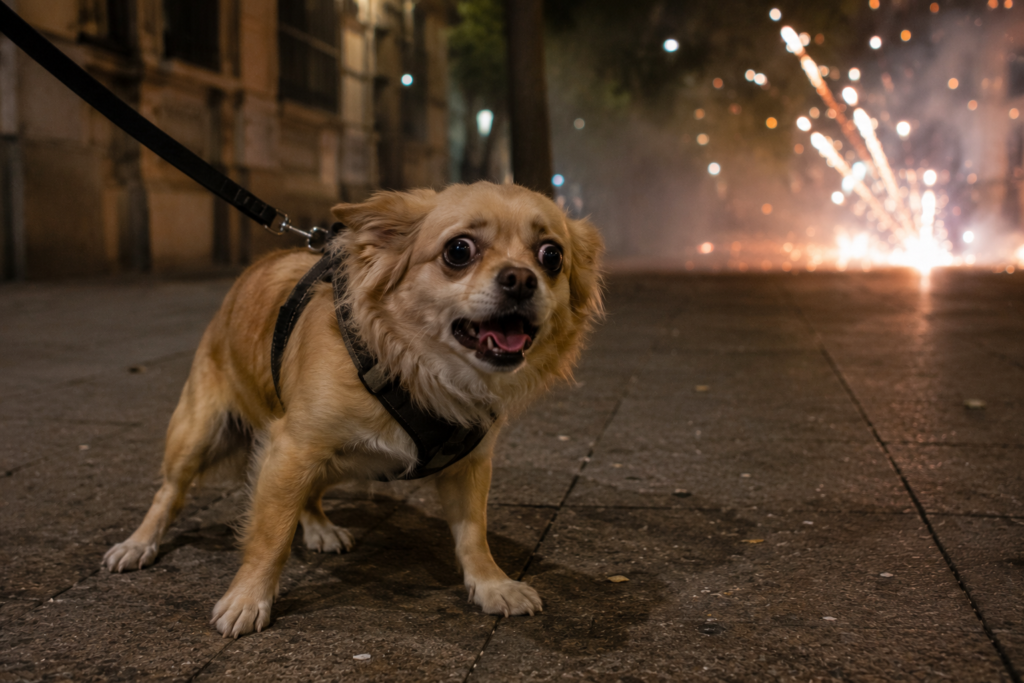
While many people enjoy firecrackers and fireworks during the festivities of Sant Joan, for some dogs, every explosion can feel like a very real threat to their lives. This isn’t overreacting. It isn’t an exaggeration. And it isn’t a matter of “bad behavior” either.
Fear of loud noises is a complex emotional disorder involving automatic survival mechanisms in the brain. In many cases, this fear of firecrackers in dogs can trigger extreme alarm responses even indoors.
That’s why some dogs tremble, pant, try to escape, hide, or go into a full-blown panic during this time of year. Their brains aren’t thinking rationally. They’re reacting.
Why are dogs afraid of loud noises and fireworks?
Dogs can develop a fear or phobia of firecrackers because their brains interpret the loud, unpredictable sounds as a threat. This triggers automatic stress, memory and survival responses.
In some dogs, these reactions are limited to a one-time incident. In others, especially following negative experiences or in dogs that are more sensitive to noise, they can develop into a full-blown phobia.
Understanding what actually happens in the brain of a dog helps us understand why this issue shouldn’t be downplayed, why not all dogs react the same way, and why some need much more than just “getting used to the noise.”
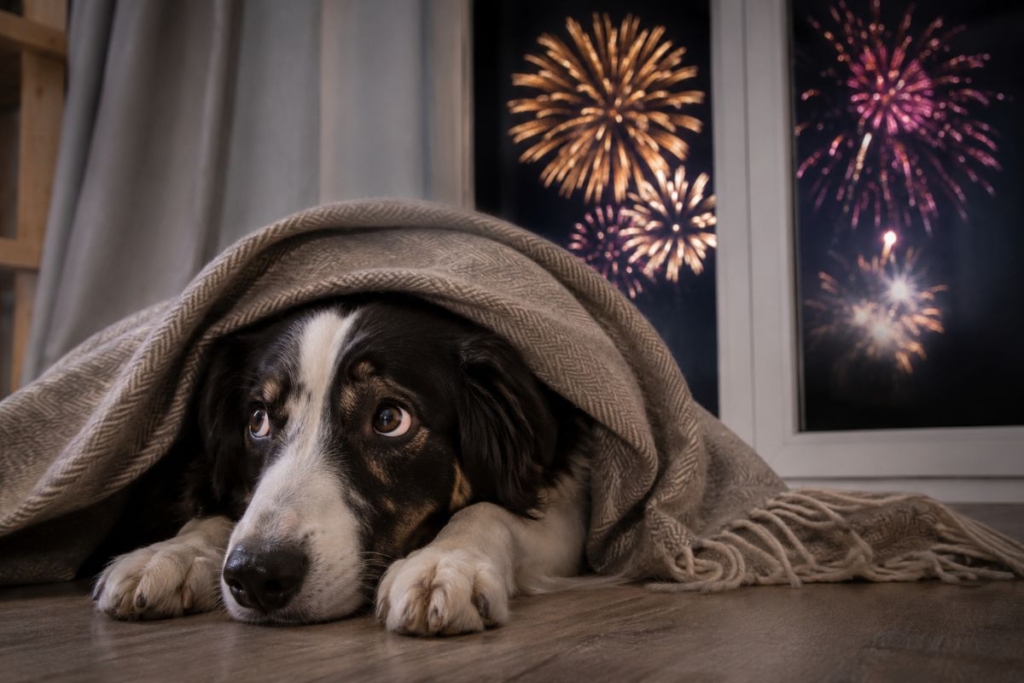
Two Ways Dogs Process Noise: Instinctively and Rationally
When a dog hears a firecracker, its brain activates various emotional processing systems. Some are extremely fast and reflexive; others are slower and more analytical.
The Fast Circuit: An Instinctive Survival Mechanism When Faced with Firecrackers
This first pathway sends sounds directly to a part of the brain called the amygdala, whose job is to detect threats and trigger protective responses.
It’s an extremely fast process, but not very accurate. The goal isn’t to determine whether there’s actually any danger, but to react before it’s too late.
Thanks to this mechanism, the dog can:
- Run away.
- Hide.
- Jump.
- Try to escape.
- Panic within seconds.
All of this happens before the brain “thinks.”
In addition, this pathway is closely linked to unconscious emotional memory. This means that if a dog’s had a very negative experience associated with a loud noise, its brain may automatically trigger the same fear response whenever a similar sound occurs.
- Even if they feel safe at home.
- Even if there’s no real danger.
- Even if the person with them tries to reassure them.
The Slow Circuit: Rational Processing and Learning in the Face of Noise
In this second pathway, the sound first passes through the cerebral cortex, where information is analyzed in greater detail before reaching the amygdala.
This process takes longer, but it allows for a better understanding of the situation.
Through this approach, some dogs can gradually learn that certain sounds or fireworks don’t pose a real threat, especially when using habituation, desensitization, and controlled positive experiences.
That’s why some dogs improve over time and others don’t.
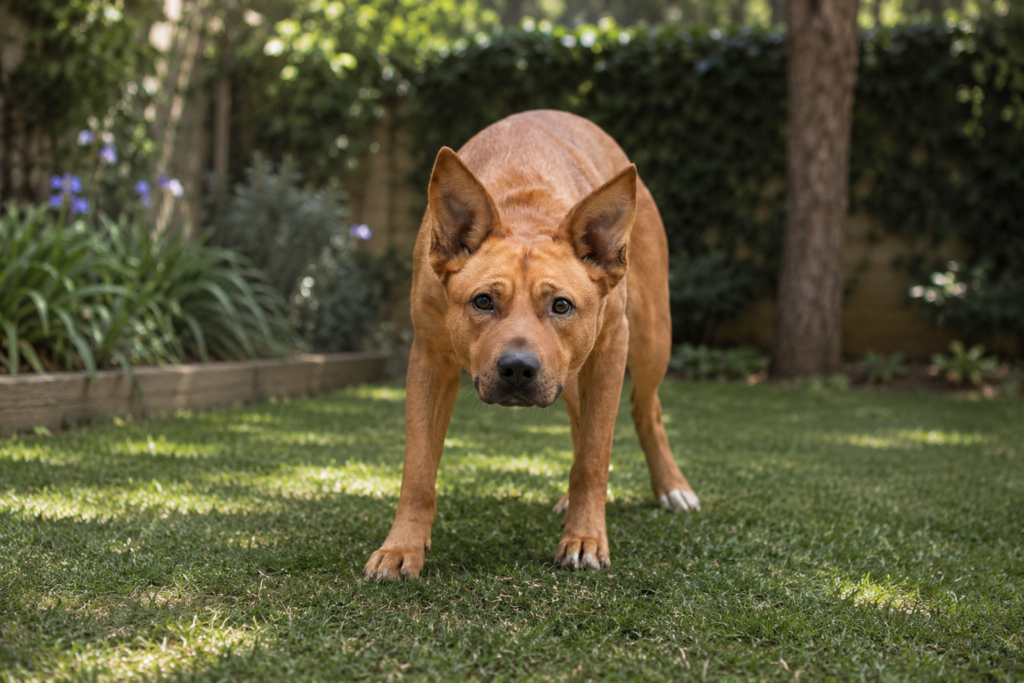
How a Dog’s Body Reacts to Noise: Stress, Cortisol, and Alertness
Noise-induced stress in dogs doesn’t only affect their behavior. It also causes significant physiological changes related to both their nervous and endocrine systems.
When a dog senses a threat:
- It increases the release of cortisol and adrenaline.
- Heart rate increases.
- Hypervigilance sets in.
- Muscle tension increases.
- Breathing becomes irregular.
- Digestive symptoms such as vomiting, diarrhea, or loss of appetite may occur.
In some patients, especially dogs with severe phobias, the body remains on high alert for hours even long after the noise has stopped.
That’s why many dogs end up completely exhausted after a night of fireworks.
Why Some Dogs Develop a Fear of Firecrackers (and Others Don’t)
Not all dogs react the same way to firecrackers. Some noise-sensitive dogs have a greater genetic or emotional predisposition to developing strong responses to firecrackers. There are many factors that influence the development of a phobia:
- Genetic predisposition.
- Individual sensitivity to noise.
- Previous traumatic experiences.
- Lack of socialization during early life.
- Poorly managed panic attacks.
- Age.
- Medical conditions or chronic pain.
- Changes associated with aging.
In some cases, fear develops gradually. In others, it can develop suddenly following a particularly intense experience.
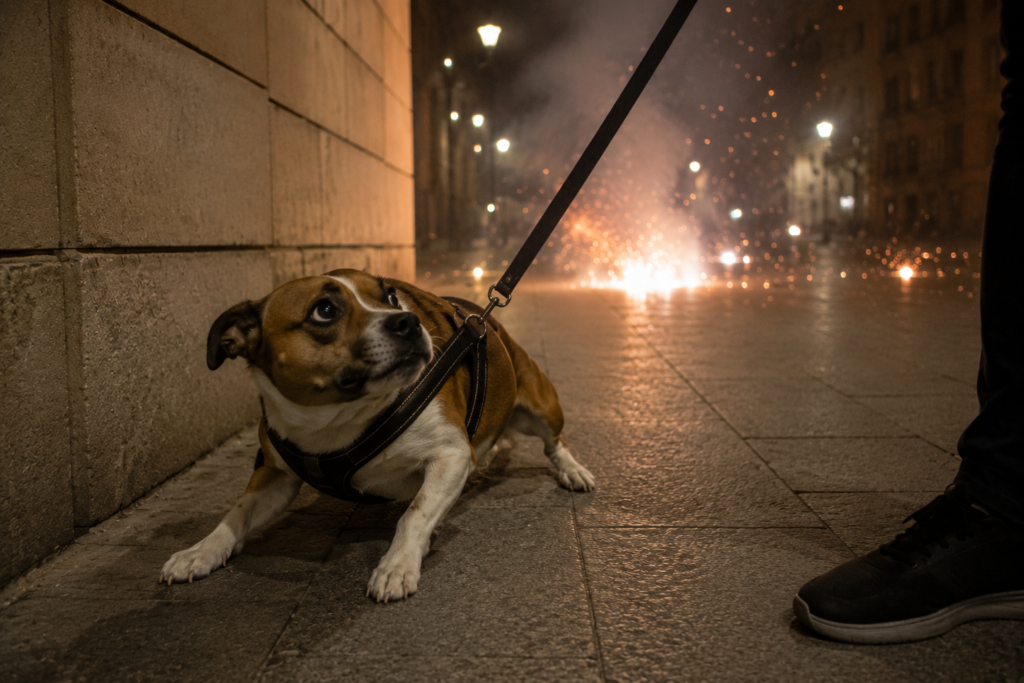
Why Some Dogs Don’t Improve Even When Their Fear of Firecrackers is Addressed
One of the most important things to understand is that not all brains respond the same way to learning.
There are certain types of neurons that continue to react to loud sounds even after the dog has undergone training or exposure therapy. These neurons are automatically activated when the noise surpasses a certain threshold.
In other words: some dogs never fully “get used” to certain sounds.
This explains why some dogs:
- Show some improvement.
- Tolerate moderate noise.
- Continue to react intensely to loud or unexpected noises.
It also explains why some patients need a more comprehensive approach that includes:
- Environmental adaptation.
- Emotional management.
- Behavioral therapy.
- Veterinary support.
- Pheromones.
- Nutraceuticals.
- Specific medication prescribed by a veterinarian.
Understanding Fear of Fireworks: How to Best Help Your Dog
When we understand how the brain of a dog who is afraid of firecrackers works, it completely changes the way we should help them.
Punishing them, ignoring their fear, or forcing them to be exposed to noise rarely works. In many cases, it can even make the problem worse.
Noise phobia in dogs is not a matter of obedience or “bad behavior.” It’s a complex emotional response linked to survival mechanisms.
That’s why supporting them with empathy, training, and professional guidance can make a huge difference in their well-being.
With the right preparations, a safe environment, and a personalized approach, many dogs can get through this time of year with much greater calm and confidence.
Because when a dog that’s afraid of fireworks panics, it’s not overreacting. Its brain is simply trying to survive.

Resources for a Stress-Free Sant Joan: Dogs and Fireworks
Understanding how fear works in a dog’s brain is important. But equally important is knowing how to help your dog before, during, and after the festival.
That’s why we at Balmesvet have created a variety of free resources designed to help you prepare for this time of year with greater peace of mind and confidence.
Everything You Need to Know: How to Help Your Dog If They Are Afraid of Fireworks
If you need practical advice on:
- How to create a safe space.
- What to do when fireworks go off.
- How to handle walks.
- What mistakes to avoid.
- When to use pheromones, supplements, or medication.
- How to implement desensitization techniques.
You can check out our complete guide:
➡️ How to Help Your Dog if They’re Afraid of Fireworks.
In it, you’ll find detailed recommendations for helping dogs with fears or phobias during Sant Joan and other times of the year when fireworks are set off.
Is Your Dog Afraid of Firecrackers? Signs to Look for and When to Seek Help
Some dogs don’t just show nervousness: they go into a full-blown panic.
If your dog:
- Tries to escape.
- Hurts themselves.
- Shakes violently.
- Stops communicating with you.
- Breathes heavily.
- Takes hours to recover.
We’ve also got an article specifically about the fear of firecrackers:
➡️ My Dog Is Afraid of Firecrackers: What to Do and When to Seek Help
Because not all cases can be fixed with just getting used to it or some general advice.
Everything you need for #UnSantJoanSinMiedo: Downloadable Resources
This year, we’re continuing our awareness campaign to help you make Sant Joan a calmer and safer experience for your cats and dogs.
➡️ Download Here all our free resources for Sant Joan.
We’re here to provide you with practical tools to help you stay ahead of and reduce the stress caused by firecrackers and fireworks.
- Sant Joan Checklist: What to Prepare Before the Fireworks
A handy checklist of everything you’ll need to prepare before the festival:
- Safe Environment.
- Walks.
- Medication.
- Identification.
- Shelter.
- Food.
- Enrichment.
- Warning Signs.
- Relaxing music for Cats and Dogs During Sant Joan
We’ve put together a selection of music designed to help create a calmer atmosphere during noisy times. You can play it as background music in your pet’s safe space.
- Printable posters: notice to neighbors (noise-sensitive cats and dogs)
We’ve also created downloadable posters to help raise awareness among neighbors and people in the surrounding area.
Messages such as:
- “A dog that is afraid of firecrackers lives here.”
- “A noise-sensitive cat lives here.”
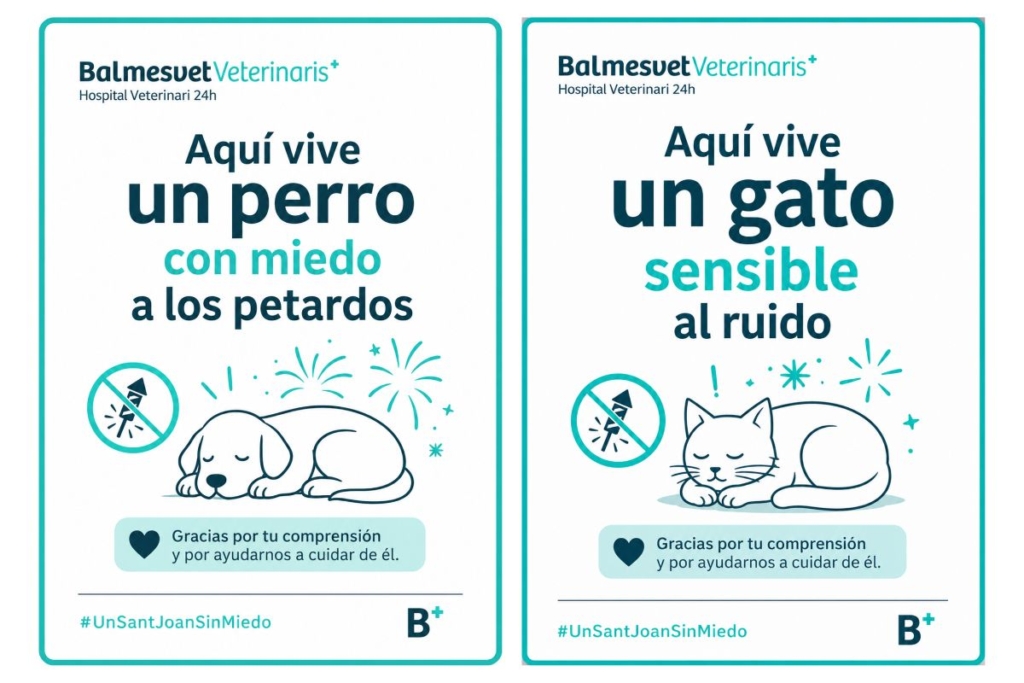
Their aim is to promote a more respectful and mindful festival for everyone. Because sometimes a small gesture can prevent a lot of suffering.
➡️ Click here to access all the free resources for #UnSantJoanSinMiedo
Frequently Asked Questions: Dogs, Cats, and Firecrackers on Sant Joan
Is it normal for my dog to be afraid of firecrackers?
Yes. Fear of loud noises is very common in dogs and can occur even in well-adjusted, sociable animals. In some cases, it’s a mild fear, but in others it can develop into a full-blown phobia.
Do cats also get stressed by firecrackers?
Yes, although cats generally tend to develop fewer severe phobias of firecrackers than dogs. This is due, in part, to differences in their behavior and how they cope with threatening situations. Cats are more likely to hide, be less active, and seek a quiet refuge rather than react explosively.
Even so, that doesn’t mean they don’t experience stress. They often express it in much more subtle ways, and it can go unnoticed.
Should I comfort my dog if they’re afraid of firecrackers?
Yes. Staying with them, letting them stay close to you, or petting them if they seek it out doesn’t “reinforce” their fear. The important thing is to remain calm and offer reassurance without forcing it.
Is it a good idea to tire them out before the festival to help them feel less afraid?
No. Moderate exercise can help relieve tension, but physically exhausting themselves doesn’t remove fear and can actually increase physiological stress.
Can I give them human medication?
Never without a veterinarian’s recommendation. Some medications used in humans can be dangerous or even toxic to cats and dogs.
What should I do if my dog tries to run away out of fear?
Keep doors, windows, and balconies closed, avoid taking walks during peak activity times, and make sure your pet’s microchipped and that its information’s up to date.
¿Cuándo pedir ayuda veterinaria por miedo o fobia a los petardos?
We recommend that you consult a professional if:
- The fear gets worse every year.
- Your dog panics.
- Your dog stops eating.
- Your dog harms themselves.
- Your dog tries to escape.
- The stress is clearly affecting their quality of life.
At Balmesvet, we’re here to help you enjoy a more peaceful Sant Joan
At our veterinary hospital, we know that this time of year can be very difficult for many dogs, cats, and their families.
That’s why we follow a “Fear Free” philosophy, focused on reducing fear, stress, and anxiety in our patients both inside and outside the veterinary hospital.
If your pet needs help coping with fireworks, our team can provide personalized guidance to find the best strategy for each situation.
And remember: for them, it’s not just noise.
Sometimes, it can feel like a very real threat.
Let’s help them have #UnSantJoanSinMiedo.
We look forward to seeing you at Calle Balmes 205, 08006, Barcelona. We are here to help you.
Balmesvet Veterinary Hospital
| Information | |
| Address | Carrer Balmes 205, 08006 Barcelona |
| Parking | Balmes 200 (30 min visits; up to 1 hour emergencies) |
| Phone | 931 173 173 |
| atencioclient@balmesvet.com | |
| Consultations | 8:30–20:00 |
| Emergency/Hospitalization | 24/7 |
Can we help you? Call us or make an appointment. 24/7 emergency services available.


 Barcelona, C/ Balmes nº 205
 931 173 173
 info@balmesvet.com