



Are you planning your next vacation and wondering what to do with your cat or dog? Whether they accompany you on the trip or you decide to leave them at home or with a caregiver, there are a number of essential things to consider so that both of you can enjoy those days with peace of mind.
Traveling with your pet: keys to a safe and pleasant experience
Sharing a vacation with your canine or feline companion can be an unforgettable experience, provided it is well prepared in advance. In the case of road trips, it is important to know the regulations and adapt the environment to ensure their well-being.
- Safety on the road
Your furry friend should not travel loose in the car. You can opt for an approved harness attached to the seat belt, or for a well-placed carrier. The Dirección General de Tráfico recommends placing the carrier on the floor behind the front seats or in the trunk, always in a sideways-facing position. - Temperature and ventilation
Never leave your pet alone in the car, especially on hot days. Although it might not seem like it, the inside of the vehicle can reach dangerous temperatures in just a few minutes. Make sure there is good ventilation or air conditioning throughout the trip.
Heatstroke in animals can be life-threatening and develop very quickly. If you want to know how to prevent it and act in time, check out our complete guide on heatstroke in pets.
- Frequent breaks and basic needs
On long journeys, it is a good idea to stop every two or three hours. Take the opportunity for your dog to walk a bit or for your cat to drink water and use the portable litter box if needed. -
Preparing for the trip
Before leaving, make a few short trips to get them used to the car. Also, keep a backpack handy with essentials: food bowl, water, blanket, toys, bed, litter box or scratching post (if you are traveling with a cat). This will provide security in new environments. Don’t forget to bring their food, especially if they follow a specific diet, and if they take medication, bring the necessary medicines for their treatment away from home.
- Up-to-date identification
The microchip is mandatory and essential in case of loss, but it is also advisable to have a tag with your contact details visible, since depending on where you travel, your microchip data might not be available in their system. All health documentation must also be up to date, including vaccination records, vaccines and any certificates required at the destination. - Inform yourself beforehand
Find out if there are veterinarians nearby in your vacation destination, in case of any emergency. And if the destination is in another country or community, check the specific health requirements: at Balmesvet we can help you with all the necessary procedures.
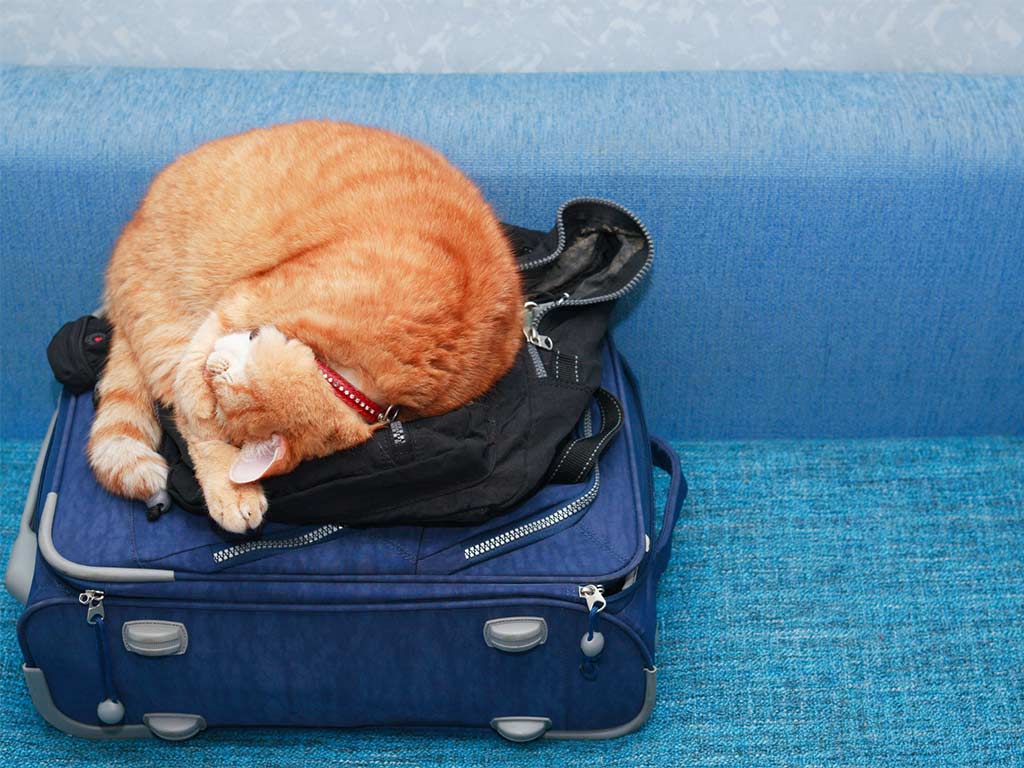
Can’t take them with you? Safe options to leave your companion in safe hands
There are situations in which your companion cannot accompany you. If this is the case, don’t worry: there are reliable alternatives for him/her to receive the best care while you are away.
- Professional or family caregivers
You can choose to leave them with someone you trust at home, which is especially recommended for cats, who are less stressed in their usual environment. If you don’t have that possibility, there are professional home care services or even family boarding services. - Animal day-care centers or specialized kennels
Some centers offer pet boarding with 24-hour care, adapted spaces, socialization and physical activity. In the case of dogs with chronic diseases or veterinary treatments, you can ask your veterinarian if there is a kennel with health care during your time away. - Don’t forget the current legislation
According to the Animal Welfare Law, cats cannot be left alone at home for more than 72 hours, and dogs for no more than 24 hours. In addition to sufficient food and water, it is essential to guarantee a safe, comfortable environment with adequate temperature.
How to reduce your pet’s stress during your vacation
Whether traveling with you, staying at home or in a doggy daycare, the change in routine can be anxiety-inducing. Here are some helpful resources to help you help them stay at ease:
Supplements, pheromones and pharmaceuticals for a relaxing vacation
- Supplementation: Nutraceuticals such as Theanine (Anxitane), Alpha-casocepin (Zilkene or Happy Snak Feliwey) and Tryptophan (Adaptil), are complementary in the treatment of behavioral problems related to anxiety, fear or aggression. Starting earlier can help your cat or dog to be more relaxed on the journey.
- Use pheromones: pheromones are chemicals that animals produce to communicate with each other, influencing behaviors and emotional states such as sexual attraction, territorial marking, and stress reduction. There are products with synthetic, species-specific pheromones that mimic the calming properties of natural pheromones, available in formats such as collar, diffuser, spray, etc. Your veterinarian can advise you on the appropriate product and how to use it.
- Administering medications: if your dog or cat is prone to motion sickness, your veterinarian can recommend a medication that can reduce the possibility of motion sickness on the road. If the problem of your pet is that he/she has a very hard time when traveling, the veterinarian will evaluate, depending on the case, what type of anti-anxiety or sedative can be given to reduce his/her anxiety.
What do you need to travel with your pet abroad?
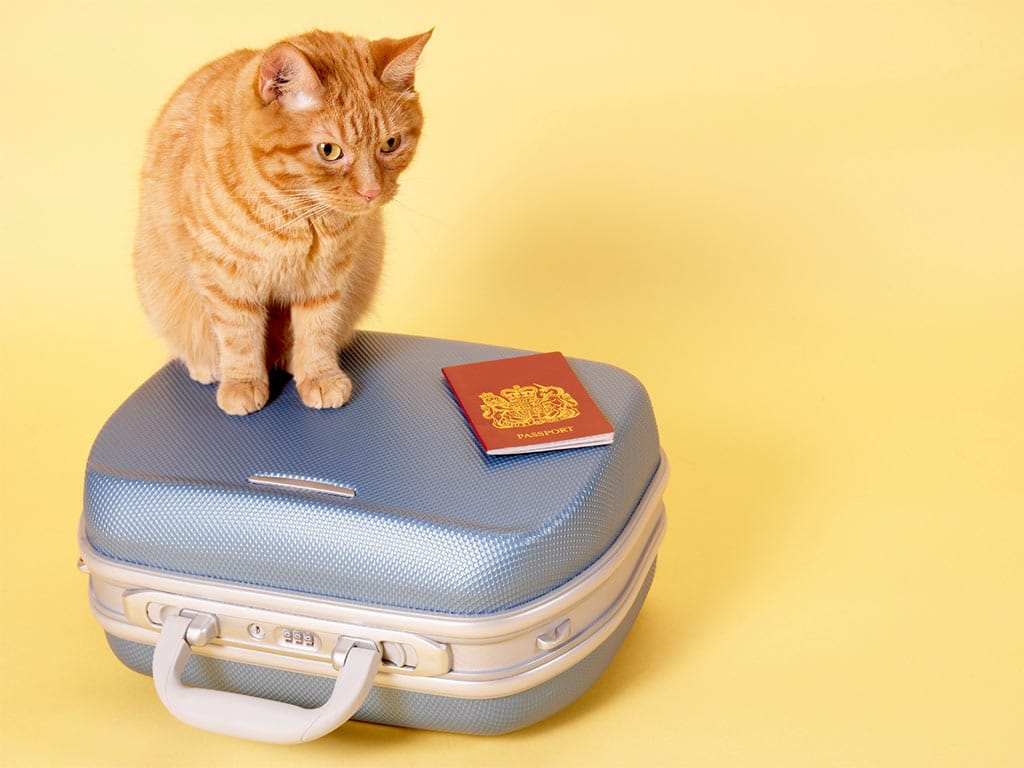
Travel certificates for pets
If you plan to leave the country with your cat or dog, there are documents you should prepare in advance. Depending on the destination, the authorities may require:
- European veterinary passport: for travel within the EU or in case you are returning to an EU country is also required.
- Current rabies vaccination: If it is the first rabies vaccination to be administered it must be at least 21 days before the trip.
- Microchip: This is mandatory and must be properly registered.
- Health certificate: This must be issued by a licensed veterinarian authorized for international procedures. This certificate must be reviewed and validated by the Regional Offices of the DACC, which in Catalonia act as the official health authority. The procedure is managed through the state system CEXGAN, which is necessary for the document to be legally valid in the country of destination.
- Rabies blood test: some countries require a rabies antibody assay. This test determines whether the rabies vaccination has generated an adequate level of defenses in the cat or dog’s body.
If you are going to travel to another country with your cat or dog you might want to read our blog about Traveling abroad with cats and dogs.
Enjoying a vacation with your cat or dog, or entrusting their care to others, does not have to be complicated if it is done with planning and love. Each canine or feline companion is different, and we will help you find the option that best suits their character and needs. At Balmesvet we can help you with all these procedures, making sure that your companion travels protected and in compliance with the law. Contact us here.
Calle Balmes 205, Barcelona
931 173 173
atencioclient@balmesvet.com
More information in our blog


 Barcelona, C/ Balmes nº 205
 931 173 173
 info@balmesvet.com