



The Yorkshire terrier, affectionately known as the Yorkie, is one of the most common dogs in Barcelona’s homes and parks. Its small size, active nature, and chic appearance have made it an ideal urban companion. But behind its reputation as a “purse dog” lies much more: a breed with working origins, a courageous disposition, and surprising intelligence.
If you are thinking about adopting a Yorkshire terrier or already live with one, in this first part of our guide we’ll tell you about its history, physical characteristics, and personality traits, plus give you practical advice on their behavior and how to live with them.
Historical origins of the Yorkie
The Yorkshire Terrier has its roots in 19th-century England. Its ancestors were Scottish terriers that arrived in the Yorkshire region alongside immigrant weavers. These dogs, which included the Waterside, Paisley, Skye, and Clydesdale terriers, were crossed with other local terriers such as the English Black and Tan, resulting in the Yorkshire Terrier we know today.
Its original function was clear: to keep rats and small rodents out of factories, mines, and working-class homes. Over time, thanks to its small size and striking silky coat, the breed caught the attention of the Victorian aristocracy, who turned it into a fashionable companion dog.
In 1885, the Yorkshire Terrier was officially recognized by the American Kennel Club (AKC) and has since gained popularity around the world.
Physical features of the Yorkshire Terrier and its varieties
The official standard for the Yorkshire Terrier defines a small, compact, and elegant dog:
- Height: between 15 and 18 cm.
- Weight: up to 3 kg (ideally between 1.5 and 2.5 kg).
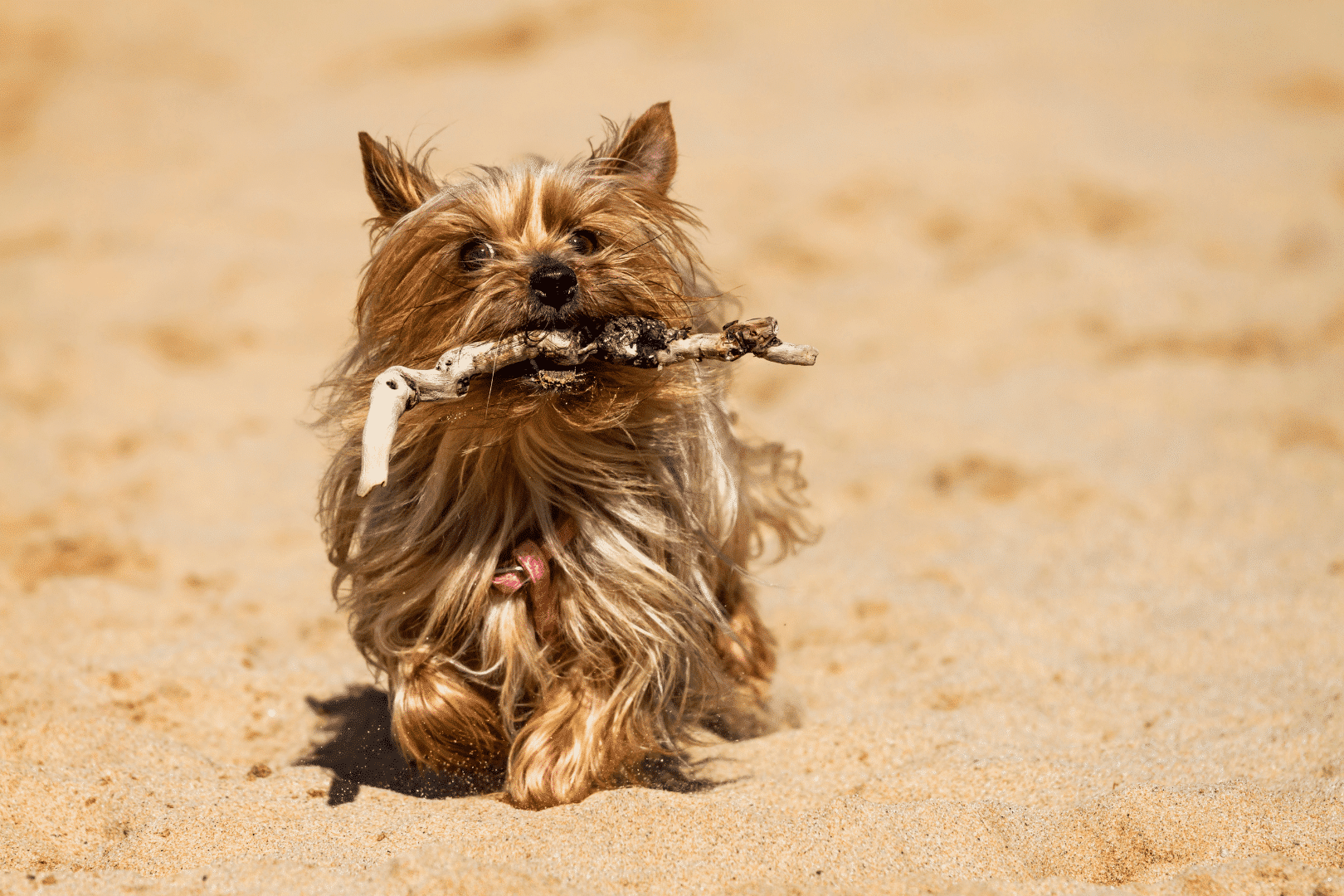
- Coat: long, straight, silky hair that changes color with age. Puppies are born black with reddish markings, and over time that black transforms into a dark metallic gray (steel blue) on the back, combined with an intense gold on the face, chest, and legs.
- Life expectancy: between 12 and 15 years, although many reach more advanced ages with good care.
A controversial variant: Miniature or “teacup” Yorkie
It is common to find “mini” or “teacup” Yorkshires, bred to be smaller than the standard size. Although they are eye-catching, these dogs tend to be more delicate and are more prone to health problems such as hypoglycemia, dislocations, or bone fragility. As a result, breeding them is highly controversial.

Yorkshire Terrier personality and behavior: what this breed is really like
The Yorkshire Terrier is a small dog in size, but it has an energetic, intelligent, and bold character. Its origins as a rodent-hunting dog have left their mark on its temperament: they are active, courageous dogs with a highly developed sense of alertness.
Main personality traits of the Yorkshire Terrier
- Brave and curious: unaware of its size, it may confront much larger dogs. This boldness is typical of terriers.
- Very loyal to its family: it forms a close bond with its owner, showing affection and tending to seek human attention.
- Alert and sensitive to stimuli: it tends to bark when it hears noises, senses movement, or detects the presence of strangers. This makes it an excellent watchdog, although it can cause problems in the home if not trained properly.
- Changeable sociability: with proper socialization from puppyhood, it usually gets along well with other dogs and people. However, if this stage is not worked on, it can be reserved, fearful, or even reactive towards strangers.
- High intelligence and mental energy: it enjoys learning tricks, scent games, and activities that stimulate its mind.
Behavioral problems and how to prevent them
Some common behaviors in the breed can become problems if not managed:
- Excessive barking: Their natural tendency to bark requires positive training to redirect the behavior and teach them signals to calm down.
- Separation anxiety: Yorkies do not tolerate being left alone for long periods of time. They may develop compulsive vocalizations, destructive behavior, or other issues if they are not gradually accustomed to being alone.
- Reactivity: Without proper socialization, they may react disproportionately to new stimuli (people, dogs, noises).
- Emotional fragility: They are sensitive dogs, which means that environments with excessive noise, sudden movements, or physical punishment can cause fear and worsen their behavior.
Games, activities, and mental stimulation for Yorkshire terriers
Yorkshire terriers do not need as much physical exercise as other large breeds, but they do require daily mental stimulation. Some ideal activities are:
- Short but frequent walks: several outings a day, allowing them to explore and socialize.
- Scent games and cognitive stimulation: scent mats, searching for hidden treats, or interactive toys.
- Positive reinforcement training sessions: they enjoy learning new tricks and routines, which strengthens the bond with their owner.
- Agility or mini-obedience: many Yorkies excel at dog sports adapted to their size, which combine physical and mental exercise.
Vital recommendations for Yorkie guardians
- The Yorkshire is a dog that needs constant human contact: it is not suitable for families who spend long hours away from home.
- It is recommended to begin early training and socialization so that they learn to manage stimuli and adapt to urban environments.
- Due to their alert nature, they need a structured environment and defined routines, which provide them with security and reduce the risk of anxiety.
Tips for living with a Yorkshire terrier: training, socialization, and well-being
- Manage barking
- Teach them commands such as “quiet” or “stop” from puppyhood using positive reinforcement.
- Avoid yelling at them, since they will interpret the increased noise level as part of the “warning.”
- Reward calm behaviors at home and during walks with treats.
- Prevent separation anxiety
- Gradually get them used to being alone, starting with very short periods.
- Provide interactive toys or ones that can be filled with food to keep them occupied.
- Avoid overly emotional goodbyes or greetings that increase anticipation and frustration.
- Stimulate their mind and body
- Alternate short walks with scent games and training tricks.
- Introduce puzzle-type toys that require them to solve small tasks in order to get the food out.
- Devote short training sessions (5–10 minutes) several times a day.
- Early and positive socialization
- Expose your puppy to different sounds, people, dogs, and environments gradually, always associating the experience with something positive (rewards, play).
- Avoid forcing situations: socialization should be gradual and respectful of their own pace.
- A safe and adapted environment
- Supervise contact with small children and large dogs to prevent accidents.
- Provide daily routines (mealtimes, walks, and rest periods) that give them a sense of security and reduce stress.
- Do not use choke collars or pull collars: Yorkshire Terriers are sensitive and prone to tracheal collapse, so it is essential to use a harness.
The Yorkshire terrier, a small dog with a big heart
The Yorkshire Terrier is much more than just a companion dog: it’s a brave, affectionate, and intelligent companion that needs attention, positive training, and quality time with its family. It may be small in size, but its energy and affection are immense.
In the following articles in this guide, you will discover how to maintain your pet’s health, nutrition, and care so that they can enjoy a long, active, and happy life by your side.
At our veterinary hospital in Barcelona, we specialize in breeds such as the Yorkshire terrier. At Balmesvet, we accompany you through every stage of your pet’s life, from their first checkup as a puppy to care in old age, always applying the Fear Free philosophy: we minimize stress, care for their emotional and physical well-being, and make each visit a calmer and more positive experience. Our goal is for your Yorkshire to enjoy a full and healthy life.
We look forward to seeing you at Calle Balmes 205, 08006 Barcelona. We are here to help you: 24/7 Emergencies & ICU.
| Data | Information |
| Address | Carrer Balmes 205, 08006 Barcelona |
| Parking | Balmes 200 (30 min consultas; hasta 1 h urgencias) |
| Phone | 931 173 173 |
| atencioclient@balmesvet.com | |
| Consultations | 8:30–20:00 |
| Emergency/Hospitalization | 24/7 |
Need help? Call us or make an appointment. 24/7 emergency services available.

 Barcelona, C/ Balmes nº 205
 931 173 173
 info@balmesvet.com