


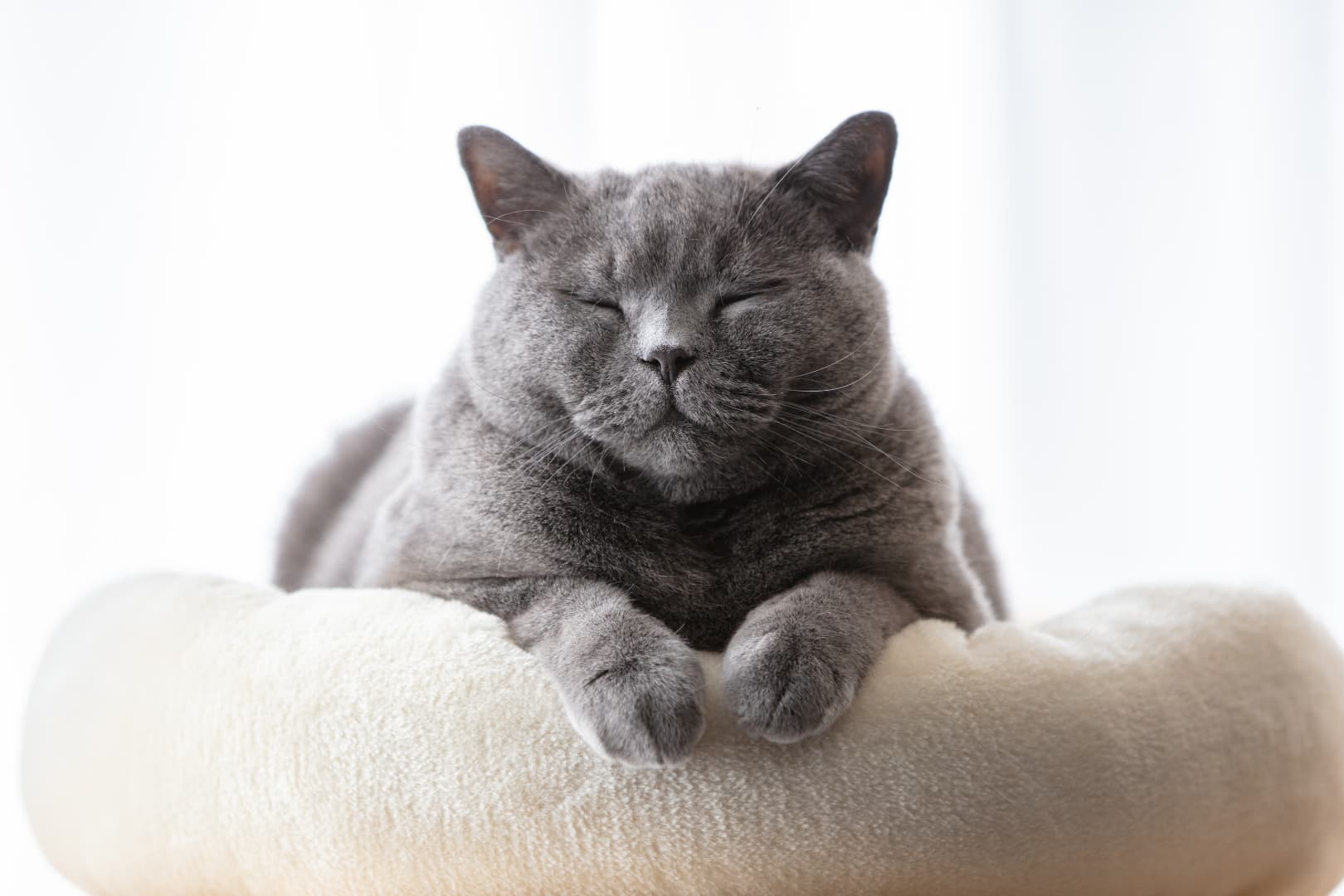
The British Shorthair is one of the most recognized and beloved cat breeds in Europe. Its stocky build, calm expression, and even temperament have made it an increasingly popular choice in urban homes such as those in Barcelona. However, behind its calm exterior lies a breed with a rich history, specific needs, and a very particular way of interacting with people.
In this first part of the complete guide to the British Shorthair, we look at its origins, physical characteristics, temperament, and the keys to healthy coexistence, with a veterinary, preventive, and respectful approach to feline well-being.
The origin and history of the British Shorthair: from Britain to big city life
The origin of the British Shorthair is believed to date back to the cats that arrived in Britain with the Roman legions around the 1st century AD, one of the most widely accepted hypotheses about the early developments of domestic cats in the British Isles. These cats were introduced as rodent controllers in settlements, barns, and storehouses, and over the centuries, they naturally adapted to the cold and humid climate of the region.
This adaptation favored a robust constitution, a strong bone structure, and a short, very dense coat, characteristics that continue to define the breed today. For generations, these cats lived alongside the local population without any selective breeding, resulting in a balanced, hardy, and functional feline.
The first attempts at standardization began in the late 19th century. In 1871, Harrison Weir presented British-type cats at the first cat show at the Crystal Palace in London, marking the beginning of formal recognition of the breed.
The World Wars brought about a serious decline in their population. To revive it, controlled crossbreeding with other breeds was used, especially those with short hair and a solid build, with the aim of preserving the physical characteristics and temperament typical of the British Shorthair. Since its definitive recognition by the main international cat organizations in the 1970s, the breed has established itself as a stable, long-lived breed well suited to indoor life.
Characteristics of the British Shorthair: physique and breed standards
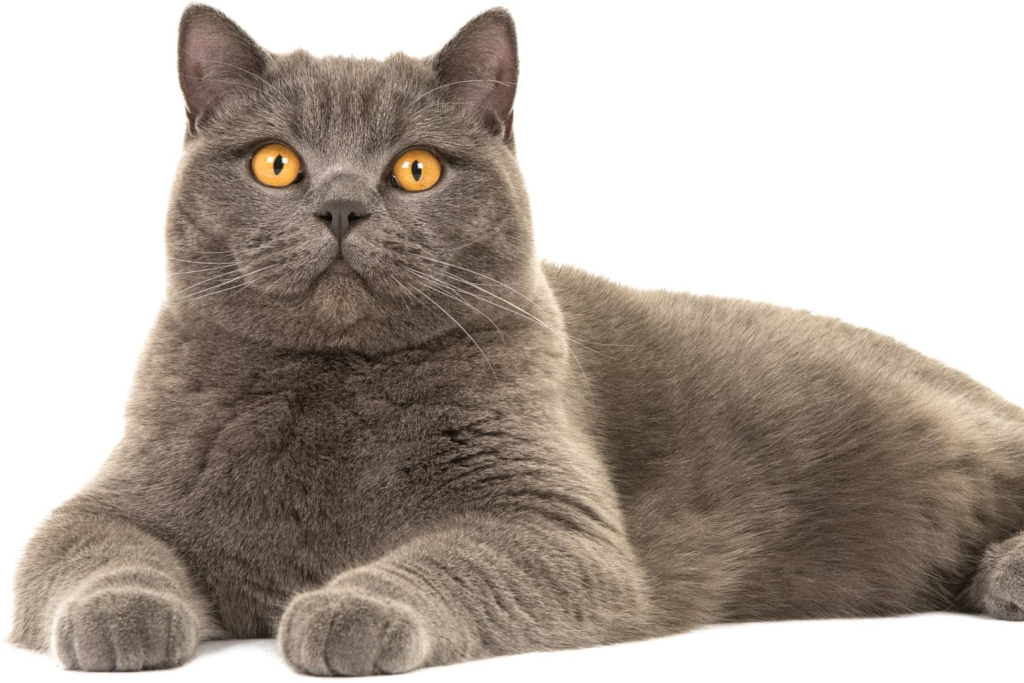
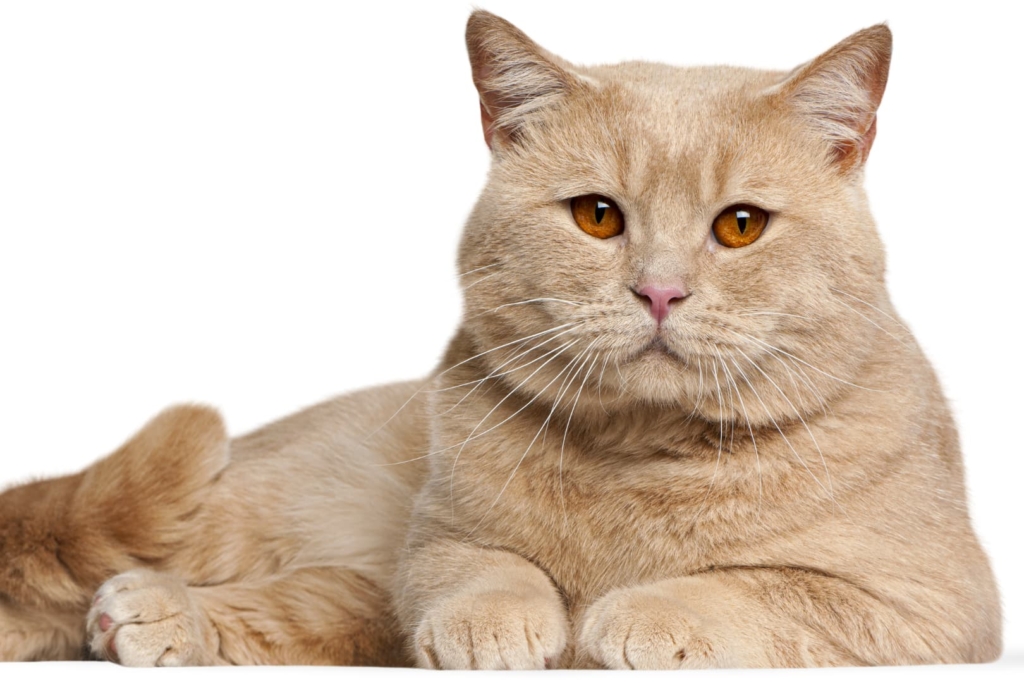
The British Shorthair is a medium-to-large-sized cat, compact and powerful, with an appearance that conveys strength, balance, and composure. Not a stylized or extravagant breed, it is instead harmonious and well-proportioned.
Size, weight, and physique of the British Shorthair
- Muscular, rounded body with a broad chest.
- Heavy cat for its size.
- Approximate weight:
- Males: between 5 and 8 kg.
- Females: between 4 and 6 kg.
- Slow growth: reaches full physical maturity between 3 and 5 years of age.
- Strong, short to medium legs with round, compact feet.
- Thick tail at the base, of medium length and rounded tip.
- This structure is associated, in many specimens, with a moderate level of activity, especially in adulthood.
Head and facial expression: typical features of the British Shorthair
- Large, rounded head.
- Prominent cheeks, especially in males.
- Short, broad muzzle, but not flat.
- Short nose with a gentle stop.
- Small to medium-sized ears, set wide apart and rounded.
- Large, round eyes with a sweet, calm expression.
- In the blue British Shorthair, the eyes are usually copper or deep orange.
British Shorthair coat: short, dense, and insulating
- Short, very dense coat that does not lie flat against the body.
- Abundant undercoat.
- Firm, plush texture.
- High insulating capacity.
- Marked shedding, especially in spring and fall.
British Shorthair colors and patterns: The standards
- A wide variety of colors and patterns are accepted:
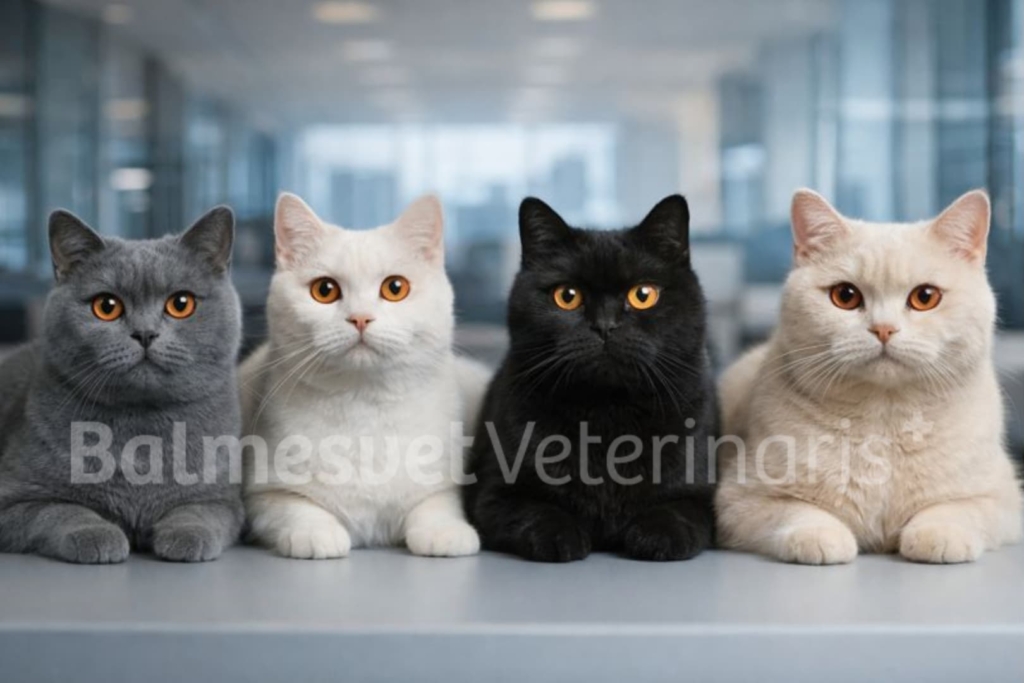
- Solid colors: blue, white, black, cream, chocolate, lilac, red.
- Two-tone.
- Tabby.
- Colorpoint.
- Silver and golden.
- Coat color does not influence the cat’s personality or health.
Differences between sexes, and changes with age: how the British Shorthair evolves
- Males are generally larger and have more pronounced cheeks.
- They tend to gain body mass with age.
- Weight control is a key aspect of preventive management.
The British Shorthair’s character: personality and behavior
The British Shorthair is a calm and even-tempered cat, but not passive or aloof. They bond with others in a gentle, discreet, and very steadfast manner.
Calm, but not indifferent: how the British Shorthair bonds
- Stable and predictable character.
- Discreet affection, without constantly seeking attention.
- Preference for quiet closeness rather than prolonged physical contact.
- Low tolerance for excessive or forced handling.
Energy level and playfulness in the British Shorthair
- Moderate level of activity.
- Plays in short sessions spread throughout the day.
- Prefers games of stalking and watching.
- Not very prone to acrobatic behavior.
- Play is essential for preventing obesity and maintaining emotional balance.
Independence and coping with loneliness: what to expect from the breed
- They tend to tolerate periods of solitude better than other more demanding breeds, although this always depends on the individual, their previous history, and their environment.
- They need routines and stable environments to feel secure.
Living with children, visitors, and other animals: how they tend to behave
- With children: gets along well if their space and routine are respected.
- With visitors: reserved at first, approaches when they feel safe.
- With other cats: adapts well with gradual introductory periods.
- With calm dogs: can live together with proper introductory periods.
Meowing and communication: signs to watch for
- Not a very vocal breed.
- Communication based mainly on body language.
- Changes in vocalization should be considered a possible sign of discomfort or illness.
Sensitivity to stress: why the British Shorthair needs stability
- Low tolerance to sudden changes in environment or routine.
- In cats, stress can show up as loss of appetite, withdrawal, or urinary problems, so it’s important to minimize changes and respect their routines.
British Shorthair: keys to living together in an urban environment
The British Shorthair adapts very well to apartment living and urban environments such as Barcelona, as long as its physical, emotional, and environmental needs are adequately met.
Indoor living: advantages and points to watch out for
Advantges:
- They don’t need a lot of space.
- They adapt well to apartment living.
- They are less prone to destructive behavior if their environment is properly set up.
Things to watch out for:
- Tendency toward a sedentary lifestyle.
- Predisposition to becoming overweight, especially after being spayed or neutered.
- Less natural physical exertion.
Environmental enrichment: scratching posts, cat trees, and other toys
- Sturdy and stable scratching posts.
- Multi-level shelves or platforms.
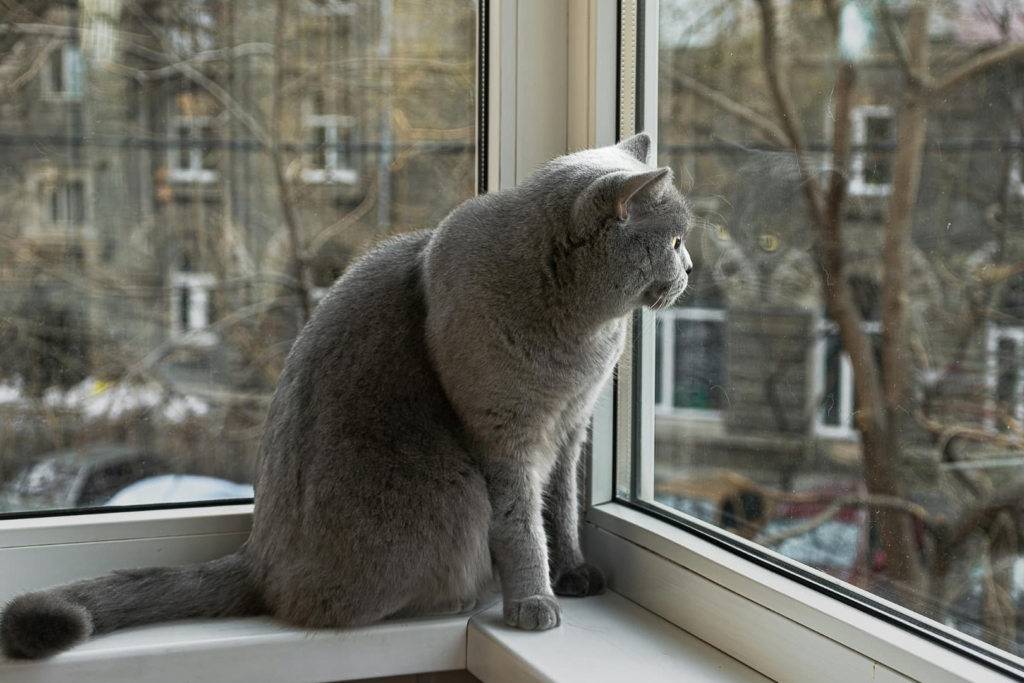
- Safe viewing areas near windows.
- Interactive toys that stimulate simulated hunting.
- Frequent rotation of toys.
Routines and stability: the foundation of British Shorthair well-being
- Regular meal times.
- Short but consistent play sessions.
- Quiet, low-traffic areas for rest.
- Gradual changes when modifying routines.
British Shorthair’s relationship with people outside the family circle
- Tendency to be reserved with strangers.
- Watching from a distance before initiating interaction.
- Forcing contact can cause stress or avoidance.
Behavior during visits and social gatherings
- They may hide when there are large or noisy groups of visitors.
- They tolerate quiet, predictable encounters better.
- Providing elevated hideaways or quiet rooms makes it easier for them to cope.
Behavior at the vet
- They may appear reserved or withdrawn in unfamiliar environments.
- They particularly benefit from a Fear Free and Cat Friendly approach:
- A carrier they are familiar with from home.
- Gentle and slow handling.
- Minimization of stressful stimuli.
- Positive experiences improve their cooperation during future visits.
Balconies and safety: netting and preventing “parachute cats”
- Always install approved safety nets.
- Don’t be fooled by their seemingly calm demeanor.
- Cat parachute syndrome remains one of the most common reasons for veterinary emergencies involving balconies and windows in city cats.
Noise pollution: coping and reducing stress
- Good at adapting to constant background noise.
- More sensitive to loud and unpredictable noises.
- We recommend providing safe places they can retreat to and avoid forcing social interaction.
Training and mentally stimulating your British Shorthair: socialization and routines
The emotional balance of the British Shorthair is built on proper socialization, respectful handling, and mental stimulation tailored to its character.
Early socialization: how it improves social skills and veterinary care
- Promotes better tolerance to human and veterinary handling.
- Reduces reactiveness to new stimulation.
- Improves adaptation to changes in environment or routine.
- Should be based on positive, gradual, and unpressured experiences.
Respectful upbringing: their environment teaches them more than punishment does
- They do not respond well to punishment or authoritarian management.
- Redirecting unwanted behavior is more effective than correcting it.
- The design of their environment teaches them more than direct correction.
Mental stimulation: games, interactive feeders, and short sessions
- Simulated hunting games adapted to their pace.
- Interactive or puzzle-type feeders.
- Searching for food scattered around the room.
- Short play sessions, 5 to 10 minutes, several times a day.
- Regular rotation of toys.
Recommendations for British Shorthair owners: well-being and prevention
What to expect from the British Shorthair: bonding, routine, and needs
- Subtle and constant affection.
- Low demand for attention.
- Preference for stable routines and quiet environments.
- A need to respect their timing and body language.
Preventing weight gain: portion control and daily activity
- Control portion sizes from a young age.
- Prevent continuous access to food if they do not exercise self-control.
- Daily exercise through play.
- Regular veterinary check-ups to assess weight and body condition.
Fear Free: why this particular breed especially benefits from it
- Respectful and tailored veterinary care.
- Reduced stress during consultations and procedures.
- Improved experience and early detection of health problems.
British Shorthair: a well-balanced cat for harmonious living
The British Shorthair is a breed particularly suited to quiet homes and owners who understand the feline bond based upon respect and observation. Calm, stable, and undemanding, it forms profound relationships without the need for constant interaction, provided that its schedule and interaction style are respected.
A well-designed indoor environment, with stable routines, appropriate mental stimulation, and safe spaces, along with early socialization and respectful handling, promotes good adaptation to city life and contributes to their physical and emotional well-being.
At Balmesvet, a leading veterinary hospital in Barcelona, we accompany British Shorthair cats throughout all stages of their lives with a Cat-Friendly and Fear-Free approach, offering specialized feline veterinary care tailored to their needs.
We look forward to seeing you at Calle Balmes 205, 08006, Barcelona. We are here to help you.
Balmesvet Veterinary Hospital
| Information | |
| Address | Carrer Balmes 205, 08006 Barcelona |
| Parking | Balmes 200 (30 min visits; up to 1 hour emergencies) |
| Phone | 931 173 173 |
| atencioclient@balmesvet.com | |
| Consultations | 8:30–20:00 |
| Emergency/Hospitalization | 24/7 |
Can we help you? Call us or make an appointment. 24/7 emergency services available.

 Barcelona, C/ Balmes nº 205
 931 173 173
 info@balmesvet.com