


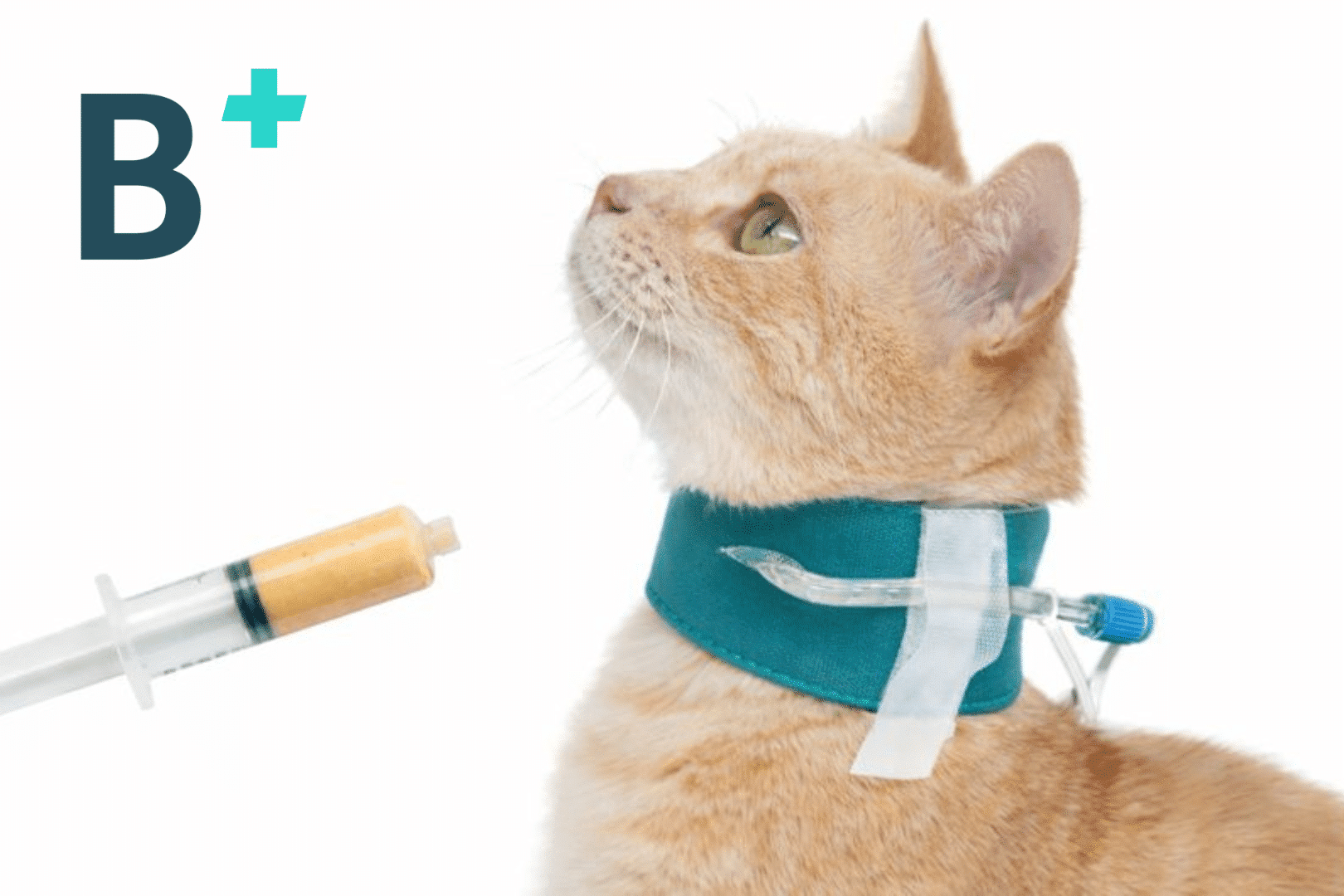
Nasogastric tube and esophagostomy in cats: indications, benefits, and care
Loss of appetite in cats is not a symptom to be taken lightly. In feline medicine, even short periods of under-eating can trigger serious complications, especially in cats with medical conditions, chronic illnesses or those who are hospitalized.
In cats, refusing to eat is not usually just a symptom of illness, but a symptom that can quickly worsen any underlying condition. That is why refusing to eat is in itself a medical problem that must be addressed actively and as soon as possible. This is where feeding tubes become a key tool for protecting the cat while the underlying cause is being treated.
Current scientific evidence shows that early tube feeding improves outcomes, reduces complications, and speeds up recovery. When a cat can’t or won’t eat on its own, part of routine medical treatment is using a feeding tube.
Among the most commonly used in cats are the naso-esophageal (through the nose) tube and the esophagostomy tube (through an incision in the throat), each with specific uses.
Loss of appetite in cats: why it’s a serious medical issue that should not be ignored
Cats are a species that are particularly sensitive to anorexia. Unlike other animals, they can develop fatty liver disease after just a few days of inadequate food intake, even when there is no underlying disease directly affecting the liver.
In addition, their metabolism, lower tolerance to fasting, and reactions to stress make nutritional support particularly important in feline medicine.
The latest studies all agree that:
- Enteral nutrition (feeding tubes) preserves the health of the gastrointestinal lining.
- It lowers systemic inflammation and bacterial overgrowth.
- It boosts the immune response.
- It helps with healing and getting back to normal.
- It lowers the death rate in hospitalized and critically ill patients.
That’s why starting nutritional support isn’t seen as a secondary measure anymore, but an active part of medical treatment.
Placing a feeding tube does not mean that the cat is in a “very serious” condition, but rather that we are acting preventively to avoid complications that could worsen its condition.
Feeding tubes in cats: what they can and can’t do
Before discussing the different types of tubes, it’s important to clarify their actual function.
What does a feeding tube do for cats?
- Ensure adequate nourishment.
- Prevent muscle loss.
- Protect the liver from fatty liver disease.
- Facilitate recovery while treating the underlying disease.
- Reduce stress associated with force-feeding.
What a feeding tube does not do for cats
- It does not cure the disease that caused the appetite loss.
- It does not replace medical treatment.
- It does not prevent the cat from eating on its own again.
- It is not placed permanently without reevaluation.
The tube is a temporary tool, adapted to each cat and reviewed on an ongoing basis.
Nasogastric tubes in cats: why they’re used, when they’re recommended, and how they’re cared for
What is a nasogastric tube in cats?
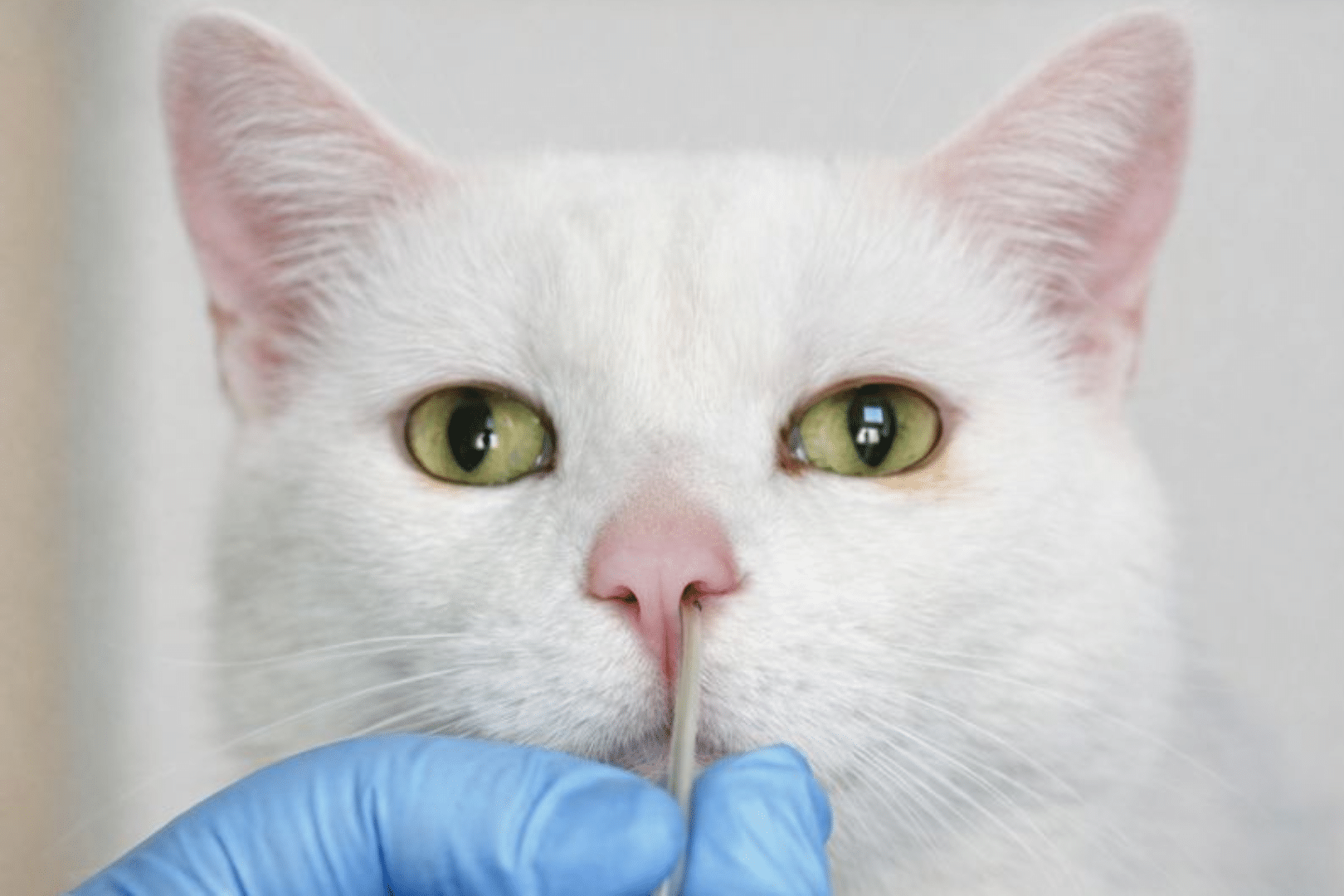
The nasogastric tube is a thin tube that is inserted through the nostril and positioned in the distal esophagus (just above the stomach). It is a minimally invasive technique widely used in feline hospitalization and intensive care units.
When is a nasogastric tube recommended for cats?
It’s mainly recommended for:
- Cats with acute short-term anorexia.
- Patients hospitalized in the early stages of systemic disease.
- Cats with temporary oral, dental, or jaw pain.
- Fatty liver disease in its very early stages.
- Patients in the ICU when immediate nutrition is required.
- Situations in which general anesthesia is not recommended.
Advantages of nasogastric tubes in cats
- Quick and easy placement.
- Generally no general anesthesia required.
- Useful in emergencies and early stages of hospitalization.
- Allows early nutrition to begin.
- Easy removal.
Limitations of the naso-esophageal tube
- Only allows liquid or very watered-down diets.
- Limited feeding volume.
- Lower short-term tolerance.
- Risk of accidental withdrawal.
- Not recommended for persistent vomiting, nasal or esophageal disease.
It’s not the ideal option when fasting is expected to last longer than 5–7 days.
Care and monitoring of the nasogastric tube
- X-ray confirmation of placement.
- Slow, gradual administration.
- Daily cleaning of the nostril.
- Monitoring for nausea, coughing, or regurgitation.
- Daily reassessment of the need to switch to another tube.
Feeding tubes in cats: medium- and long-term nutritional support
What is an esophagostomy tube in cats?
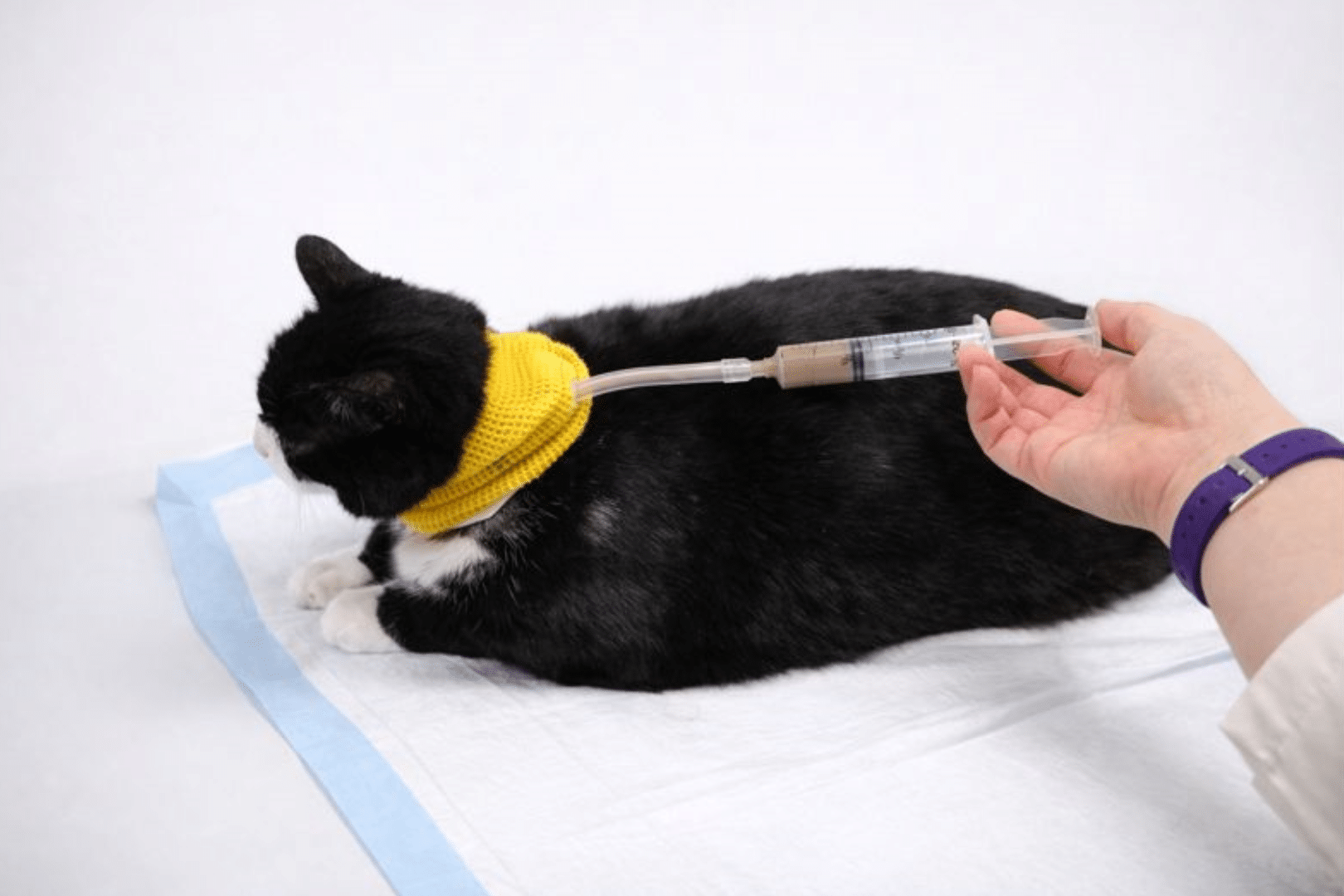
The esophagostomy tube is surgically placed at the level of the throat through the esophagus. In modern feline medicine, it’s considered the tube of choice when medium- or long-term nutritional feeding is expected.
When is an esophagostomy tube recommended in cats?
It’s particularly recommended for:
- Confirmed feline fatty liver disease.
- Acute or chronic feline pancreatitis.
- Chronic decompensated kidney disease.
- Inflammatory bowel disease (IBD).
- Digestive or systemic neoplasms.
- Neurological diseases with difficulty swallowing.
- Oral, mandibular, or maxillofacial trauma.
- Complex postoperative cases.
- Cats hospitalized in the ICU.
Benefits of the esophagostomy tube in feline medicine
- Allows for a complete diet of pureed foods, not just liquids.
- Makes it easier to meet the cat’s actual energy requirements.
- Excellent medium- and long-term tolerance.
- Less stress during feeding.
- Easy to use in hospitals and at home.
- Improves recovery and quality of life.
Nowadays, it’s considered a leading form of treatment, not a last resort.
Risks and limitations of esophagostomy tubes in cats
- Requires general anesthesia for placement.
- Risk of infection at the insertion site.
- Requires proper daily care.
- Not indicated in cases of severe esophageal disease or uncontrolled vomiting.
Complications are rare when proper protocols are followed.
Caring for an esophagostomy tube in cats
- Daily wound care.
- Correct tube placement.
- Washing after each feeding.
- Monitoring for signs of inflammation, pain, or discharge.
- Gradual withdrawal when the cat is able to eat voluntarily again.
Feline diseases where a feeding tube makes all the difference
The placement of a feeding tube helps to break the cycle of illness, anorexia, muscle loss, and medical decline, which is especially relevant in cats.
It is key in:
- Feline hepatic lipidosis.
- Pancreatitis.
- Chronic kidney disease.
- Chronic gastrointestinal disease (IBD).
- Tumors.
- Severe infectious diseases.
- Frail geriatric cats.
- Critically ill hospitalized patients.
How we choose which type of tube each cat needs
The decision is based on:
- Expected duration of anorexia.
- Underlying medical condition.
- General condition and stability of the patient.
- Risk in relation to anaesthesia.
- Ability to manage the patient in hospital and at home.
The evidence is clear:The evidence is clear: the sooner adequate nutritional support is provided, the better the outcome.
Feline nutritional support at Balmesvet
Fear Free and Cat Friendly feline medicine in Barcelona
At Balmesvet, nutritional support is part of a comprehensive approach to advanced feline medicine, always from a Fear Free and Cat Friendly perspective.
Our approach is based on:
- Exclusive feline hospital, designed to reduce stress.
- Team specialized in feline medicine and intensive care for cats.
- Catheter placement with respectful handling and pain control.
- Use of pheromones and a calm environment.
- Individualized nutritional plans according to condition and clinical status.
- Close monitoring during hospitalization and after discharge.
- Support and clearly explained information for accompanying guardians.
We understand that a catheter is a temporary tool, adapted to each cat and checked on a daily basis, with the aim of restoring their independence, well-being, and quality of life.
When to consult your veterinarian if your cat is not eating
If your cat has stopped eating, is eating less than usual, or has an illness that may affect its nutrition, early veterinary assessment is key.
At Balmesvet, we have a leading feline hospital in Barcelona, a 24/7 ICU, and a team specializing in feline medicine and advanced nutritional support.
We look forward to seeing you at Calle Balmes 205, 08006, Barcelona. We are here to help you.
Balmesvet Veterinary Hospital
| Information | |
| Address | Carrer Balmes 205, 08006 Barcelona |
| Parking | Balmes 200 (30 min visits; up to 1 hour emergencies) |
| Phone | 931 173 173 |
| atencioclient@balmesvet.com | |
| Consultations | 8:30–20:00 |
| Emergency/Hospitalization | 24/7 |
Can we help you? Call us or make an appointment. 24/7 emergency services available.

 Barcelona, C/ Balmes nº 205
 931 173 173
 info@balmesvet.com