


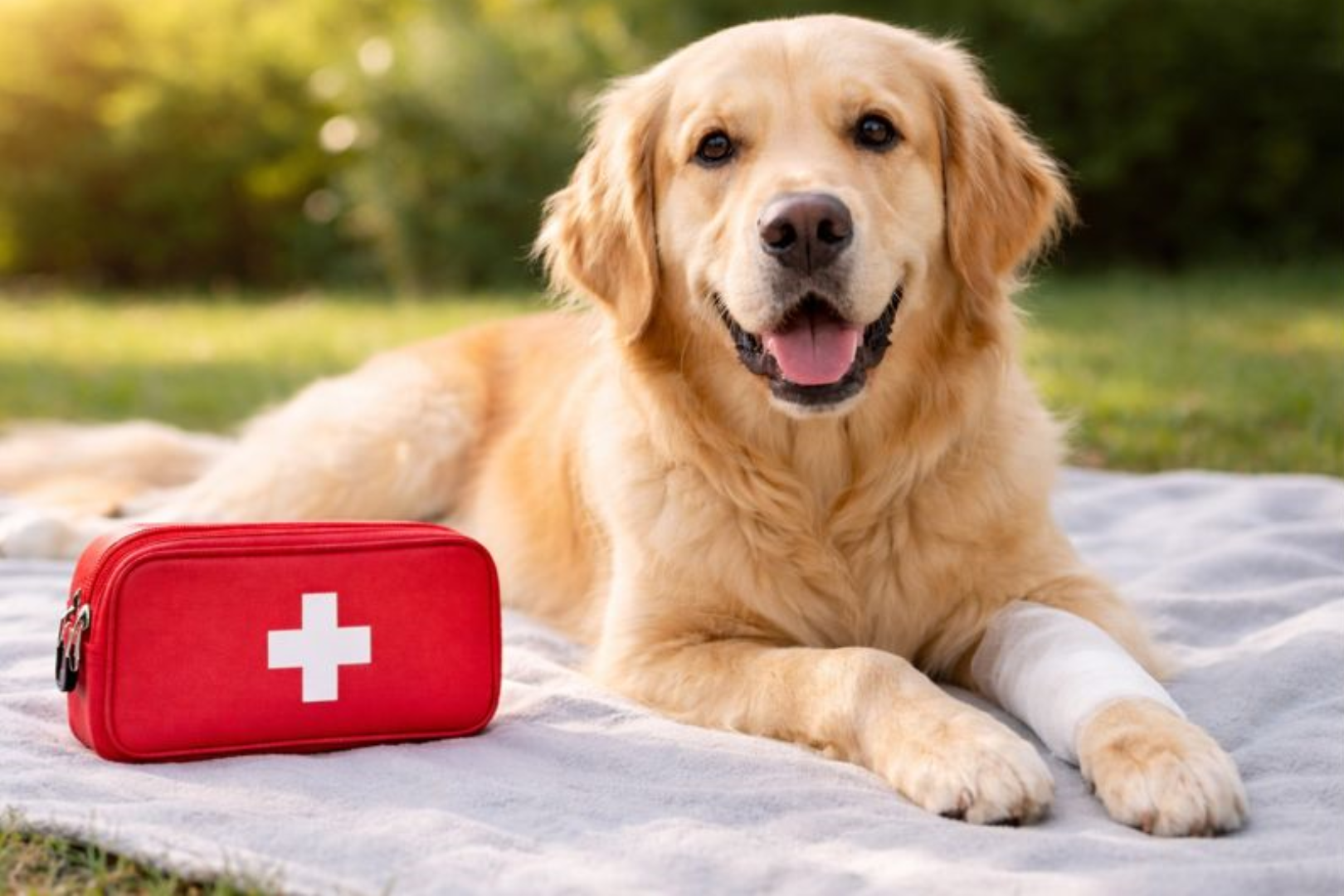
Accidents and medical emergencies can happen at the drop of a hat. Knowing how to respond in the first few minutes can make a big difference in a dog’s recovery, as long as you act calmly, use good judgment, and don’t just wing it.
First aid for dogs does not replace veterinary care, but it does allow you to buy time, reduce pain, avoid complications, and increase the chances of recovery while transporting the patient to a veterinary center.
In this comprehensive guide, we explain what first aid is, how to respond step by step, what to do in the most common emergencies, what mistakes to avoid, and when to go immediately to the veterinary hospital, using rigorous veterinary principles and an approach that respects the physical and emotional well-being of the dog.
First aid for dogs: what it is and when it can help
Veterinary first aid is a set of immediately applicable temporary measures that can be applied to a dog after an accident or in a medical emergency before receiving professional veterinary care.
Its main objectives are:
- Save lives.
- Prevent injuries or illnesses from worsening.
- Reduce pain and stress.
- Ensure safe transport to the veterinary hospital.
It’s essential to understand that first aid is not full treatment. Incorrect or rushed actions can worsen the patient’s condition, so knowing what to do and what not to do is key to acting responsibly.
Basics to know before taking action in a veterinary emergency
In an emergency, how you act in the first few minutes has a decisive influence on the dog’s outcome. Before intervening, it’s important to pause for a few seconds, assess the situation, and prioritize safety.
First aid should focus on keeping the dog alive and preventing further harm, not on resolving the emergency at home.
Safety first: protect your dog and yourself
Before intervening, always assess the situation and your own safety:
- Remove the dog from the source of danger only if doing so does not pose an additional risk, such as traffic, fire, water, electrical cables, or falls.
- Keep in mind that pain, fear, and disorientation can cause unexpected defensive reactions, even in normally calm dogs.
- Avoid bites by keeping a safe distance from their snout and using a towel or blanket as a barrier if necessary.
- Do not force maneuvers or restraints if the dog is agitated, as this can worsen internal injuries or cause accidents.
- Always prioritize the safety of the person helping. An injured guardian cannot properly assist the dog.
Acting calmly and confidently reduces mistakes and makes it easier to intervene more effectively later on.
Rapid assessment in emergencies: Veterinary ABC in dogs
The ABC assessment is a basic tool in veterinary emergencies that allows potentially life-threatening situations to be quickly identified.
A – Airway in dogs (what to check)
- Check if the dog is breathing and if the airway appears clear.
- Look for any visible objects, blood, or excessive foaming.
- Do not blindly insert your fingers into the mouth, since you could cause a bite or push a foreign object further inside.
B – Breathing in dogs (warning signs)
- Check whether they are breathing normally or quickly, laboriously, or with unusual noises.
- Assess the movement of the chest and abdomen.
- Check the color of the gums. Pale, bluish, or very dark gums indicate a serious emergency.
C – Circulation in dogs (pulse and mucous membranes)
- Check for a pulse, especially on the inner thigh.
- Assess the color of the mucous membranes.
- Detect visible bleeding and note its severity.
If you cannot assess any of these issues with certainty or detect serious abnormalities, do not try to force it. Take the dog to a veterinary hospital as soon as possible.
How to recognize a veterinary emergency in dogs: important signs
You should consider it an immediate veterinary emergency if you notice:
- Difficulty or labored breathing.
- Collapse, extreme weakness, or inability to stand.
- Heavy bleeding or bleeding that does not stop when pressure is applied.
- Intense pain, persistent whimpering, or hunched posture.
- Seizures.
- Loss of consciousness or severe disorientation.
- Swollen or painful abdomen.
- Suspected poisoning.
When in doubt, it’s best to go to the vet.
Most common emergencies in dogs: first aid, step by step
- Wounds and bleeding in dogs: what to do and when to rush to the emergency room
External bleeding is a serious veterinary emergency that can cause rapid and significant blood loss, compromising tissue oxygenation and potentially triggering hypovolemic shock (shock from loss of blood), a life-threatening condition. In dogs, even bleeding that appears to be “moderate” can have serious consequences in just a short period of time, especially in puppies, small dogs, senior dogs, or dogs with pre-existing conditions.
Wounds can affect only the skin or extend deeper into muscles, blood vessels, nerves, or internal organs. In addition, some small external injuries can mask deeper damage, as is the case with bites, puncture wounds, or trauma from being hit by a vehicle.
That’s why any active bleeding should be treated as an emergency, requiring immediate action to stop the bleeding and a quick trip to a veterinary hospital, where the actual extent of the injury can be assessed, pain can be managed, infections can be prevented, and, if necessary, supportive treatment such as IVtherapy or surgery can be started.
Controlling bleeding in the first few minutes can make a difference, but it never replaces veterinary evaluation, even when the bleeding appears to have stopped.
Warning signs
- Continuous bleeding that does not stop.
- Blood gushing out or pumping out.
- Weakness, fatigue, or paleness of the gums.
- Deep or widespread wounds.
What to do
- Apply direct, firm pressure with clean gauze or a cloth.
- Maintain pressure continuously for at least 5–10 minutes without lifting.
- Apply a pressure bandage if bleeding continues.
- Keep the dog calm and prevent it from walking or moving unnecessarily.
- Transport to the veterinary hospital as soon as possible.
What not to do
- Do not remove clots that have already formed.
- Do not clean with alcohol, hydrogen peroxide, or concentrated iodine.
- Do not apply creams, healing powders, or antibiotics without veterinary advice.
- Do not apply tourniquets without prior training.
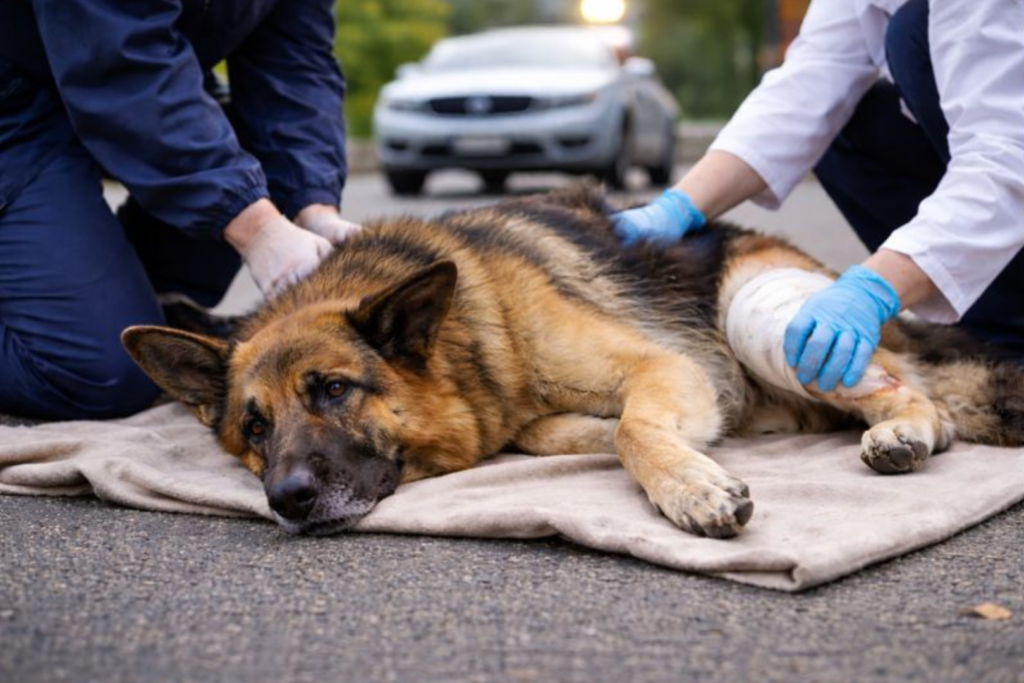
2. Trauma and accidents: what to do before arriving at the vet
Trauma is one of the most common causes of veterinary emergencies and can cause serious internal injuries, even when the dog appears stable on the outside or shows few visible signs of distress. Being hit by a car, falling from heights, receiving heavy blows, or being crushed can affect vital organs such as the lungs, liver, spleen, or brain, without any obvious external injuries being visible at first.
In these cases, the body may initially compensate for the injury, giving a false sense of stability. However, internal bleeding, pulmonary contusions, or neurological injuries can progress and manifest hours later, with a sudden deterioration in the patient’s overall condition.
This is why any major trauma should be considered a veterinary emergency, even if the dog is walking, responding, or seems to be relatively well. Early assessment at a veterinary hospital allows for the detection of hidden injuries, initiation of supportive treatment, pain management, and reduction of the risk of serious complications.
Warning signs
- Being run over, falling from any height, or receiving a strong blow.
- Intense pain or loud cries.
- Marked lameness or inability to stand up.
- Difficulty breathing.
- Progressive weakness.
What to do
- Do not move the dog unless necessary.
- Keep the head, neck, and spine aligned.
- Prevent the dog from walking on its own.
- Carry the dog on a firm surface, sturdy blanket, or board.
- Go to the veterinary hospital immediately.
More information on our blog “Your dog has been run over, what should you do?”
What not to do
- Do not attempt to reposition limbs.
- Do not allow the animal to walk “to see if it can.”
- Do not delay visiting the veterinarian, even if the animal appears stable.
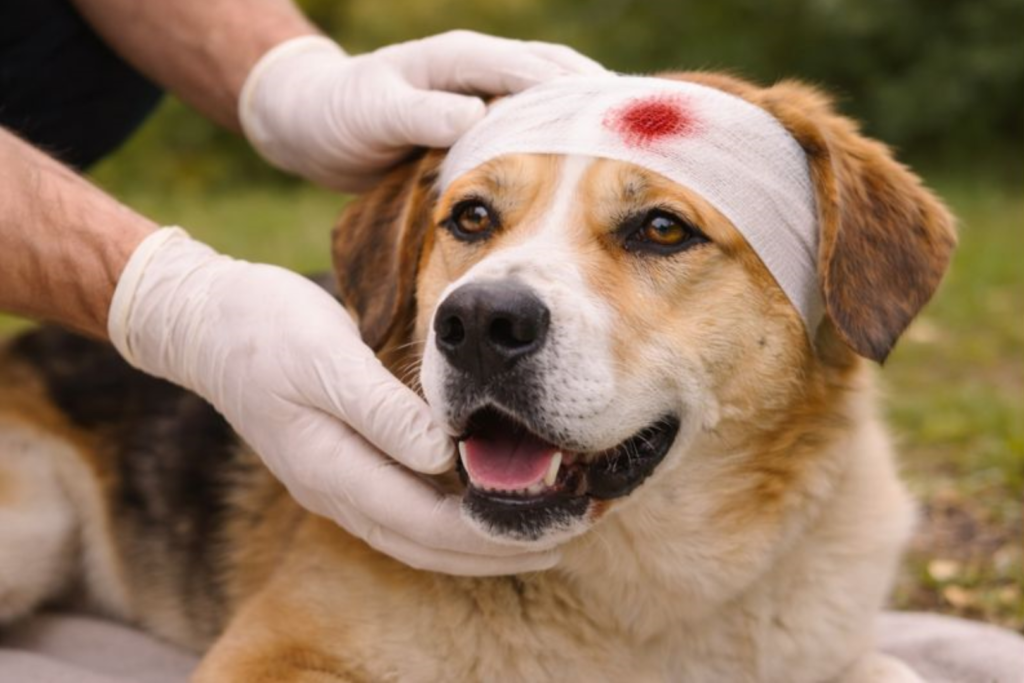
3. Heatstroke in dogs: immediate action and mistakes to avoid
Heatstroke is a serious veterinary emergency that requires immediate veterinary attention. It occurs when a dog’s body is unable to regulate its temperature, causing severe hyperthermia. This excessive increase in temperature can trigger multiple organ failure, rapidly and progressively affecting vital organs such as the brain, kidneys, liver, heart, and digestive system.
Unlike other emergencies, heatstroke can progress very quickly, even within a few minutes, and its effects can continue, even though the dog may appear to improve after initial cooling. Cellular damage, clotting disorders, and systemic inflammation can persist for hours after the episode, which explains why many patients worsen over time if they do not receive veterinary care.
Therefore, heatstroke should always be considered a life-threatening emergency, requiring immediate action to initiate controlled cooling and, with no exceptions, urgent transport to a veterinary hospital for monitoring, supportive treatment, and control of possible complications.
Warning signs
- Intense and persistent panting.
- Weakness, lack of coordination, or collapse.
- Vomiting or diarrhea.
- Very red or pale mucous membranes.
- Disorientation or altered consciousness.
What to do
- Move the dog to a cool, well-ventilated place.
- Gradually wet the dog with cool, not cold, water.
- Focus on the abdomen, chest, groin, and armpits.
- Stop cooling if the dog starts to shiver.
- Take the dog to the veterinary hospital immediately, even if it seems to be improving.
More information on our blog “Heatstroke in dogs: symptoms and treatment”
What not to do
- Do not use ice or ice water directly.
- Do not cover the dog with wet towels.
- Do not wait to see if it recovers on its own.

4. Seizures in dogs: what to do during and after the attack
Seizures are caused by abnormal electrical activity in the brain and can have multiple causes, ranging from metabolic disorders to poisoning, trauma, or neurological diseases. Although some isolated episodes may subside on their own, prolonged or repeated seizures constitute a veterinary emergency, as they can cause brain damage in dogs, alter body temperature, and rapidly deteriorate their overall condition.
When a seizure lasts longer than a few minutes or recurs without the dog returning to normal between episodes, the body enters a state of high physiological stress. Lack of adequate oxygenation, increased temperature, and excessive energy consumption can trigger serious complications if action is not taken quickly.
Seizures should always be approached with caution, prioritizing the safety of the dog and the person accompanying it, and require urgent veterinary assessment, especially if they last longer than 3–5 minutes, occur repeatedly, or are the dog’s first seizure.
Warning signs
- Involuntary movements.
- Body stiffness.
- Loss of consciousness.
- Excessive salivation.
- Urination and defecation.
- Recurring episodes, or ones lasting longer than 3–5 minutes.
What to do
- Retira objetos cercanos para evitar golpes.
- Mide la duración del episodio.
- Mantén un ambiente tranquilo y oscuro tras la convulsión.
- Acude a urgencias si dura más de 3–5 minutos o se repite.
What not to do
- Do not put objects in their mouth.
- Do not try to hold their tongue.
- Do not try to restrain their movements.

5. Poisoning in dogs: how to act and what never to do
Poisoning in dogs can progress rapidly and unpredictably, depending on the substance involved, the amount ingested, the means of exposure, and the animal’s state of health. Many toxins affect the nervous system, digestive system, liver, kidneys, or blood clotting, and can cause serious damage in a relatively short time if not treated correctly.
One of the main difficulties in cases of poisoning is that improper actions, such as inducing vomiting without veterinary advice or administering home remedies, can worsen the damage, especially if the toxin is corrosive, foamy, or neurotoxic. In addition, some signs may appear later, giving a false sense of initial safety.
Consequently, any case of suspected poisoning should be considered a veterinary emergency, requiring you to avoid taking unnecessary measures and immediately transport the animal to a veterinary hospital to identify the substance, assess the actual risk, and administer the appropriate treatment as soon as possible.
Warning signs
- Vomiting or diarrhea.
- Excessive salivation.
- Tremors or convulsions.
- Weakness or collapse.
- Suspected ingestion of toxic substances.
What to do
- Remove the substance if it’s on the skin or fur.
- Keep the container, label, or product information.
- Take the animal to the veterinarian immediately.
More information on our blogs:
- Harmful medicines and toxic substances for dogs and cats.
- Foods forbidden for dogs and cats.
- The 40 most common indoor and outdoor toxic plants.
What not to do
- Do not induce vomiting without veterinary advice.
- Do not administer human medication.
- Do not wait for it to “pass.”

6. Choking and foreign objects: warning signs and how to respond safely
Choking and airway obstruction are particularly life-threatening situations, since they can impair breathing and oxygenation of the body in a matter of minutes. Foreign bodies can become lodged in the mouth, pharynx, trachea, or esophagus, causing anything from intense coughing to severe breathing difficulties or even respiratory arrest.
In some cases, the dog may continue to breathe partially, creating a false sense of stability. However, the foreign object may shift, increase the obstruction, or cause progressive inflammation of the airways, rapidly worsening the condition.
That’s why any suspected choking should be treated as a veterinary emergency. It’s very important to stay calm, avoid doing anything that could make the obstruction worse, and take your dog to a veterinary hospital immediately, where safe techniques can be used to address the situation and protect their airway.
Warning signs
- Severe coughing or retching.
- Difficulty breathing.
- Cyanosis (blue tongue or gums).
- Extreme distress.
What to do
- If the dog is coughing or breathing, avoid abrupt measures.
- Remain calm and transport the dog to the nearest veterinary hospital.
- Only attempt maneuvers if you have specific training.
What not to do
- Do not blindly put your fingers in their mouth.
- Do not waste time if their breathing is impaired..

7. Shock in dogs: warning signs and what to do
Shock is a life-threatening emergency that occurs when the body is unable to maintain adequate blood flow to the tissues, meaning that oxygen and nutrients are not properly delivered to the organs. In dogs, shock often occurs as a result of severe trauma, significant bleeding, poisoning, severe infection, or intense pain, and can worsen rapidly if left untreated.
During shock, the body activates coping mechanisms that can maintain a semblance of initial stability. However, this phase may be brief and give way to a sudden decline, with failure of vital organs such as the heart, lungs, kidneys, or brain. That’s why the signs can be subtle at first and go unnoticed if you don’t know what to look for.
Shock cannot be treated at home and requires immediate veterinary care, including monitoring, intravenous fluids, pain management, and treatment of the underlying cause. Recognizing it early and transporting the dog quickly to a veterinary hospital is essential to improving the outcome.
Warning signs
- Extreme weakness.
- Pale or whitish gums.
- Weak or racing pulse.
- Cold extremities.
- Rapid breathing.
What to do
- Keep the dog lying down and still.
- Cover it gently without overheating it.
- Take it to the veterinary hospital immediately.
What not to do
- Do not give liquids or food.
- Do not attempt to treat it at home.

8. Burns in dogs: first aid and when to go to the vet
Burns in dogs can be caused by heat, chemicals, electricity, or contact with very hot surfaces, and they have the distinct characteristic of becoming deeper and worse over time, even when they initially appear to be minor. Thermal or chemical damage continues to affect the tissues after initial contact, which explains why some injuries increase in size, pain, and inflammation over time.
In addition to skin damage, burns cause intense pain, disturbances in local blood circulation, and an increased risk of infection. In extensive or deep cases, they can trigger significant systemic imbalances, such as fluid loss, generalized swelling, or shock, especially in small dogs or frail patients.
Because of this, any burn should be considered a veterinary emergency, requiring careful immediate action that limits the damage, and a speedy transport to a veterinary hospital where the actual severity of the injury can be assessed, pain can be controlled, and appropriate treatment can be administered to promote healing and prevent complications.
Warning signs
- Reddened skin, blisters, or blackened areas.
- Intense pain.
- Injuries caused by heat, chemicals, or electricity.
What to do
- Remove the heat source if it is safe to do so.
- Soak the wound with cool water for several minutes.
- Cover with clean gauze.
- Go to the vet.
What not to do
- Do not pop blisters.
- Do not apply creams, oils, or home remedies.
9. Dog bites: what to do and why you should always have them checked by a veterinarian
Dog bites may appear to be minor injuries when the hole in the skin is small, but they often cause deep damage to underlying tissues such as muscles, tendons, and subcutaneous spaces. The pressure of the bite drives bacteria from the other animal’s mouth deep into the wound, creating a breeding ground for serious infections, abscesses, and tissue necrosis.
In addition, when the skin closes quickly, it can give a false appearance of healing, while the infection progresses internally. In some cases, bites can affect important structures such as blood vessels or nerves, and damage can appear hours or days after the incident.
For this reason, every bite should be considered a veterinary emergency, even when bleeding is minimal. Early assessment allows the wound to be thoroughly cleaned and treated, pain to be controlled, infection to be prevented, and the risk of medium- and long-term complications to be reduced.
Warning signs
- Puncture wounds.
- Bleeding.
- Localized pain.
- Progressive inflammation.
What to do
- Apply pressure if there is bleeding.
- Keep the wound clean on the surface.
- Always go to the vet.
What not to do
- Do not close the wound.
- Do not try to clean it deeply without veterinary advice.
For more information, see our blog post “Dog bites: A step-by-step guide (medical, legal, and emotional).”

10. Insect bites and allergies in dogs: when it’s an emergency and how to respond
Insect bites and allergic reactions can range from mild local inflammation to a severe systemic response. In some dogs, especially those with a history of hypersensitivity, the reaction can develop rapidly and unpredictably, compromising breathing, circulation, or general condition in a short period of time.
Severe allergic reactions can cause facial or snout swelling, difficulty breathing, widespread hives, weakness, or collapse. These signs indicate an immune system response that requires immediate veterinary attention, as it can progress to anaphylactic shock if not treated quickly.
For this reason, any allergic reaction that goes beyond mild local inflammation should be considered a veterinary emergency. Avoid administering human medication and prioritize rapid transport to a veterinary hospital, where the actual severity can be assessed and appropriate treatment administered.
Warning signs
- Swelling of the face or snout.
- Difficulty breathing.
- Widespread hives.
- Weakness or collapse.
What to do
- Keep the dog calm.
- Remove the stinger if it is visible, and do not apply pressure.
- Go to the vet immediately.
What not to do
- Do not give human antihistamines.
- Do not wait for respiratory signs to appear.

First aid for dogs: what you should NEVER do
- Administer human medication.
- Apply ice directly to the skin.
- Give food or water to an unconscious dog.
- Handle fractures by trying to reposition them.
- Force movements or restraints when the dog is very agitated.
- Induce vomiting without veterinary advice.
- Clean deep wounds aggressively or close them at home.
- Delay visiting the veterinarian because “it seems to be getting better.”
A first aid kit for dogs: what to have ready at home
In an emergency, the first few minutes are often spent in a state of anxiety and panic. Having basic supplies prepared in advance allows you to act more calmly, avoid improvisation, and focus on what is essential: stabilizing the dog and getting to the veterinary hospital as soon as possible.
This small kit is not a substitute for professional care and is not intended to treat emergencies at home, but it can be very helpful in controlling bleeding, protecting your dog during transport, or assessing basic vital signs while you seek veterinary help.
- Clean gauze pads.
- A bandage.
- A blanket or towel.
- A digital thermometer.
- Gloves.
- Saline solution.
- The phone number of a nearby veterinary hospital.
Recommended additional material for emergencies
For treating wounds and bleeding
- Single-dose saline solution ampules for surface cleaning.
- Blunt-tipped scissors for cutting hair or bandages.
- Hypoallergenic adhesive tape.
For transport and safety
- Adjustable muzzle (only if the dog is agitated, conscious, and breathing well).
- Another stiff blanket or lightweight board to use as a makeshift stretcher.
- Flashlight or headlamp, useful for nighttime outings.
For basic assessment
- Reloj o cronómetro (para medir duración de convulsiones o respiraciones).
- Libreta pequeña o notas en el móvil para anotar tiempos y síntomas.
What NOT to include in a veterinary first aid kit
It’s just as important to know what not to pack:
- Human medication.
- Anti-inflammatories, painkillers, or antibiotics.
- Antihistamines without a veterinary prescription.
- “Natural” products or home remedies.
- Alcohol, hydrogen peroxide, or concentrated iodine.
Improper use of medication is a common cause of worsening conditions in veterinary emergencies.
First aid and emotional well-being for dogs: how to reduce stress
Stress exacerbates pain, breathing, and heart rate.
Therefore:
- Minimize handling.
- Reduce noise and stimulation.
- Speak in a calm voice.
- Focus on a quick and quiet transfer.
Emergencies at Balmesvet: how we handle them and what you can expect
At Balmesvet, we combine quick diagnosing, medical excellence, and emotional care with:
- 24-hour veterinary emergencies.
- Canine intensive care unit.
- Instant advanced diagnostics.
- Fear Free and Low Stress Handling.
- Clear and empathetic support for individuals accompanying the patient.
Veterinary ICU after first aid: what makes it so important
First aid only provides temporary stabilization for your pet. Many emergencies require monitoring, oxygen therapy, IV fluids, and pain management.
More information is on our blog, “Prepare for the unexpected: the veterinary intensive care unit.”
Important information regarding the use of this content
The information contained in this article is for informational and educational purposes only and does not replace professional veterinary assessment, diagnosis, or treatment. In case of emergency or if you have any questions, contact a veterinary center as soon as possible.
We look forward to seeing you at Calle Balmes 205, 08006, Barcelona. We are here to help you.
Balmesvet Veterinary Hospital
| Information | |
| Address | Carrer Balmes 205, 08006 Barcelona |
| Parking | Balmes 200 (30 min visits; up to 1 hour emergencies) |
| Phone | 931 173 173 |
| atencioclient@balmesvet.com | |
| Consultations | 8:30–20:00 |
| Emergency/Hospitalization | 24/7 |
Can we help you? Call us or make an appointment. 24/7 emergency services available.

 Barcelona, C/ Balmes nº 205
 931 173 173
 info@balmesvet.com